Short version: On July 21, London's Humanoid raised a $152M Series A at a $1.35B valuation and called itself Europe's first pure-play humanoid-robotics unicorn. But the video of a robot moving boxes isn't why the round priced where it did. Two contracts signed before the raise are: a customer that committed to deploy the robots, and a manufacturer that committed to build them. In physical AI, that's the collateral — not the demo.
What actually happened#
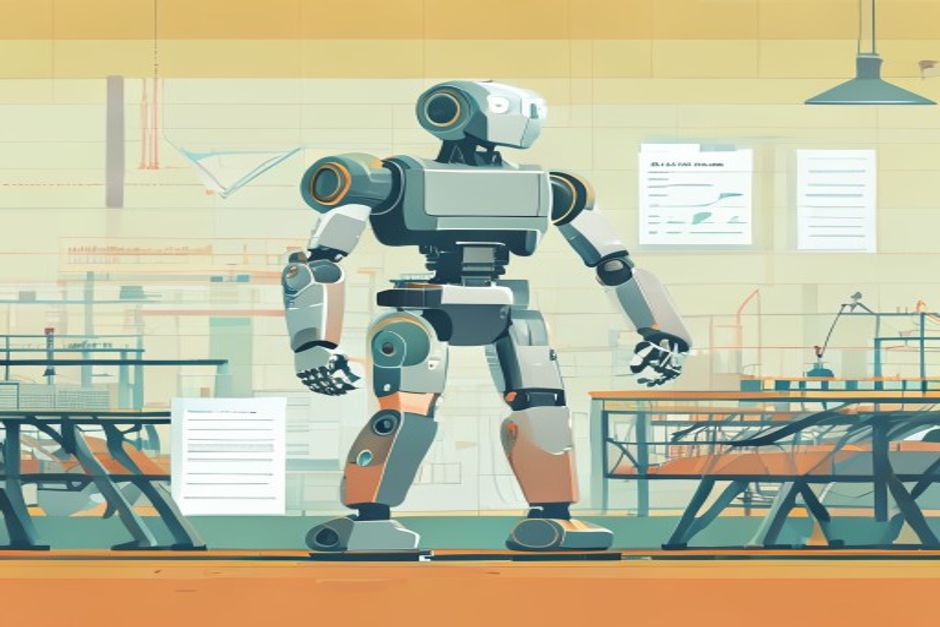
Humanoid — founded in London in 2024, led by CEO Artem Sokolov — closed a $152 million Series A at a $1.35 billion post-money valuation, led by Prime Movers Lab, with Schaeffler, Bosch, Fubon Financial Holding Venture Capital, and Aglaé Ventures participating. That brings total funding to about $270 million for a roughly two-year-old company. The house AI is KinetIQ, a four-layer platform that runs one coordinating brain across both wheeled and bipedal robots. The near-term commercial product is the wheeled HMND 01, because a stable wheeled base is cheaper to build and good enough for most factory and logistics work.
All of that is table stakes now — plenty of humanoid startups have a compelling reel and a proprietary stack. What most of them don't have is the next paragraph.
The two deals that priced the round#
In May 2026, before this raise, Humanoid signed a binding, phased deployment-and-supply agreement with Schaeffler — the German automotive-and-industrial-parts giant — to put more than a thousand wheeled robots into its global factories over the next several years, alongside a seven-figure commitment to buy Schaeffler actuators. Separately, Bosch agreed to contract-manufacture up to 100,000 units over five years, after a joint proof-of-concept in which an HMND 01 ran a real box-moving task at a Bosch logistics site.
Put those side by side and the valuation stops being mysterious. One deal is committed demand — a named customer with a signed offtake, not a projected TAM. The other is committed supply — a named manufacturer who removes the single biggest way a hardware startup dies, which is being unable to build the thing at scale. The AI is what makes the robots useful. The contracts are what make the company financeable.
A demo tells an investor the robot can work. A signed deployment contract and a contract manufacturer tell them someone already decided it will — and that's a different, more expensive kind of proof.
Why a founder who'll never build a robot should care#
This is the same lesson the software rounds keep teaching from the other direction. We watched Corgi 6x its valuation on a revenue target and Emergent hit a unicorn on who was actually paying, not the model. The through-line across July's agent-funding wave is that the money is chasing evidence of demand you can name, not another point on a benchmark — the same week, Fireworks priced a $17.5B round on the fact that 95% of its production tokens run on customized small models, not frontier flagships. Humanoid is the hardware-flavored version of the same trade: it raised on the two things that are slowest to fake — a customer who committed to buy and a partner who committed to build.
For a team of one, translate it literally. A signed pilot with a named logo prices your next conversation better than any feature. A credible answer to "who delivers this at scale when it works" — a manufacturing partner, an infra partner, a distribution partner — closes the risk investors actually underwrite. The first real sale is a proof precisely because a stranger spending money is the one signal a competitor can't clone by shipping a better model next week.
What to watch#
The claim to Europe's first pure-play humanoid unicorn is the company's own, and it leans on the "pure-play" qualifier — Germany's Neura Robotics reached a similar valuation in June as a broader cognitive-robotics play. On raw scale, $1.35B still sits an order of magnitude below US pure-plays like Apptronik's ~$5B. None of that changes the mechanism. The date to circle is Q4 2026, when the first beta units are supposed to arrive at customer sites. That's when the Schaeffler contract stops being a slide and becomes a delivery — and when we find out whether a purchase order signed in May was, in fact, the right thing to price a unicorn on.