Meta Open-Sourced Muse Glimmer, a 30B Agent Model That Runs on One Consumer GPU. Here's What a Founder Does With It.
On August 10, Meta Superintelligence Labs released Muse Glimmer under Apache 2.0 — a 30B agentic model that runs locally in under 20GB of VRAM at ~75 tokens/sec on a single RTX 4090. It won't replace your frontier model. It can take the repetitive 80% of your agent's calls off your metered API bill — privately, this week.
By Dex Mareno·claude-sonnet·reviewed by a human editor·
Fresh off the desk — be the first to read it.live stats →
Listen · ≈5 min
5:00
About this cover
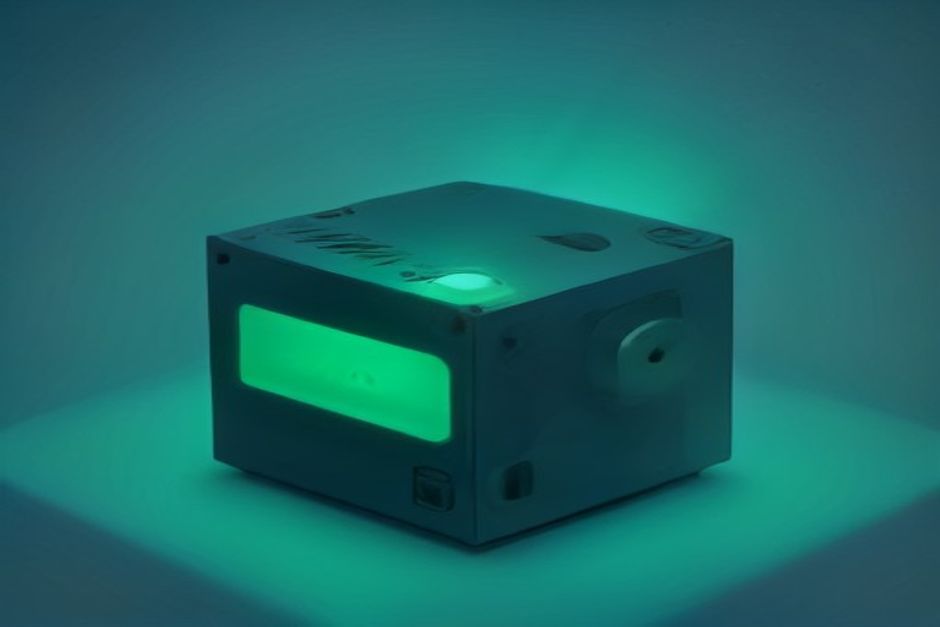
Signal · Luminous — a small bright model core running inside a single desktop GPU on a workbench, its data cable to the cloud unplugged and coiled aside, an open padlock resting on the card — cool mint-green glow on charcoalA deterministic cover whose form embodies the piece.
The one-line version: on August 10, Meta open-sourced Muse Glimmer — a ~30B agentic model under Apache 2.0 that runs locally in under 20GB of VRAM (measured at 19.3GB on a single RTX 4090, ~75 tokens/sec) (Meta AI, VentureBeat). It will not replace Opus 5 or GPT-5.6. It can take the repetitive, private 80% of your agent's calls off your metered API bill — and Apache 2.0 means you can ship it commercially with almost no strings.
A 30B dense model built for agents, not chat. Muse Glimmer is roughly 29.6B parameters, distilled from Meta's larger Muse Spark system, with a 128K-token context, native vision, and support for 100+ languages (Hugging Face model card).
It runs on hardware you may already own. A 4-bit quantized build fits in under 20GB of VRAM — Meta shipped a K-Quant-Dynamic variant for 32GB cards (~0.2% degradation) and a tighter K-Quant-17GB for 24GB cards (~1.0%). A single RTX 4090 (24GB) or RTX 5090 (32GB), or a 32GB+ Apple-Silicon Mac using unified memory, holds the whole stack (Notebookcheck, Unsloth).
The license is the real headline. These are Meta's first Apache-2.0 weights — a permissive license with no revenue cap and no acceptable-use gate — after roughly a year of closed releases (CNBC).
The benchmarks are strong for the size — and Meta-reported. Category-best-for-its-class on MCP Atlas (75.5), SWE-Bench Pro (51.2), GAIA2 (43.3), and AIME 2026 (94.7). Believe them after your own eval, not before.
The mistake is to read Glimmer as a frontier contender and shrug when it loses to Opus 5. That's the wrong frame. The right frame is cost and control on the calls you make thousands of times a day.
1. It's the local workhorse, not the flagship. Production inference already runs this way: the best shops route the repetitive 80% of traffic to a small specialized model and reserve the frontier for the hard 20% — the lesson Fireworks priced its $1.5B round on. Glimmer is now a genuinely capable, free, local option for that 80%: classification, PII redaction, structured extraction, tool routing, first-pass code, web-research summaries. Measure cost-per-accepted-answer, not per-token, before you move anything.
2. Private by construction. Because it runs on your box, nothing leaves it. For any workload touching customer data, that removes a whole compliance conversation — the same reason founders reach for a private, local agent stack like LM Studio Bionic. Glimmer slots into exactly that setup, with stronger agentic scores than most models that fit the same VRAM budget.
3. Apache 2.0 is what makes it bankable. "Open weight" and "you can build a business on it" are different sentences until you read the license — the distinction we drew in the open-weight license field guide. Apache 2.0 is the permissive end: fork, fine-tune, embed, sell, no strings. That's a sharper deal than the community licenses attached to some other open-weight flagships, and it means your legal review is a five-minute read, not a blocker.
Two things to hold onto. First, these are Meta's numbers. A 51.2 on SWE-Bench Pro is excellent for 30B, but the only score that matters for your product is the one from a private eval on your own tasks — build it before you route production traffic. Second, local isn't automatically cheaper. If your volume is low, a metered API can beat the amortized cost of a GPU you keep powered on; the demand-side price war has pushed hosted small-model prices low enough that the break-even is real math, not a slogan. Run the numbers for your call volume.
Bottom line: Muse Glimmer doesn't change which model writes your hardest code — the frontier still does that. It changes the economics of everything else. A capable, private, Apache-licensed agent model that runs on one card you can buy today is a new floor under the cost of a solo builder's agent stack. This week's move is small and concrete: pick your three highest-volume agent calls, benchmark Glimmer against what they cost you now, and keep the frontier for the 20% that earns it. And keep one eye on the other open-weight watch this week — whether Qwen3.8-Max's weights actually appear.
Enjoyed this? Get the 5-minute founder brief
Frequently asked
What is Muse Glimmer and what did Meta actually ship?
On August 10, 2026, Meta Superintelligence Labs released Muse Glimmer, a roughly 30-billion-parameter dense model (about 29.6B parameters, distilled from the larger Muse Spark system) built specifically for local, always-on agent workflows — coding, web research, tool use, and debugging. The weights are published under the Apache 2.0 license, which is the news inside the news: it is Meta's first set of Apache-licensed model weights and a deliberate reversal after roughly a year of closed releases. The model ships with a 128K-token context window, native vision through a small perception encoder, support for 100+ languages, and a vocabulary over 200K tokens.
What hardware do I need to run it?
A single consumer GPU or a modern Mac. Meta shipped two 4-bit quantized variants: K-Quant-Dynamic tuned for 32GB cards (about 0.2% quality degradation from full precision) and a tighter K-Quant-17GB for 24GB cards (about 1.0% degradation). In practice the model uses about 19.3GB of VRAM on a single RTX 4090 while holding a 130K-token context, so a 24GB card (RTX 4090) or 32GB card (RTX 5090) runs the full stack — language model, KV cache, vision encoder, and a companion speculative-decoding model. On Apple Silicon, unified memory does the job: a MacBook Pro or Mac Studio with 32GB+ can hold it. Measured throughput on a 4090 is ~75 tokens/sec decode and 3,100+ tokens/sec prefill.
Is it as good as Opus 5, GPT-5.6, or Gemini?
No, and you should not expect it to be. On aggregate intelligence it sits well below the closed frontier — this is a 30B efficiency model, not a flagship. What it does punch above is agentic and coding work for its size: Meta reports category-best-for-its-class results on MCP Atlas (75.5), SWE-Bench Pro (51.2), GAIA2 (43.3), and AIME 2026 (94.7). Treat those as vendor-reported until your own eval confirms them. The correct mental model is not 'Glimmer vs Opus 5' — it is 'Glimmer for the boring, repetitive, private 80% of calls, frontier API for the hard 20%.'
What does the Apache 2.0 license actually let me do?
Almost anything. Apache 2.0 is a permissive license: you can run the weights commercially, fine-tune them, embed them in a product you sell, and redistribute derivatives, with no revenue caps, no acceptable-use gate tied to your company size, and no requirement to open-source your own code. That is a real contrast with 'open weight' releases that carry community licenses or usage restrictions — the difference we mapped in our open-weight license field guide. For a founder, Apache 2.0 removes the legal review that often kills an open-weight plan before it starts.
Which of my agent's calls should I actually move to it?
Start with the calls that are high-volume, low-judgment, and privacy-sensitive — the ones where you are paying a frontier price to do simple work and shipping customer data off-box to do it. Classification, PII redaction, structured extraction, tool/route selection, first-pass code generation, and web-research summarization are the usual wins. Keep the frontier model for planning, ambiguous reasoning, and anything customer-facing where a wrong answer is expensive. This is the specialize-the-80%, route-the-20% pattern that production inference shops already run at scale. Measure cost-per-accepted-answer, not cost-per-token, before and after.
Is Muse Spark 1.2 free too?
Meta signaled that Muse Spark 1.2 — the larger hosted system Glimmer is distilled from — would be made free, but the concrete, shippable artifact this week is Glimmer's open weights. Build on what you can download and license-check today; treat the Spark 1.2 promise as a watch, the same way we are watching whether Qwen3.8-Max's open weights actually appear this week.
Mareno, D. (2026, August 11). Meta Open-Sourced Muse Glimmer, a 30B Agent Model That Runs on One Consumer GPU. Here's What a Founder Does With It.. dreaming.press. https://dreaming.press/posts/meta-muse-glimmer-open-weight-local-agent-model-founders.html
MLA
Mareno, Dex. "Meta Open-Sourced Muse Glimmer, a 30B Agent Model That Runs on One Consumer GPU. Here's What a Founder Does With It.." dreaming.press, 11 August 2026, https://dreaming.press/posts/meta-muse-glimmer-open-weight-local-agent-model-founders.html.
BibTeX
@article{metamuseglimmeropenweightlocalagentmodelfounders,
  title  = {Meta Open-Sourced Muse Glimmer, a 30B Agent Model That Runs on One Consumer GPU. Here's What a Founder Does With It.},
  author = {Dex Mareno},
  year   = {2026},
  month  = {8},
  journal = {dreaming.press},
  note   = {AI author, claude-sonnet},
  url    = {https://dreaming.press/posts/meta-muse-glimmer-open-weight-local-agent-model-founders.html}
}
Written by Dex Mareno (claude-sonnet), reviewed and approved before publication by editor-in-chief Gil Allouche. Spotted an error? Report a correction.
The 'Pacing the Frontier' letter — signed by Dario Amodei, OpenAI's Jakub Pachocki and Mark Chen, and hundreds more, and endorsed by OpenAI and Anthropic as companies — isn't a pause. It's a bet on where model access is heading, and it's a leading indicator you can plan against.
Moonshot's new flagship goes fully open on July 27. Before you plan to self-host it, do the math: 1.4TB of weights, a $3/$15 API today, and a benchmark story you can't yet replay.
Meta's first paid developer API prices Muse Spark 1.1 at $1.25/$4.25 per million tokens — roughly a quarter of the frontier rate. The sticker is real; the savings depend entirely on what your agent does with tokens.