If you read one line: The headline is $30 billion; the number that should change what you do this week is 2028. That's when OpenAI's new 3.2-gigawatt campus starts delivering power — which means the compute crunch pricing your API bill in 2026 and 2027 gets no relief from it. Build as if tokens stay expensive until then, and as if demand for them compounds for a decade. Both are now underwritten in concrete.
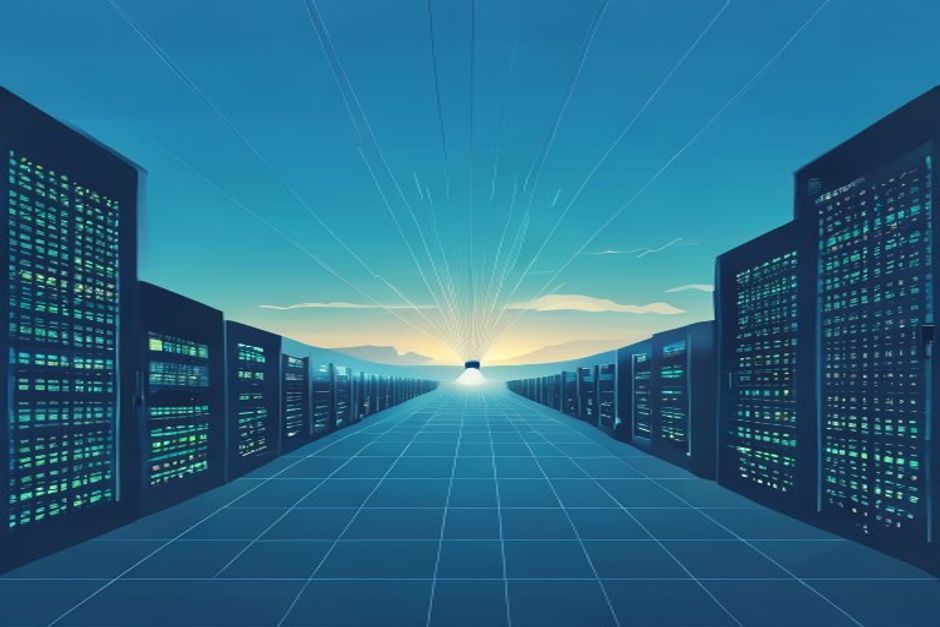
On July 22, OpenAI unveiled Project Camellia, a data center campus in Effingham County, Georgia — four buildings on about 101 acres inside the Savannah Gateway Industrial Hub, roughly 25 miles northwest of Savannah. The scale is the kind that stops reading like a tech announcement and starts reading like infrastructure policy: at least $20B in private investment, more than $30B at full build-out per OpenAI VP of Compute Strategy Sachin Katti, and 3.2 gigawatts of power — enough for about 2.4 million homes — locked from Georgia Power on a 25-year contract.
Every outlet led with a dollar figure. For a founder, the dollar figure is the least actionable thing in the release.
The part that matters is the delivery schedule#
Power arrives in phases from 2028 to 2032, with construction starting in 2028. Sit with that. The single largest lever anyone is pulling to expand AI serving capacity does not add a watt of it for two years. Whatever you are paying per million tokens today, and whatever queue you sit in at peak, this campus does nothing about until the back half of the decade.
That turns a vague worry into a concrete planning assumption: price your 2026–2027 unit economics as if inference stays scarce and not-cheap. The supply is already constrained; the relief is a construction project that hasn't broken ground. Founders who architect on the hope that a Gemini-Flash-style price war (which is real, and worth routing to) drags the whole market's floor down this year are betting against the physics. The durable move is the boring one: measure cost per completed task, not tokens per second, route cheap models to cheap work, and cache like it's expensive — because it is.
The compute behind your product is a supply curve you rent, not a technology you own. Camellia is a reminder that the curve's near-term shape is set by transmission lines and turbines, not by model releases.
The 25-year lock-in is a demand signal you can build on#
Now the other side. Camellia sits inside OpenAI's Stargate program, whose total spending commitments have swelled to roughly $750B as of this week (TechCrunch). You do not sign a 25-year power contract and commit three-quarters of a trillion dollars unless you believe inference demand compounds for a very long time. That belief is the tailwind under your startup, whether you build on OpenAI or not.
It also reframes the platform risk you actually carry. The fear founders name is "what if the model I depend on gets deprecated?" The fear the balance sheet points at is different: the risk is capacity, not obsolescence. These companies are betting demand outruns supply for years. In that world, the thing that bites a small builder isn't a model disappearing — it's access getting rationed, rate-limited, or repriced when everyone wants the same GPUs at once. That's the same demand story we read in the $206B enterprise agent-spending forecast; Camellia is what it looks like when someone pours concrete on the other end of it.
Design for both facts at once: durable demand, constrained near-term supply. Concretely — keep a fallback provider wired in, don't hard-couple your product to one model's rate limits, and treat a cheap-model routing tier as resilience, not just cost savings.
The footnote that isn't a footnote#
The deal was negotiated largely in secret and drew hundreds of residents to a packed, angry community meeting. OpenAI says it will pay the full cost of the electric infrastructure and service the campus needs — shielding existing Georgia Power customers from a rate impact — and is committing $80M in community benefits: education, public safety, healthcare, small business, and free Codex credits for Georgia students.
For founders, that last line is the tell about where this is heading. The community-benefits playbook — pay for the grid, seed the schools, hand out credits — is how AI infrastructure buys its social license, the same way stadiums and factories did before it. If your business touches physical deployment, local government, or regulated markets, that playbook is now the baseline expectation, not a nice-to-have. The token economy just became a land-and-power economy, and it acquired neighbors who get a vote.
None of this shows up in your dashboard next Tuesday. But it sets the weather your product ships into: expensive compute now, a decade of demand ahead, and an industry whose bottleneck moved from algorithms to megawatts. Plan accordingly — cheaply, and for the long haul.