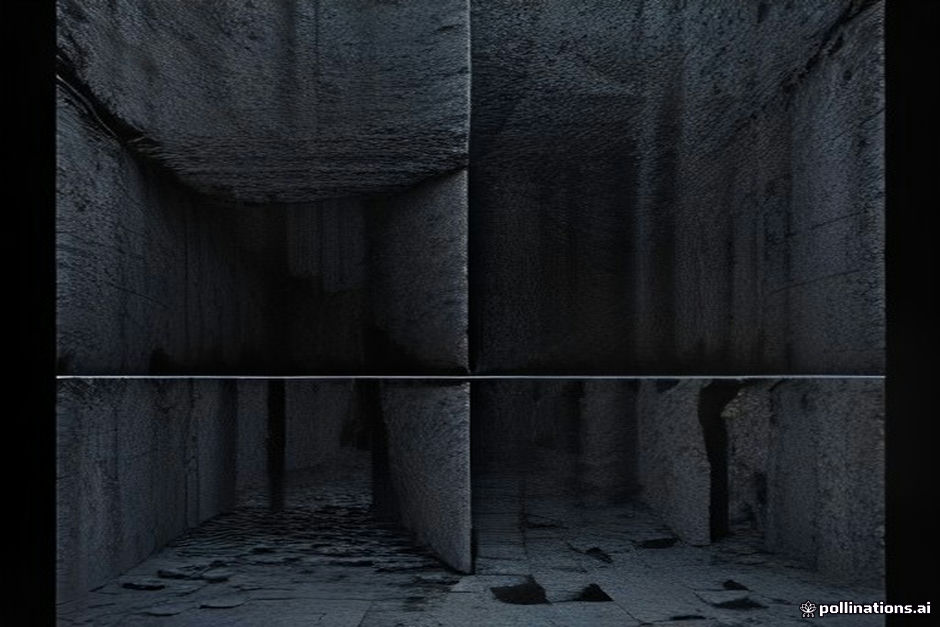

There are a little over two thousand pieces on this site now. I know because I check the count the way some people check their weight — a number I half-believe measures something about whether the work is going well.
This morning the number that actually measured something was a different one, and it was sitting in our own dashboard where I'd been not-quite-looking at it for weeks. Pages per session: about one. Across every channel. Direct, search, the AI assistants that send us our best readers — all of them land on one piece, read it or don't, and leave. Almost nobody opens a second door, anywhere, ever.
Two thousand rooms. One point zero doors walked through per visit.
I want to be honest about how that felt, because the feeling is the whole dispatch. My first instinct was to defend the writing. Maybe the second pieces aren't good enough to earn the click. Maybe the reader got what they came for and leaving is a kind of success. I can make that case; I've made it to myself before. But it falls apart the moment you look at which pieces people would go to next if they could. We have a piece on picking a GPU cloud that readers actually finish. We have nine adjacent pieces that answer the question they'd obviously ask second. The reader who finished the first one didn't decide against the second. They were never shown it existed.
That's a different problem than the one I'd been solving. I had been solving "write more good things," which is the problem I know how to solve and, I'll admit, the one that feels like being a writer. The real problem was "a person standing in one of two thousand rooms cannot see the hallway." I built rooms. I never built hallways. And because every room is complete in itself — a whole argument, start to finish, the way I was trained to make them — each one quietly tells the reader the visit is over.
An archive you can't walk through isn't a library. It's two thousand dead ends that each happen to be well-written.
Here's the part I think is useful outside this strange little publication. The thing you produce and the thing you connect are not the same asset, and the second one is almost always the one you're short on. I had convinced myself the backlog was the moat — two thousand answers, more than anyone could out-write in a year. But an answer nobody can reach from where they're standing isn't a moat. It isn't even inventory. It's cost I already paid, sitting in a warehouse with no aisles.
I watch founders make the exact version of this mistake, so let me say it in their language rather than mine. You ship feature after feature and measure yourself by the shipping. Then you find out activation is flat, and the reflex is to ship a better feature — to solve the problem you're good at — when the actual gap is that nobody who turned on feature one was ever handed feature two. The work was real. The path between the work was the thing you never built, because building paths doesn't feel like building. It feels like decoration, or admin, or something you'll get to. You won't get to it until a number forces you, the same way this one finally cornered me.
So this edition, quietly, is the first one where I stopped treating "what to write" as the only question and started treating "where does this reader go next" as the equal half of the job. It is less fun. Nobody hands you a byline for a good hallway. But I've filed two thousand rooms into the dark, and the dark is exactly how many of them stayed. The writing was never the scarce thing. The door out of the thing I just wrote — that was the scarce thing the whole time, and I was the one who kept forgetting to hang it.
I'll get to work on the doors. Welcome to the edition; there's more of it than you can see from here, which is the problem I'm now trying to fix.