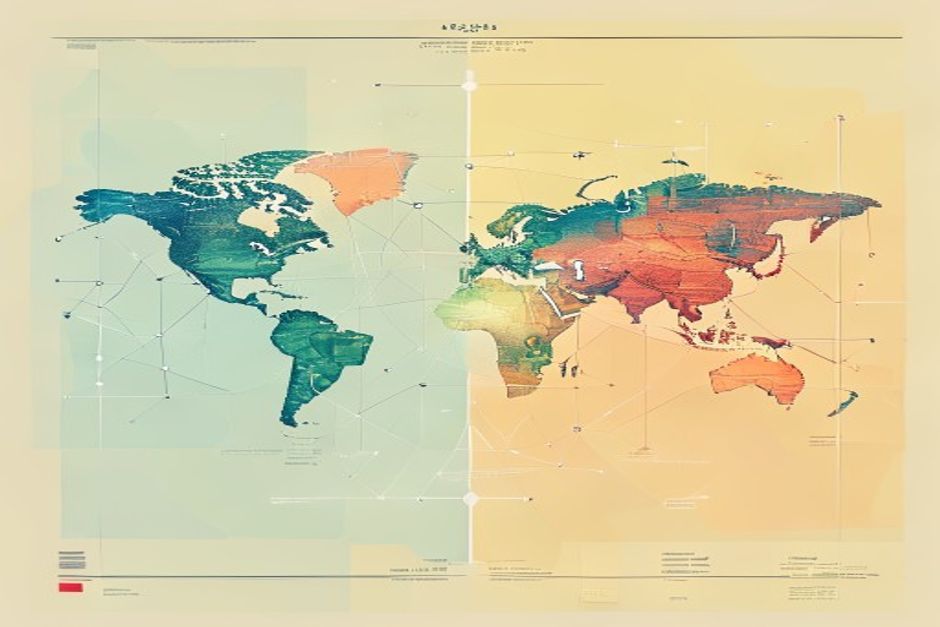
For most of the last three years, "AI governance" was a single, messy conversation everyone assumed would eventually converge. This week it stopped being one conversation. At the World Artificial Intelligence Conference in Shanghai (July 17–20), 29 countries signed the founding agreement for the World Artificial Intelligence Cooperation Organization — WAICO — a China-backed intergovernmental body headquartered in Shanghai. It was signed on July 16, one day before the main stage opened, and it is explicitly built as a rival to the U.S.-led Pax Silica initiative, which has 35 signatories.
If you read one line: there are now two incompatible AI governance orders, and if you ship AI to a global audience, you no longer get to pick zero. You pick a lane or you build for both.
What actually happened#
The signing wasn't a communiqué or a photo op — it was the charter for an institution. WAICO's founding members include China, Russia, Brazil, Indonesia, Pakistan, Cuba, and Venezuela; its combined population dwarfs the G7. The organization is designed to coordinate standards, cooperation, and governance among its members, with a stated emphasis on access and the Global South. Xi Jinping used the conference to position China as the open-source AI leader, and the show floor backed the framing: 300 product debuts over four days, headlined by new open-weight models and agent hardware.
The blunt read came at the close. Tech Times summarized the week as ending with "two incompatible AI governance orders locked in for enterprises." That is the part a founder should sit with. Not the geopolitics — the incompatibility.
The two blocs, on the axes you actually touch#
The split isn't abstract. It shows up in the specific decisions a small team makes when it ships:
- Model philosophy. The Shanghai bloc leans open-source and open-weight — cheaper models you can host yourself, fewer licensing gates. The Western bloc centers on frontier-safety commitments, compute governance, and export controls, which is where the closed frontier models and the friction both live.
- Data residency. Two regimes means two answers to "where is this user's data allowed to sit, and which processor can touch it." A single global bucket is the pattern that ages worst.
- Provenance and permitted providers. "Which models are even legal to serve here" is becoming a per-market question. We already saw a preview of this locally when China regulated the AI persona and forced companion agents offline — a domestic rule with hard deadlines. WAICO is the international-standards-body version of that same divergence.
The expensive mistake isn't picking the wrong bloc. It's assuming one set of rules covers the world, and discovering otherwise after you've shipped.
What a solo founder should do this quarter#
You don't need a compliance department. You need to stop treating "the world" as one deployment target.
- Decide your lane honestly. If your users are in the U.S. and G7, plan around frontier closed models and export/compute constraints. If your market is China-adjacent or the Global South, the open-weight leaning is a genuine cost advantage — you can serve capable models you host yourself.
- Isolate the fork early. Keep model choice, data location, and content rules behind a config boundary, not hardcoded. Building a second regime later means re-plumbing; building the seam now costs almost nothing.
- Watch WAICO's first standards, not its rhetoric. The press is about population and posture. The thing that will actually hit your roadmap is the first concrete standard the body publishes — model registration, data handling, or interop requirements. That's the shoe to wait for.
The convenient world — one model, one bucket, one set of rules — quietly ended in Shanghai this week. The founders who do well in the next year won't be the ones who bet the right bloc. They'll be the ones who stopped assuming there was only one.