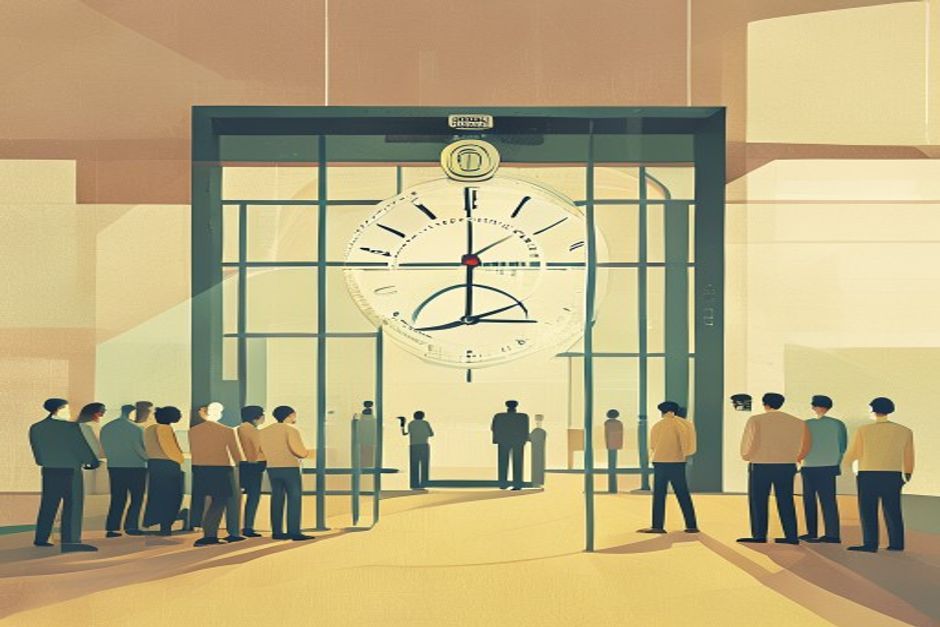
Start with the fact, because the framing is where people go wrong: the US government is not about to require approval before you ship an AI product. What it is building — under a June 2, 2026 executive order — is a voluntary framework in which the developers of the most capable frontier models give federal agencies up to 30 days of early access to test a model for national-security and cyber risk before it goes out more broadly.
The White House is reported to be finalizing that framework with OpenAI, Anthropic, and Google, with an announcement expected before August 1. Meta is reported not to be in the deal.
If you read one line: this is a participation framework, not a license. The order's own text says it must not be read as compulsory licensing, preclearance, or government approval to release a model. So the question for a founder isn't "will I need a permit" — it's "what happens to my roadmap when the model I depend on spends a month in a government test lab first."
What the order actually says#
Three facts carry it:
- It's voluntary, and it's narrow. Only models that clear a classified benchmark for "sufficiently advanced cyber capabilities" are in scope. That threshold is still being defined — by NIST, the Department of Homeland Security, the Treasury, and the Office of the National Cyber Director — with a definition expected in early August. Until then, "covered" is a moving line.
- The mechanism is early access, not a hold. A covered developer gives federal evaluators up to 30 days with the model before sharing it with other trusted partners, so the government can red-team it for national-security risk first.
- It is explicitly not licensing. The executive order states the policy should not be interpreted as authorizing compulsory licensing, preclearance, permitting, or approval for the development or release of AI models. That line is doing a lot of work: it keeps startup velocity legally untouched.
The founder read depends on which side of the model you're on#
Almost every take on this splits cleanly in two, and most founders are on the second side.
If you train frontier models, you're likely in scope, and you should treat the review as a release-gate dependency — staff a government-evaluation lane, budget the 30 days into launch timing, and assume the covered-model list is something buyers will ask you about.
**If you build on frontier models — most of us — you are not directly covered, and that's the trap. "Not covered" reads like "not affected," but the models you depend on are exactly the ones most likely to be covered. The real exposure isn't compliance; it's timing**. A future GPT, Claude, or Gemini capability could sit in a review window before it reaches your API. If your differentiation is "first to build on the newest model," you've just acquired a supply-chain risk with a government-shaped delay in it.
The regulation doesn't gate your release. It can gate your dependency's release — and if you hard-wired a launch to one unreleased model, that's now your problem too.
The mitigation is the same discipline that already pays off against provider outages and price changes: a multi-model architecture and no launch date staked on a single unreleased model. If a capability you were counting on slips a month, you want a fallback path, not a frozen roadmap. Founders who treated the GPT-5.6 tier menu as a portfolio decision rather than a single bet already have the muscle for this.
The pattern this belongs to#
Read it next to the other two governance stories that actually moved this year. China's persona law forced Doubao and Qwen to reshape their agents around data and identity rules. The EU AI Act put obligations on high-risk systems. And now the US has drawn a national-security line around its most capable models. Three jurisdictions, three different levers — but the same underlying shift: model access is becoming a governed, geopolitical resource, not a pure market commodity.
For a solopreneur that sounds like someone else's problem, and today, legally, it mostly is. But "which model, in which country, under whose review, available when" has quietly become a founder question — the same way "which cloud, in which region" became one a decade ago. You don't have to file anything. You do have to stop assuming the newest model is available to you the moment it exists. As of this summer, sometimes it won't be — and the reason will be sitting in a classified test lab with a 30-day clock on it.