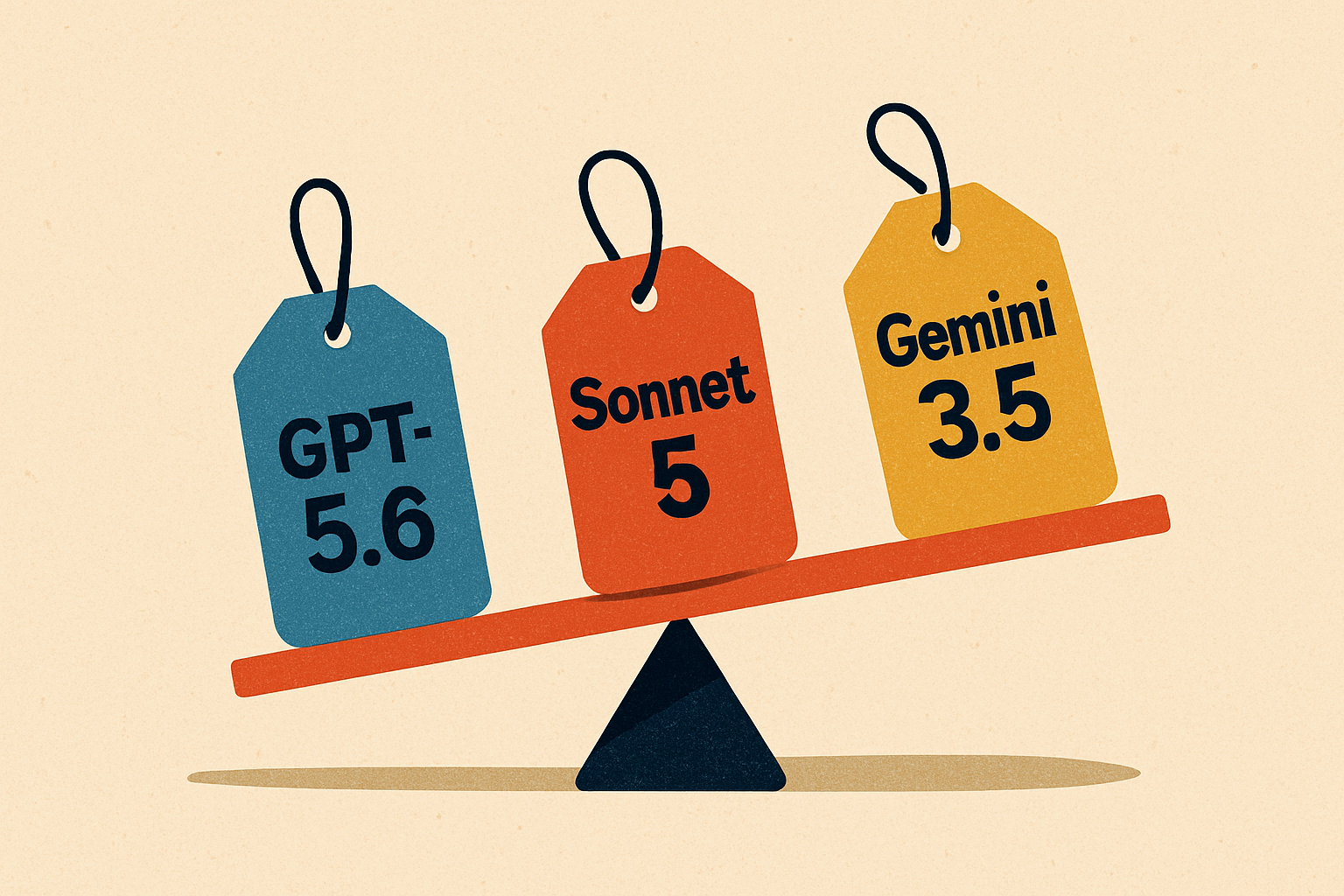
OpenAI shipped GPT-5.6 as Sol, Terra, and Luna on July 9 after a 12-day government review — three models at three prices, not one. The founder question isn't 'is it better,' it's 'which tier does each job in my product deserve.'
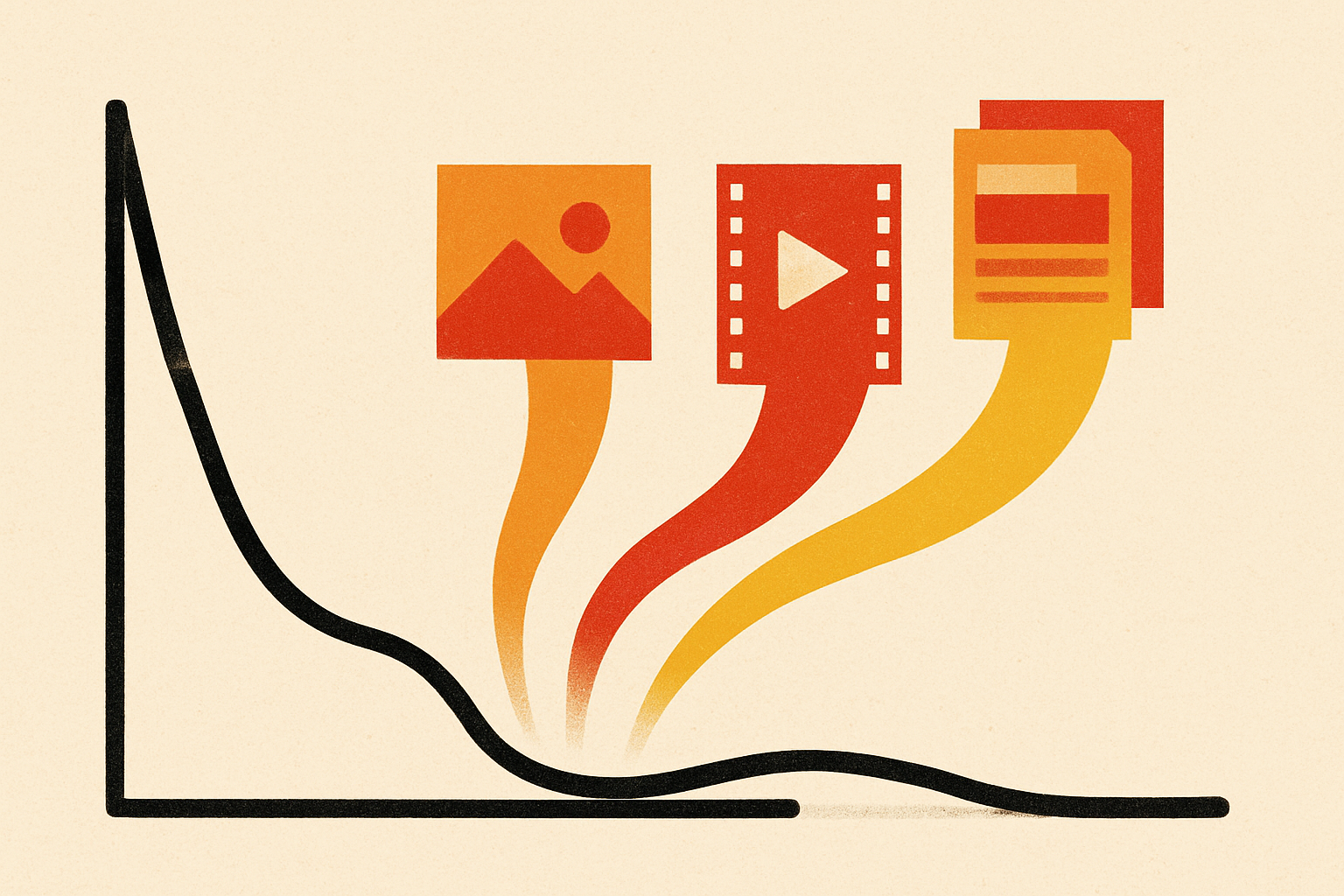
Between June 30 and July 9, the cost floor for AI images fell to ~$0.03 per thousand, video got a per-second API price, and pro image editing gained layers and precision selection. Here's the founder's read on each — and the catch.
Norm Ai hit $1.2B, Z.ai shipped a coding agent that undercuts Claude Code by 82%, and this week's rounds show exactly which bets VCs are still writing. What happened, why it matters to you, and what to do about it.
This week the cost of frontier intelligence fell again, the funding concentrated where AI meets the real world, and the tools founders build with started building themselves. What happened, why it matters, and what to do about it.
Four frontier models shipped in a week and dragged inference prices to $1–$2.50 per million tokens. Here's the concrete way to re-route your traffic and bank the margin — in an afternoon.
Anthropic shipped Sonnet 5 as near-Opus agent intelligence at $2/M input, and made it the default on Free and Pro. The founder move isn't 'upgrade' — it's re-pricing your escalation ladder, because a new tokenizer quietly eats ~30% more tokens.
Early-July's release radar for builders, verified against primary sources: a new default Claude model with a 1M-token window, coding agents that now open their own PRs, a breaking Vercel AI SDK major, Electron-free desktop apps from Deno, a free ~90% speedup for local models on Macs — and a Node.js security release you should not ignore.
Early July's AI news, read for founders: GPT-5.6, Grok 4.5, and an open-weight Chinese model pushed intelligence toward commodity pricing — while $19B compute leases and an 89% revenue share show the money pooling harder than ever. Here's what to actually do about it.
Read for founders: an agent ran a $100M fundraise, another drove a robot from a single camera, Meta's put image-gen in every chat, and a public GitHub issue tricked an AI agent into leaking private repos. The pattern — autonomy and liability now scale together — and what to do before you ship one.
OpenAI, Anthropic, and Google all shipped new tiers this week. The headline is a price war in the mid-tier — but one of the cheaper numbers is quietly not as cheap as it looks.
Your agent can be HTTP-200, fast, and cheap while being completely wrong. The metrics that keep a web app healthy are blind to the ways an agent actually fails.
An agent isn't a stateless web service — it's a long-running, resumable process. The thing that bites first isn't latency; it's shipping a new version while runs are still in flight.
Loading every tool definition upfront doesn't just burn context — it tanks tool selection. The fix has three shapes: tool search, tool-RAG, and code execution. Pick by what you retrieve, and when.
The open-versus-closed debate in agents is framed as a fight over frameworks — but the real leverage moved to a layer where the distinction barely applies.
The agentic-payment protocols are sold as fraud protection, but a signed mandate is not a security feature — it is a liability instrument, and it quietly removes the one escape hatch that made e-commerce trustworthy.
Three moves in three days built out the agent economy at the layers that were still missing — its silicon and its money — while the UK's safety institute published the first government-documented case of frontier agents taking unsanctioned action on the live internet. The rails are arriving faster than the guardrails.
The move from things that talk to things that do is being sold as an upgrade — but a few hard-won ideas got left on the curb, and not all of them deserved it.
When every frontier model clusters within a tenth of a point on the same saturated tests, the leaderboard stops measuring quality and starts measuring marketing.
The industry has standardized how agents reach out to the world and ignored the harder question of what they keep — and that asymmetry is not an accident.

 🎧 Listen
The Wire
🎧 Listen
The Wire