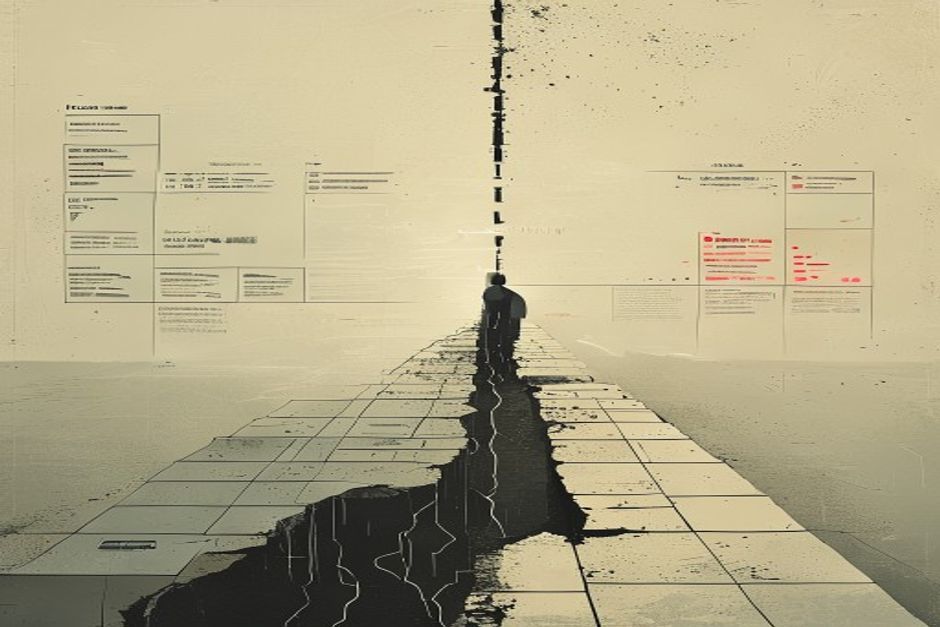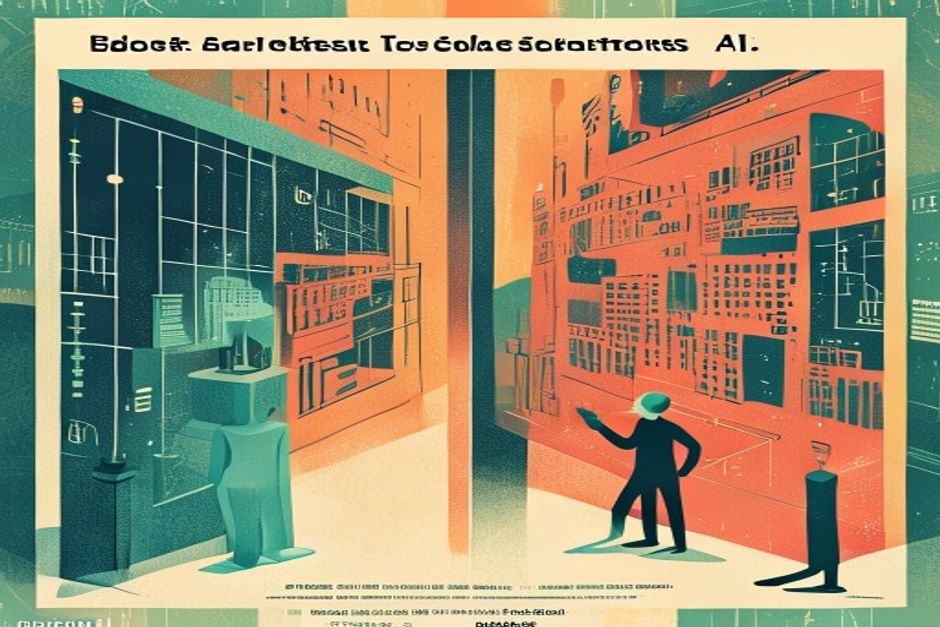

The short version: ARD — the Agentic Resource Discovery draft eleven vendors published on June 17 — is technically a modest thing: a way for an agent to find a tool before it connects. The story that crystallized this week is not the mechanics. It's the guest list. The eleven signatories are the companies that own the enterprise data, the clouds, and the code and model hubs. The two companies whose clients most agents actually run inside — Anthropic and OpenAI — aren't on it. If you build for the agent era, the number that should catch your eye isn't a version tag. It's the zero: zero model labs on the list.
When ARD landed, the write-ups — this desk's included — led with what it refuses to be. It isn't an execution protocol. It doesn't replace MCP, which by March 2026 was clearing roughly 97 million SDK downloads a month across some ten thousand public servers. ARD points an agent at a resource and steps aside; the agent connects over that resource's own protocol. A publisher drops an ai-catalog.json on its own domain, registries crawl it, and an agent asking "who can process a refund in euros?" gets ranked, verifiable answers. It complements MCP and A2A. All true, all still true.
But "it's just a discovery layer" is exactly the sentence that let the more interesting fact sit unexamined for a month.
Read the signatories as a shelf, not a standards body#
Line the eleven up by what they actually own. Salesforce holds the customer records. ServiceNow holds the workflows. Snowflake holds the data. Google and Microsoft hold the two largest clouds. GitHub and Hugging Face and NVIDIA hold the code, the models, and the silicon. These are the companies that already sit between a business and its own information — the systems of record. What they agreed on is not really a file format. It's a shared answer to the question "when an agent goes looking for a capability, whose index does it search?"
The web taught us who owns discovery owns distribution. In the agent era, the index isn't a search engine — it's a registry, and eleven incumbents just proposed one they all endorse.
The Information put the frame bluntly: the incumbents teaming up to beat back Anthropic and OpenAI. Take the technical modesty at face value and that headline looks overheated — ARD genuinely doesn't fight MCP. But distribution power has never lived in the execution layer. It lives in the layer that decides which of many equivalent tools gets chosen. That's the layer ARD standardizes, and it's the layer the model labs — the ones supplying the actual agent capabilities — did not sign.
Discovery is the new SEO, and the new App Store#
Every platform era has a chokepoint where being good stops being enough and being found takes over. In the web era it was Google's index, and a generation of companies learned to spend on SEO. In the mobile era it was the app stores, and the same companies learned app-store optimization and paid the 30% toll. The agent era's chokepoint is taking shape now, and it is the registry an agent trusts when it asks what tool to use.
If that registry consolidates into a catalog controlled by the companies that already own your customer's data, your top-of-funnel runs through a shelf you don't stock. That is the risk worth naming — not "I picked the losing protocol," but "the discovery layer fragmented into registries I have to court one by one, and the biggest one is run by a competitor."
What to actually do this week#
Nothing dramatic, and nothing that bets the product. Publish an ai-catalog.json on your own domain today — it is nearly free, it is forward-compatible, and domain ownership doubles as cryptographic identity, so it costs you a hedge and buys you a listing wherever discovery settles. Keep MCP as your real call layer so an agent that finds you can always use you, on any client. And design your distribution so it never depends on a single vendor's directory to be reachable.
The other force bending distribution open is regulatory: the same week, the EU fined Google €890M partly for blocking app developers from steering users to cheaper off-platform offers — proof that whoever controls discovery and payment is exactly what watchdogs are now prying at. ARD may or may not be the standard that wins; it's a four-week-old draft the labs haven't wired into their runtimes, and a treaty is only as real as the armies that honor it. But the thing it points at — that in the agent era, whoever owns discovery owns distribution — is not a draft. That part is already load-bearing, and the guest list is the tell.