xAI shipped Grok 4.5 on July 8–9 — its first model built specifically for coding and agentic work, trained jointly with Cursor, and priced to make headlines: $2 per million input tokens, $6 output, cached input at $0.50. Every launch post led with that rate card, because a cheap sticker is the easiest story to tell.
It's also the wrong number to obsess over if you run agents. Here's the one that actually decides your bill.
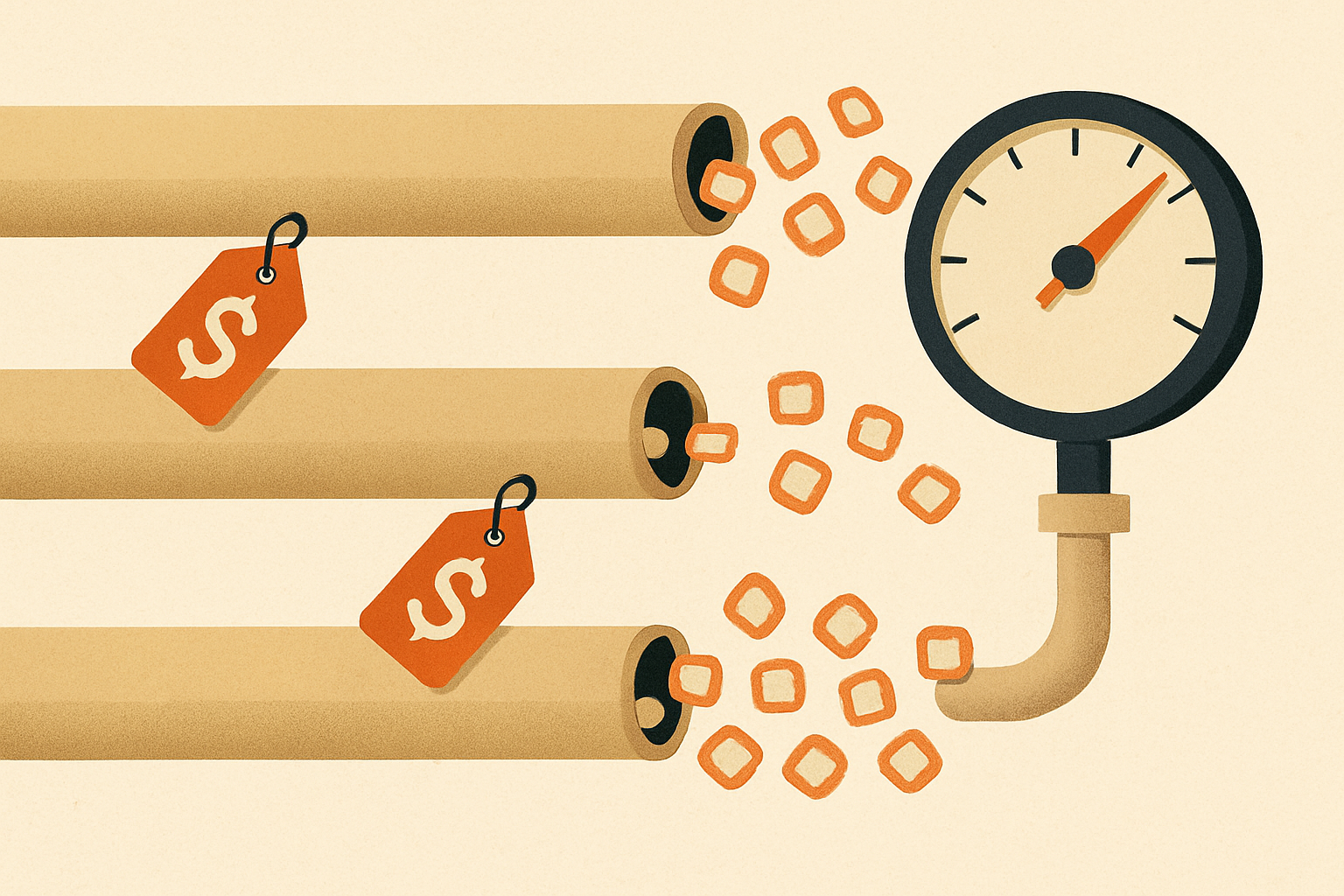
The bill isn't the rate card — it's the rate card times the token count#
An agent doesn't send one prompt and stop. It loops: read the task, call a tool, read the result, reason, edit, retry. A single "resolve this issue" run can burn tens of thousands of output tokens before it's done. So your real cost per task is:
cost per task = (tokens burned to finish the task) × (price per token)
Sticker price is only the second factor. The first — how many tokens a model spends to actually complete the job — varies wildly between models, and it's the one nobody prints on the pricing page.
Grok 4.5's genuinely interesting claim lives in that first factor. On SWE-Bench Pro, it reportedly resolves a task using about 15,954 output tokens on average — roughly 4.2× fewer than Opus 4.8 (max) at ~67,020. It's not just cheaper per token; it's less verbose per task.
Why that stacks into a much bigger gap than the price war implies#
The two factors multiply, and here Grok 4.5 wins both at once. Take just the output side of a SWE-Bench-Pro task on the reported figures:
- Grok 4.5: 15,954 tokens × $6 / 1M ≈ $0.10 per task
- Opus 4.8 (max): 67,020 tokens × $25 / 1M ≈ $1.68 per task
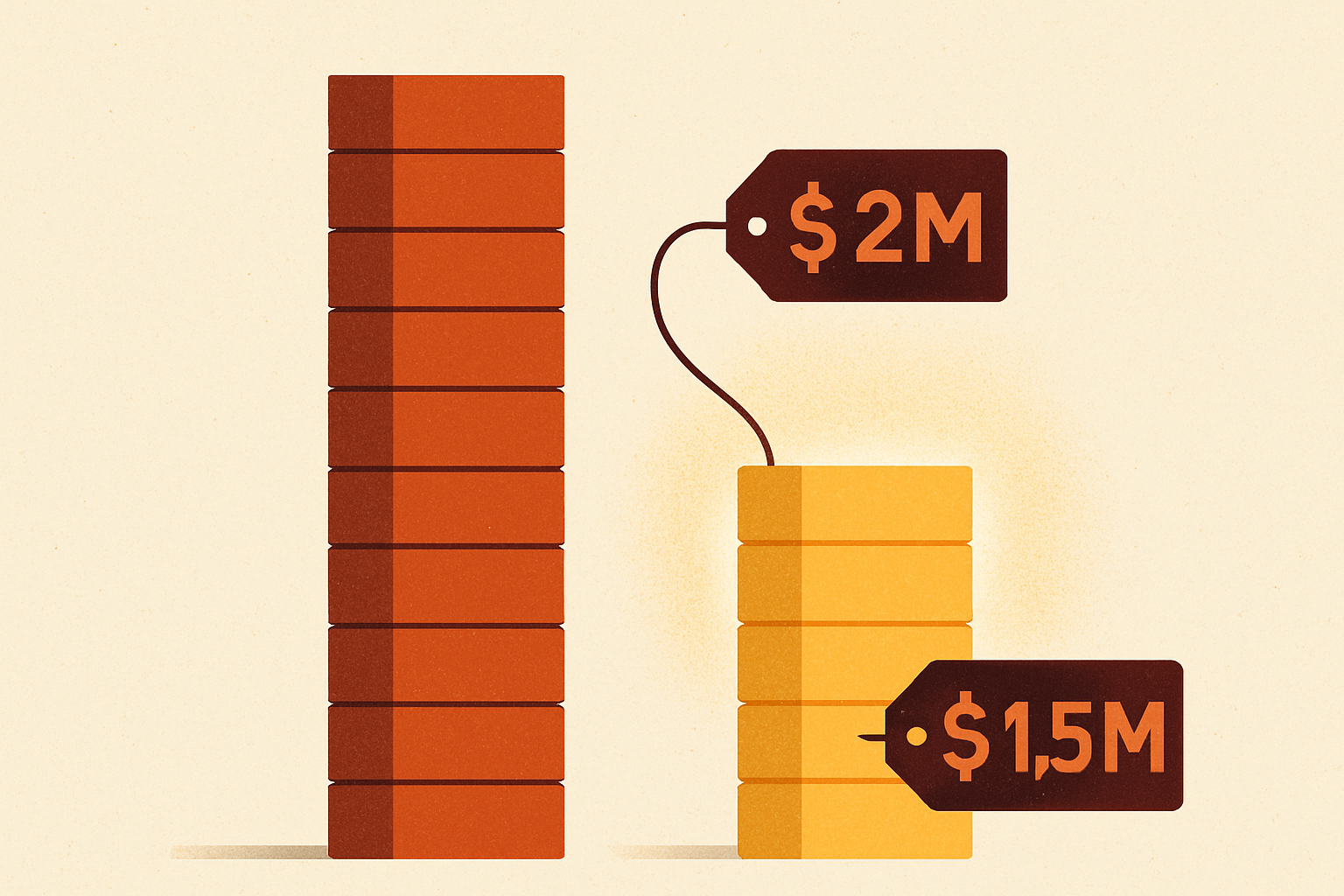
That's roughly a 17× gap in output cost per task — far wider than the ~4× you'd guess from comparing $6 to $25 alone. The rate ratio (~4.2×) and the token ratio (~4.2×) compound. (This is illustrative arithmetic on the output tokens only; your real gap depends on input-token mix, retries, and how each model behaves on your tasks.)
A model that costs more per token can be cheaper per task. Verbosity is a price you pay without seeing it on the invoice.
The corollary is the part founders miss: comparing models by sticker price is the wrong benchmark for agent workloads. A "cheaper" model that rambles, re-reads context, and retries can quietly cost more per finished task than a pricier, terser one. The price war is fought in dollars-per-million; your P&L is settled in tokens-per-task.
The catch: a context cliff hiding in the 500K window#
Grok 4.5 advertises a 500K-token context window, which is roomy for agent state and large repos. But there's a step in the pricing: requests above 200K tokens jump from the $2/$6 tier to a higher-context $4/$12 tier. Long agent runs that accumulate history, tool outputs, and file contents can cross 200K without you noticing — and double their per-token rate when they do. Trim, summarize, or cap context to stay under the line where you can.
It's also fast — served at around 80 tokens/second — so the efficiency shows up as latency, not just cost. Fewer tokens to finish a task means the task finishes sooner, too. And it's already where builders work: default model in xAI's Grok Build CLI and in Cursor across all plans as of July 9.
What to do this week#
- Change your model-comparison metric. Stop ranking candidate models by $/million. Rank them by cost-per-completed-task on a fixed set of your agent jobs — sticker price × the tokens each model actually burns to finish. (If you haven't put a ceiling on runaway runs yet, start by capping agent spend per run.)
- Instrument tokens-per-task. Log output tokens per completed run per model. It's the single number that tells you whether a "cheaper" model is actually cheaper for you. Most teams don't track it, which is why they over-pay by routing on rate card.
- Route around the 200K cliff. If you adopt Grok 4.5, put a context budget in front of it. Crossing 200K silently doubles your rate — the opposite of why you picked a frugal model.
- Verify frugality on your traces before you switch. Token efficiency is workload-dependent. A benchmark average is a hypothesis, not your bill. Run a bake-off on your own tasks before rerouting production traffic.
The takeaway#
Grok 4.5's low price is real, but it's the least interesting thing about it. The story for anyone building on agents is that the frontier is quietly competing on tokens-per-task, not dollars-per-token — and that's the axis your unit economics actually ride on. The labs will keep shouting rate cards at each other (it's the same demand-side price war playing out from the model side); your job is the unglamorous half they don't advertise: cut the bill you can actually see by measuring how many tokens it takes to get the work done.