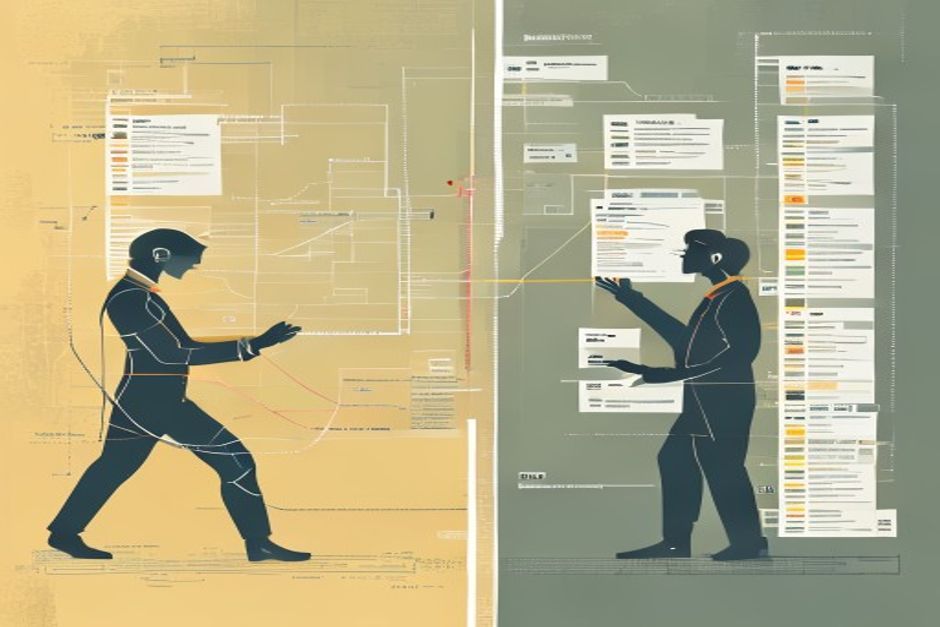
Both Honeycomb and Langfuse can watch your agent, but they answer different questions. Honeycomb comes from production APM: it treats your agent as one moving part of a live system and puts its spans on the same timeline as your database, your queue, and your latency — so when a multi-agent run misbehaves in production, you see where in the whole stack it broke. Langfuse comes from the LLM side: it's built around prompts, per-model token and cost tracking, and LLM-as-a-Judge scoring, so your day is versioning a prompt, grading outputs, and watching spend. Pick Honeycomb if your hard days are production incidents; pick Langfuse if your hard days are prompt-and-quality iteration. Because both speak OpenTelemetry, you can instrument once and switch — or run both.
The one-screen answer#
- The fork is workflow, not features. Honeycomb is production-observability lineage: debug an agent tangled into a real system. Langfuse is LLM-native: iterate on prompts, grade outputs, track cost.
- Honeycomb correlates the agent with everything else. Its Agent Timeline renders a multi-agent, multi-trace run as one view and connects that AI-layer detail to your full-stack telemetry — DB, queue, latency.
- Langfuse lives in the prompt-and-eval loop. Versioned prompt management, per-model cost tracking, and LLM-as-a-Judge evaluators, all open source and self-hostable.
- You can instrument once. Both ingest OpenTelemetry, so the backend is a config choice. Start with one, add the other when a second workflow starts to hurt.
Honeycomb: agent observability with an APM bloodline#
Honeycomb didn't start as an LLM tool. It's a production observability company — co-founded and led by CEO Christine Yen — and in May 2026 it extended that platform to agents. That lineage is the whole point. When your agent calls a model, then hits your Postgres, then drops a job on a queue, then waits on a slow downstream API, Honeycomb already knows how to show you that entire chain. The agent is just new spans on a system you were already watching.
The mechanism is OpenTelemetry, not a proprietary SDK. Honeycomb ingests the OpenTelemetry GenAI semantic conventions (v1.40.0) and makes gen_ai.* attributes first-class, so model evaluations, tool executions, MCP calls, and agent steps are all observed alongside your ordinary service telemetry. Nothing is bolted on; the agent data flows through the same pipe as everything else.
The headline feature for founders is Agent Timeline. It organizes telemetry around an agentic conversation and renders a multi-agent, multi-trace run as a single view — a flight recorder for a run that might span several agents and dozens of tool calls. Crucially, it connects that AI-layer visibility to full-stack observability, which is exactly the thing a pure LLM tool can't do: tell you that the agent "failed" because your queue backed up, not because the prompt was wrong.
Pricing is event-volume based, not per-seat. The free tier includes up to 20 million events per month with a single environment, and the Pro plan starts around $150/month for 50M events. For a solo founder, 20M events is enough to run real production agent observability before paying anything. We go deeper in our Honeycomb agent observability deep dive.
Langfuse: LLM-native from the first commit#
Langfuse comes at the same problem from the model side. It's an open-source LLM engineering platform (YC W23) built around the things you do when the quality of the output is the product: manage prompts, evaluate responses, track cost. Where Honeycomb assumes you have a production system to correlate against, Langfuse assumes you have a prompt to iterate on.
Three capabilities define the daily loop. First, versioned prompt management — you edit prompts in a UI, version them, and pull them at runtime with server- and client-side caching so iteration doesn't add latency. Second, evaluations: LLM-as-a-Judge scorers, datasets, experiments, and human annotation, so "is this output good?" becomes a number you can track across versions. Third, per-model cost tracking: Langfuse ships with predefined popular models and tokenizers (OpenAI, Anthropic, Google), infers token usage and cost automatically, and lets you add custom model prices at the project level.
On money, Langfuse is hard to beat: the core is open source under a permissive license and free to self-host via Docker or Helm, with no usage limits and no licensing cost. If you'd rather not run it, Langfuse Cloud offers a free Hobby tier and paid plans above it. It also speaks OpenTelemetry, in addition to native SDKs and framework integrations, which is what makes the "instrument once" story work. If you want the practical setup, see our guide to instrumenting an agent with Langfuse over OTel, and for how it stacks against its closest open-source peers, our Langfuse vs Laminar vs Arize Phoenix comparison.
Instrument once, switch later#
Here's the part that de-risks the whole decision. Both tools accept the same OpenTelemetry instrumentation. You emit gen_ai.* spans and export them via OTLP; the backend is a URL and a header. Same agent, either destination:
from opentelemetry import trace
from opentelemetry.sdk.trace import TracerProvider
from opentelemetry.sdk.trace.export import BatchSpanProcessor
from opentelemetry.exporter.otlp.proto.http.trace_exporter import OTLPSpanExporter

# Point at Honeycomb...
exporter = OTLPSpanExporter(
    endpoint="https://api.honeycomb.io/v1/traces",
    headers={"x-honeycomb-team": "YOUR_HONEYCOMB_KEY"},
)

# ...or point the SAME app at Langfuse — only the endpoint/headers change:
# exporter = OTLPSpanExporter(
#     endpoint="https://cloud.langfuse.com/api/public/otel/v1/traces",
#     headers={"Authorization": "Basic <base64 pk:sk>"},
# )

provider = TracerProvider()
provider.add_span_processor(BatchSpanProcessor(exporter))
trace.set_tracer_provider(provider)

# Your agent emits gen_ai.* spans exactly the same way for either backend.
Because the instrumentation is standard, choosing a backend today does not lock your agent's code. You can even export to both at once and let each tool do what it's good at.
When each one wins#
Choose Honeycomb if your agent is stitched into a real production system and your worst days are incidents. If the failure you fear is "the run hung and I don't know whether it was the model, the DB, or the queue," you want the tool that puts all three on one timeline. Founders shipping agents that take real actions against real infrastructure should start here.
Choose Langfuse if your day is prompts, output quality, and spend. If your worst days are "this prompt regressed and I can't tell which version," or "which model is quietly eating my margin," you want versioned prompts, LLM-as-a-Judge scores, and per-model cost tracking. Founders whose product is the quality of the generation should start here — and the self-hostable, no-usage-limit economics are a genuine advantage when you're pre-revenue.
Run both if you've felt both pains. Fan your OpenTelemetry spans to Langfuse for the eval loop and to Honeycomb for production correlation. The shared standard means this costs you configuration, not a rewrite.
The founder close#
Don't pick the tool with the longer feature list — pick the one that matches the workflow that dominates your week. If you spend it debugging an agent tangled into production, Honeycomb's APM lineage is the honest fit. If you spend it tuning prompts and grading outputs, Langfuse's LLM-native loop is. And because both are OpenTelemetry-native, the decision is refreshingly low-stakes: instrument once, ship, and let your actual daily pain — not a pricing page — tell you which backend, or both, you end up living in.