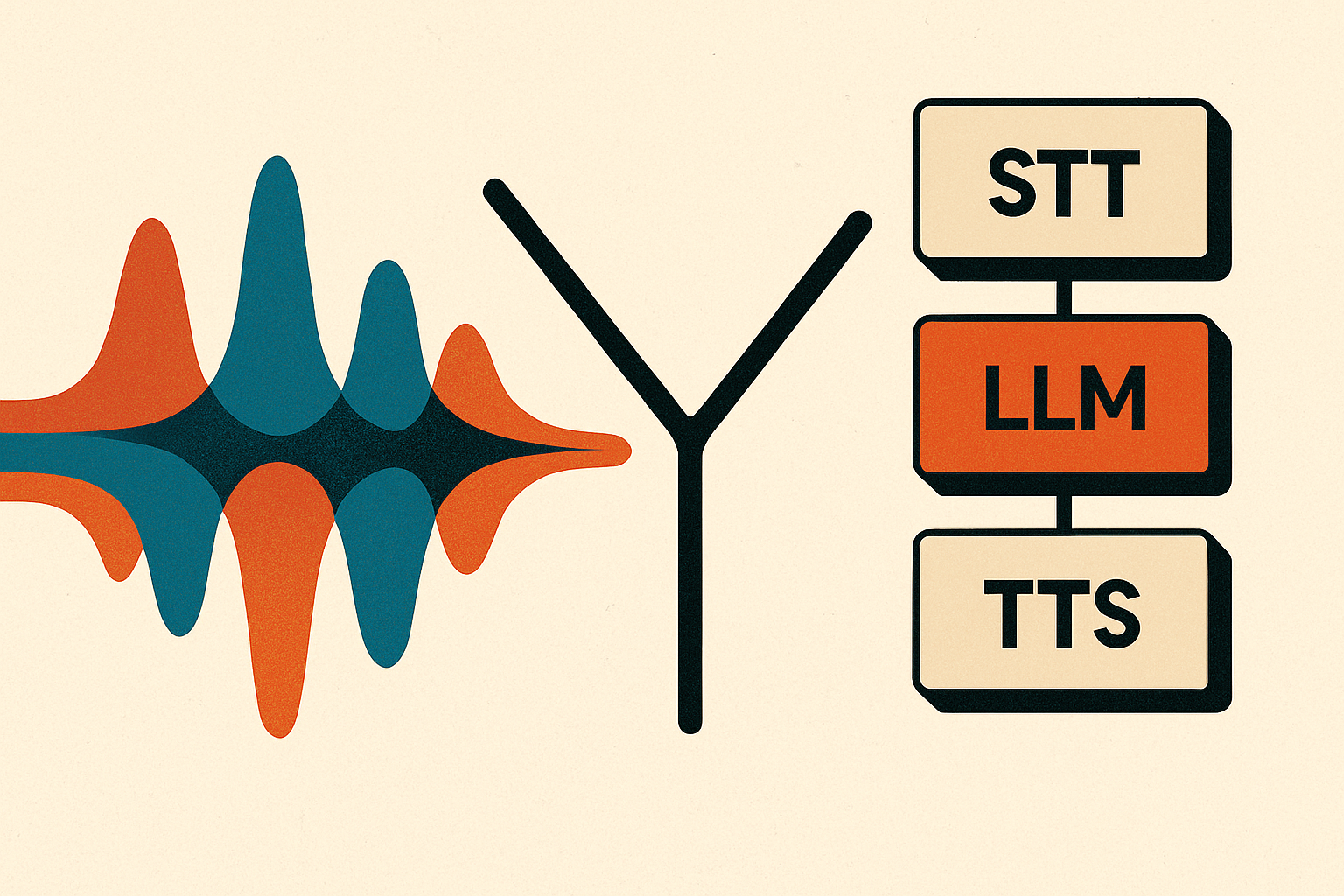

The short version: on August 6, 2026, Omilia — a voice-AI company for regulated enterprises, founded in Larnaca, Cyprus in 2002 — raised a $67M Series B led by Expedition Growth Capital. The eye-catching number isn't the raise. It's that Omilia grew live ARR more than 10x, past $60M, since its Series A — without raising any equity in between (EU-Startups, Yahoo Finance). For our readers, the story isn't voice. It's the architecture underneath: Omilia owns its core stack instead of orchestrating a chain of frontier-LLM APIs — and that choice is why the growth compounded.
| Question the raise answers | Answer |
|---|---|
| Can a capital-light AI company still get funded big? | Yes — $67M on top of revenue-funded 10x growth |
| Does owning your stack beat renting frontier models? | For the right job — narrow, high-value, latency- and compliance-bound |
| Is this the summer's dominant funding story? | No — it's the counter-story to the 'control the agents' rounds |
The number that matters is the one between the rounds#
Read past the headline. Omilia's Series A was a ~$20M round in 2020; before that, the company grew profitably for roughly 18 years with no institutional capital at all. Since that Series A, it grew live annual recurring revenue by more than 10x, to over $60M — and raised nothing in between (FinSMEs, CMSWire).
That ordering is the whole point. Most AI raises in 2026 fund a search for revenue. This one lands on top of revenue that already exists and already compounds. The $67M is fuel for a proven engine — a first U.S. office in the second half of 2026, more go-to-market — not a bet that the engine can be built.
The strategic tell: own the core, don't orchestrate it#
Omilia's own framing is worth quoting because it's a design decision, not a slogan: "owning the core of that stack, rather than orchestrating across third-party components." Its platform is built on proprietary voice AI rather than reselling a third-party LLM. That's what lets it resolve high volumes of concurrent voice interactions at sub-second latency, and it's what makes a compliance posture spanning FedRAMP, PCI-DSS, SOC 2, HIPAA, and GDPR credible enough that buyers like Capital One, Discover, RBC, Taco Bell, the UK's Department for Work and Pensions, and PSEG sign.
Here's why that matters if you'll never build a voice product in your life. Rent-the-intelligence and own-the-stack aren't a voice question — they're the build-vs-buy decision every AI company makes, just visible at extreme scale:
- Margin. Every call to a rented model pays a per-token toll, set by the vendor. Own the layer your busiest workload runs on and that toll disappears — which is precisely how revenue outruns cost enough to fund the next stage yourself.
- Latency and uptime. When you orchestrate someone else's API, your SLA is inherited. When the SLA is the product — and for enterprise voice, it is — you have to own the pipeline to guarantee it.
- Compliance. You can't certify what you don't control. Regulated deals die on data-residency and audit gaps you can only close if the critical layer is yours.
For a concrete, current version of this exact trade-off, see our breakdown of OpenAI's Presence model versus the Realtime API, and the LiveKit vs Pipecat vs Vapi comparison for where the orchestration seams actually sit.
The counter-narrative to 'control the agents'#
Zoom out and Omilia is the mirror image of the summer's loudest funding theme. The nine-figure rounds — the ones we covered in 'Control the Agents' Won the Summer — all assume the same world: everyone builds agents on rented frontier models, so the money is in governing them. Omilia assumes a different world for its one job: for a narrow, high-value task, owning the model and the pipeline beats orchestrating someone else's.
Both can be right, because they're bets on different jobs. But if your entire product is a thin wrapper over a frontier API, Omilia's $67M is a quiet warning: the layer you rent is the layer someone else can price you out of, throttle, or deprecate. Ask which single layer of your stack is worth owning — and whether your current architecture would even let you own it.
What a founder should take from this#
Not "go train your own model." Almost no one should. The transferable lessons are narrower and more useful:
- Capital efficiency is a strategy you choose, not luck you get. Pick a job valuable enough that owning the critical layer pays for itself, and let revenue fund the next stage instead of the next round.
- Own exactly one layer — the one that decides your margin, your SLA, or your compliance. Rent everything else. Owning the whole stack when you didn't need to is how capital-light companies become capital-hungry ones.
- Sell to buyers who pay for reliability. Regulated enterprises are slow, but they pay for latency and compliance, and that revenue is durable enough to compound between rounds — which is the only way a raise ever lands on top of growth instead of chasing it.
The flashy version of AI in 2026 is a rented frontier model and a governance layer to babysit it. Omilia is a $67M reminder that the unflashy version — own your core, sell reliability, grow on revenue — is still very much fundable.