The one-line version: Microsoft announced Project Perception on July 27, 2026 — an agentic security platform that goes to public preview August 3 inside Microsoft Defender — and shipped its first security model, MAI-Cyber-1-Flash, alongside it. You, a team of one, will almost certainly never buy this. But there's one number inside it worth more than the whole product: the 90/10 model split that lets Microsoft claim frontier-grade results at half the cost. That trick is yours for free.
What actually shipped#
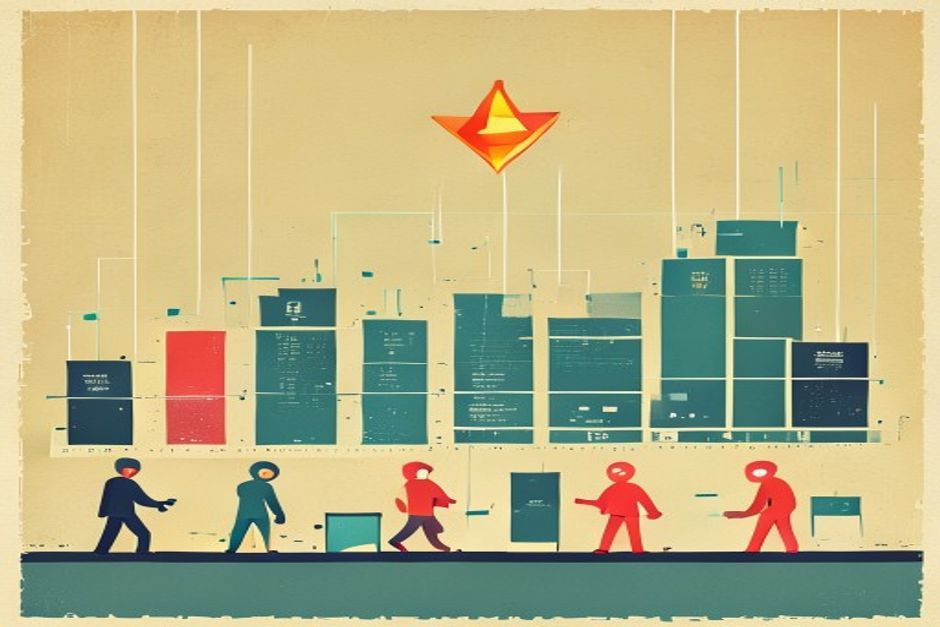
Project Perception organizes AI agents into three teams that pass work between them:
- Red agents probe your systems the way an attacker would, surfacing reachable attack paths.
- Blue agents investigate what the red team found and decide which risks actually matter.
- Green agents remediate and harden, so the same gap doesn't reopen.
The pitch is that a finding flows red → blue → green through orchestrated workflows without a manual handoff, with humans kept in control of high-impact calls. Microsoft describes the reasoning as "evidence-grade… not pattern matching," and prices it by consumption in Security Compute Units. That's the enterprise packaging. Skip it.
The number that matters#
Here's the part a founder should underline. Inside Microsoft's MDASH vulnerability-management harness, MAI-Cyber-1-Flash is paired with OpenAI's GPT-5.4, and Microsoft reports the combination hits 96% on the CyberGym benchmark — about 12 points above Anthropic's Mythos — at 50% of the cost of its previous configuration.
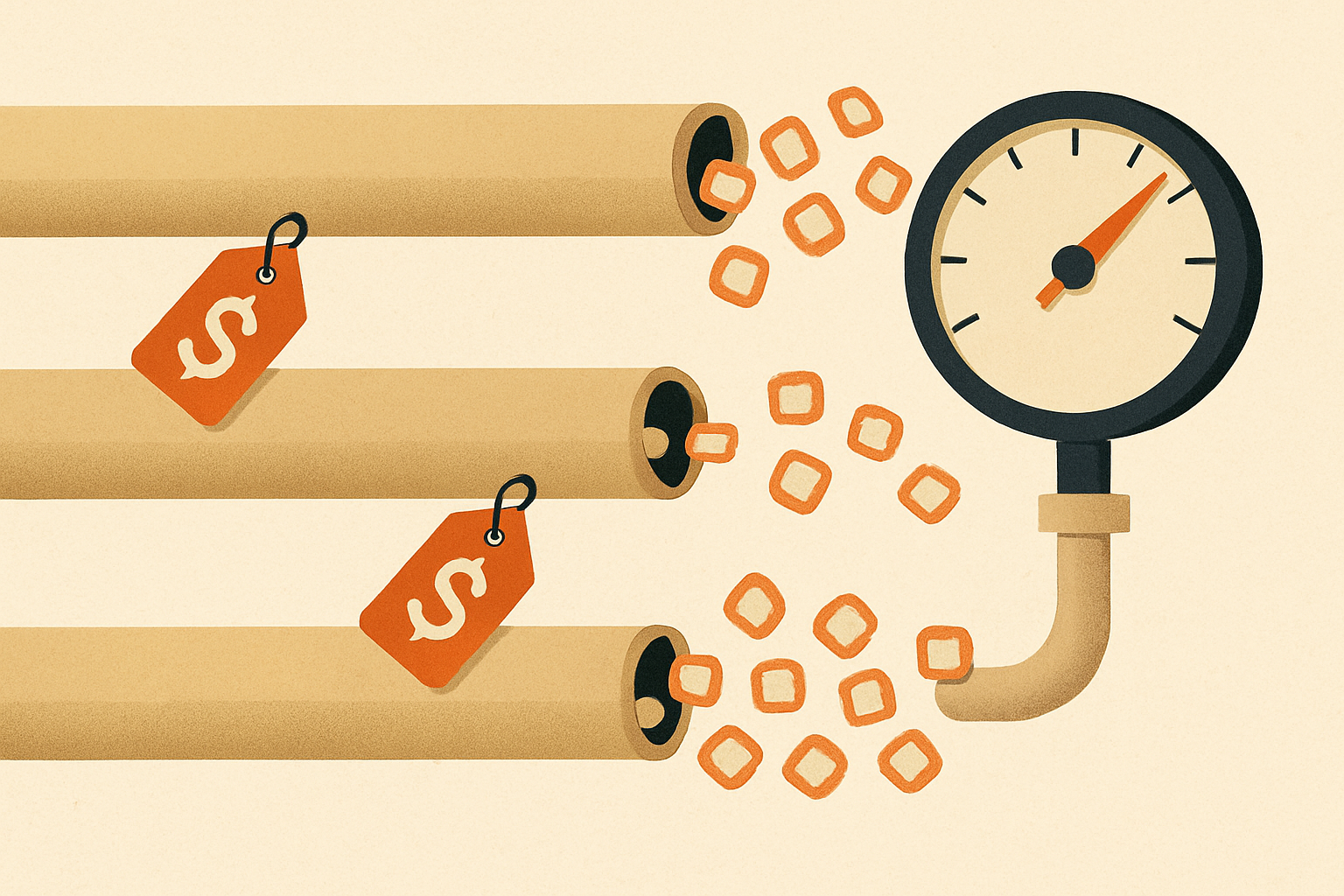
How does a cheaper stack get a higher score? Not because the small model is smarter. Because of how the work is divided: MAI-Cyber-1-Flash handles roughly 90% of routine tasks, and the frontier model (GPT-5.4) is only invoked for the hardest ~10%. The expensive model stops being the default and becomes the exception.
The flagship model is not your workhorse. It's your escape hatch. Most teams pay flagship prices for junior-clerk work because they never built the classifier that would route it away.
Why this is the most portable idea in agent-building#
Every solopreneur running an LLM agent has the same bill problem: the model that's good enough for the 90% of easy calls is not the model you need for the 10% of hard ones, but defaulting everything to the flagship is the path of least resistance. Project Perception is a very expensive, very public demonstration that the path of least resistance is also the most expensive one.
The fix is boring and it works: classify the task, then route it. A cheap model (or a small fine-tune) takes the bulk; a difficulty classifier escalates only the tail to the frontier model. Your equivalent of "96% at half the cost" is real — but only if you actually measure your escalation rate and your quality on your own traffic, because the break-even depends entirely on your task mix. We walked through where the budget model stops winning in when to still pay for the flagship; this is the same math, run at Microsoft scale.
And steal the org chart, too#
The red/blue/green structure is worth copying independently of the cost trick. It's separation of concerns for agents: instead of one omniscient agent that probes, triages, and fixes in a single tangled prompt, you get a short pipeline where each stage has one job and a clean interface. That's not just tidier — it's the property that makes a multi-agent system debuggable, which is the entire argument for deterministic orchestration over an all-LLM free-for-all.
For your own product that looks like: an adversarial stage that tries to break your own tools before a user does (red), a cheap triage stage that ranks what's worth escalating (blue), and a fix-and-write-back stage that files the change instead of just flagging it (green).
The founder read#
Two caveats before you act. First, every number here is Microsoft's own, on Microsoft's harness, against a benchmark Microsoft chose — 96% and 50% are claims, not laws. Second, "MAI-Cyber-1-Flash + GPT-5.4" is a combined system; the small model didn't score 96% alone, and neither will yours.
But the shape survives all of that. The agent-security category is where a surprising amount of this year's money is going, and the thing the biggest spender in it just validated is the cheapest thing you can do: stop paying flagship prices for the 90% of work a smaller model does fine. Build the classifier. Route the tail. Measure it on your traffic. That's the whole memo.