
Every RAG demo works. Then you point it at your real documents — a scanned lease with a nested rent-schedule table, a financial statement in three columns, a form somebody photographed at an angle — and the retrieval quality quietly falls apart. The culprit is almost never the embedding model. It's the parser, flattening a table into a meaningless run of numbers before anything downstream ever sees it.
Reducto is a document-parsing API built specifically for that messy last 10% of documents. Here's the practical rundown for a builder deciding whether to wire it in.
What it actually does#
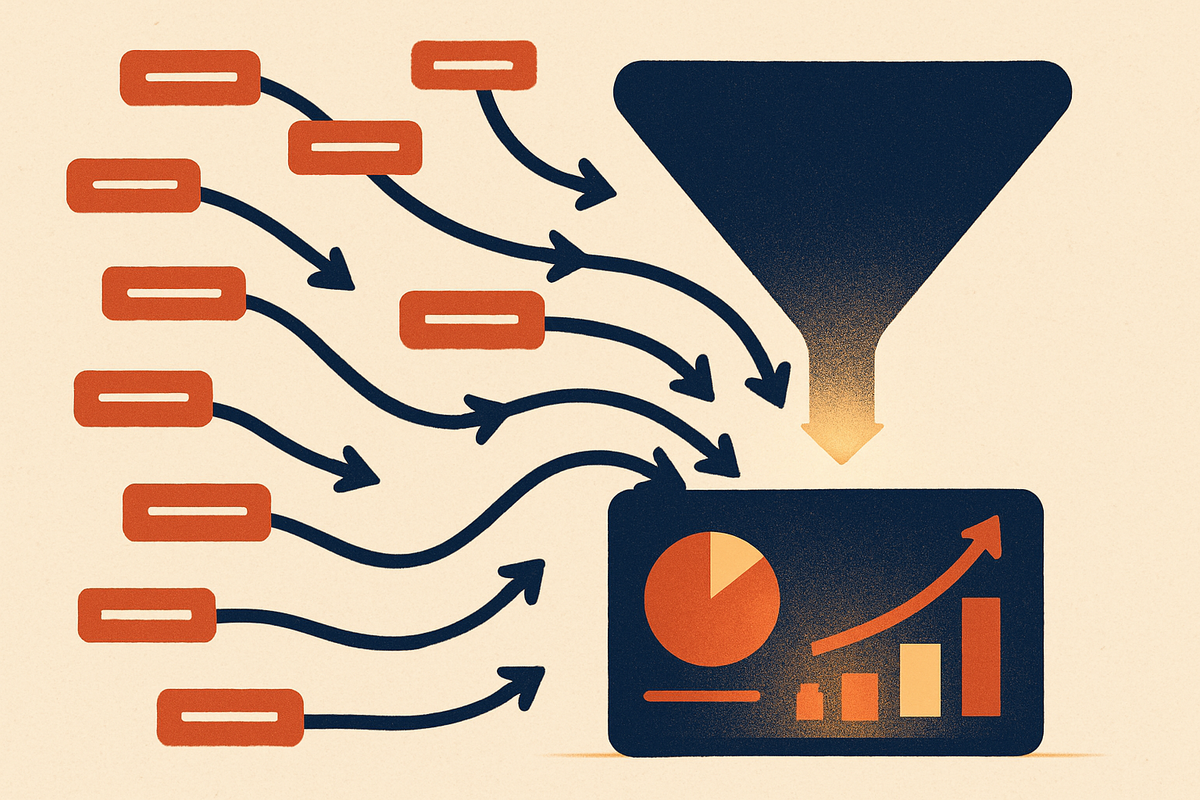
Reducto runs a three-stage pipeline. First, layout-aware computer-vision models detect the regions on a page — tables, figures, text blocks, headers. Second, a vision-language model interprets each region in context, linking labels to values and reading table structure rather than guessing at it. Third — the part that names the product — an agentic OCR loop reviews the output, catches misplaced rows, field-value mismatches, and corrupted tables, and re-processes low-confidence blocks until the result is internally consistent.
The output is structured JSON: typed elements with page positions and confidence scores, plus per-block markdown, chunked for RAG. It handles PDFs, spreadsheets, slides, scans, handwriting, rotated pages, and multi-column layouts — the inputs where rule-based parsers silently fail.
Who's behind it#
Reducto isn't a weekend project. It's raised $108M: an $8.4M seed led by First Round Capital (October 2024), a $24.5M Series A led by Benchmark (April 2025), and a $75M Series B led by Andreessen Horowitz (October 2025). Named customers include Scale AI, Airtable, and Harvey, and it's listed on the AWS Marketplace. That matters for a founder: the API you build a data pipeline on should still exist in two years.
How to start#
It's self-serve — no sales call to try it. Install the official SDK, set a Bearer key, and parse a document by URL or upload:
import os
from reducto import Reducto

client = Reducto(api_key=os.environ.get("REDUCTO_API_KEY"))

response = client.parse.run(
    input="https://pdfobject.com/pdf/sample.pdf",
)
The base URL is https://platform.reducto.ai (EU and AU regions are available), with POST /parse for synchronous jobs and /parse_async for batch. You get back typed, chunked structure ready to embed — you're not writing table-reconstruction heuristics.
The whole pitch is that you stop owning the parsing failures. The correction loop is the difference between "looks fine in the demo" and "still correct on the ugly 10%."
What it costs, and when it's worth it#
Pricing is credit-based and pay-as-you-go. The standard plan includes the first 15,000 credits free — enough to evaluate on real documents — and complexity is auto-classified, so simple pages cost less and you don't hand-pick a tier. Asynchronous batch jobs get a 20% discount with a 12-hour completion guarantee. For regulated data, Reducto is SOC 2 Type II, offers HIPAA BAAs and zero data retention, and deploys in-VPC, on-prem, or air-gapped.
The honest caveat: if your documents are clean digital PDFs, a free open-source parser will get you the same result. Reducto earns its cost on the hard inputs — which is exactly where we put it head-to-head with the alternatives in Reducto vs LlamaParse vs Unstructured vs Docling. Start with your worst 50 documents, not your best.