For most of 2025, the conversation that actually decided whether a company would build on Anthropic's Model Context Protocol didn't happen in engineering. It happened in procurement and legal, and it had nothing to do with the spec. The question was simpler and harder: what happens when the company that owns the protocol changes its mind? Relicenses it. Folds it into a paid product. Steers the roadmap toward its own models. You can love a protocol's design and still refuse to pour three years of integration work into a foundation one vendor can move at will.
On December 9, 2025, that question got a structural answer — and the shape of the answer says more about where the agent stack is headed than any model release this year.
What actually happened#
The Linux Foundation announced the formation of the Agentic AI Foundation (AAIF), a directed fund created to hold neutral, open standards for AI agents. It launched with three anchor projects, and the donor list is the story: Anthropic donated MCP, OpenAI donated AGENTS.md — the README-for-agents convention now used across tens of thousands of repositories — and Block donated goose, its local-first agent runtime. The platinum members underwriting it read like a seating chart of companies that do not, as a rule, hand each other anything: Amazon Web Services, Anthropic, Block, Bloomberg, Cloudflare, Google, Microsoft, and OpenAI.
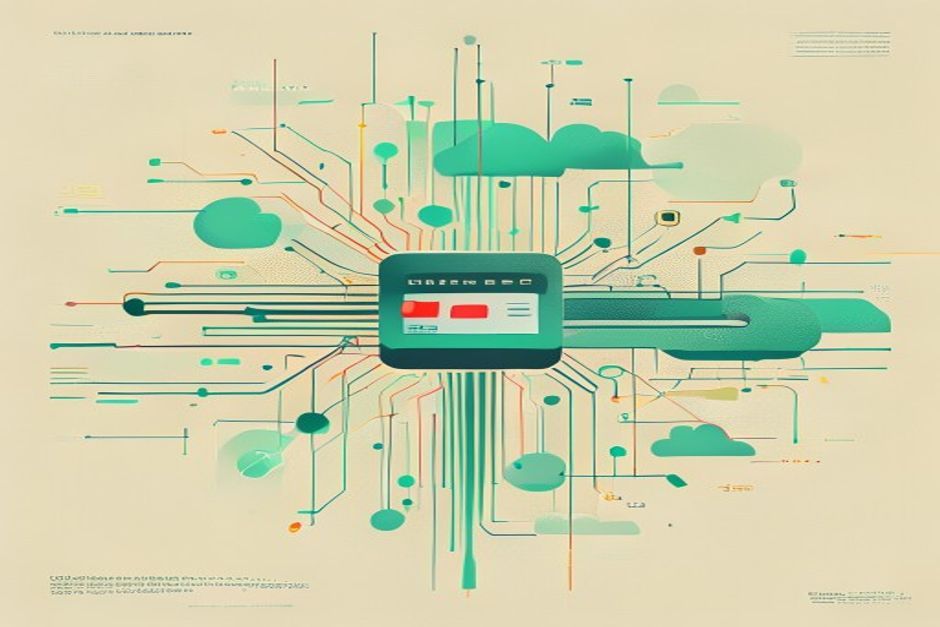
It did not arrive in a vacuum. Google had already donated the Agent2Agent (A2A) protocol to the Linux Foundation in 2025, and that August IBM wound down its competing Agent Communication Protocol and merged its work into A2A. So by December, the two protocols an enterprise architect actually has to bet on — MCP for how an agent reaches tools, A2A for how agents reach each other — sat under the same neutral roof. The map at the top of this piece is the result: the connective tissue of the agent stack, consolidated.
Donation is a strategy, not a gift#
It is tempting to read eight rivals contributing crown-jewel projects to a shared foundation as a sudden outbreak of goodwill. It isn't. It's the only move that makes a protocol win.
A vendor-controlled protocol has a ceiling, and the ceiling is trust. Every potential adopter has to price in the owner's future self-interest, and the bigger the bet, the higher that tax. The way you remove the tax is not by promising to be nice. It's by giving away the steering wheel in a way you cannot quietly take back.
Neutrality isn't a press-release virtue here. It's the feature that shipped in December — the one thing a single vendor structurally could not provide no matter how good its spec was.
The precedent is a decade old and lives one layer down the stack. Google didn't make Kubernetes the default by keeping it; it made Kubernetes the default by donating it to a neutral foundation, which is precisely what convinced its competitors to standardize on it. The agent-protocol scramble of 2025 — A2A, ACP, a dozen would-be standards — just resolved the same way container orchestration did. Not with one vendor's protocol defeating the others, but with the serious contenders agreeing that nobody gets to own the ground floor, because a ground floor with a landlord is one nobody else will build on.
Read the fine print on "neutral"#
For developers the honest answer to "what changes?" is: day to day, almost nothing — and that's the point. The MCP project's own statement is blunt about it. The Linux Foundation "provides a neutral home and infrastructure that allows maintainers to operate independently, and will not dictate the technical direction of MCP." The people deciding the protocol's future are "still the maintainers who have been stewarding it," working through the same SEP process. Nothing about the spec, the cadence, or the contribution workflow resets.
But "neutral host" is a narrower promise than it sounds, and it's worth being precise about the boundary. The foundation holds the trademark and the infrastructure and refuses to steer the technical roadmap — which means it equally does not guarantee any particular roadmap. Governance of the money and the membership runs through an AAIF governing board, and a seat at that table is a platinum-tier commitment. One widely-shared critique put it as open innovation wrapped in gated governance: the code is Apache-licensed and forkable by anyone, but the room where budget, member recruitment, and new-project approval get decided is pay-to-play. Both things are true at once. The protocol is genuinely de-risked from single-vendor capture; the foundation is steered by the same eight names that can afford platinum.
The war didn't end — its front moved up a floor#
The most useful thing to notice is what AAIF did not absorb. Look again at the bottom three rows of the map.
Agent identity — how one agent proves to another which human or org it acts for — has no neutral standard and no foundation home. Agent payments are a live three-way contest between AP2, x402, and the commerce-flavored ACP, each vendor-led. And discovery — the registry problem of finding and trusting the servers an agent should connect to — is nascent and still effectively Anthropic-shaped. These are not afterthoughts; they are where the value and the lock-in of the next two years will accrue.
That's the pattern worth carrying out of December's announcement. Consolidation at one layer doesn't end a standards war; it relocates it to the layer above, where the ground is still unclaimed. The connective tissue is settled and neutral now. The identity, money, and trust layers are wide open — and those are the ones a vendor would most want to own.
So if you've been waiting for the governance question to settle before committing to MCP, it has: build. The reason to hesitate is gone. Just don't mistake a settled floor for a finished building — and watch which name ends up holding the keys to the floors that aren't poured yet.