Anthropic put its non-coding office agent on web and mobile. For a founder who IS the ops team, the pitch is simple — hand off async work, get pinged only when a decision needs you.
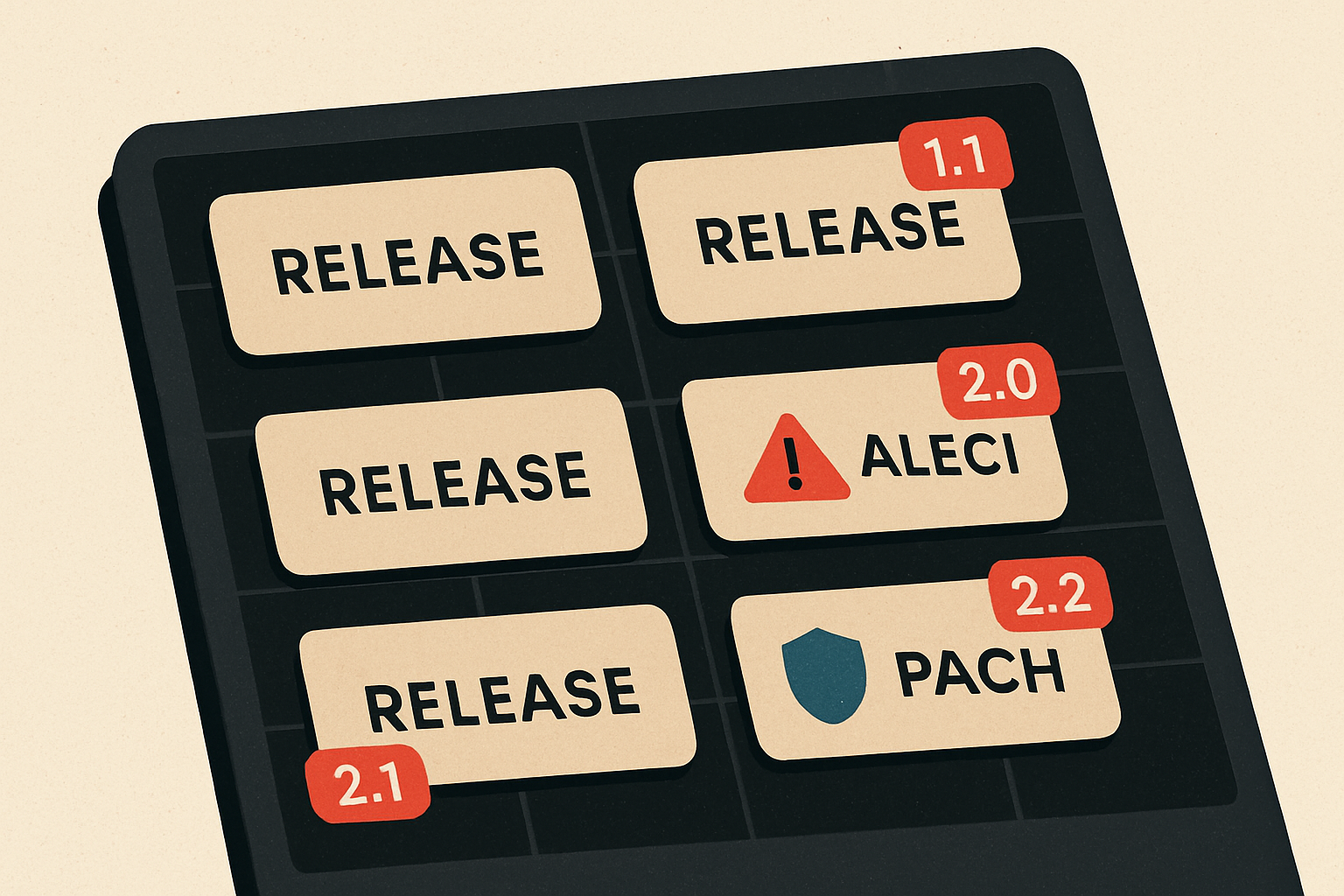
Early-July's release radar for builders, verified against primary sources: a new default Claude model with a 1M-token window, coding agents that now open their own PRs, a breaking Vercel AI SDK major, Electron-free desktop apps from Deno, a free ~90% speedup for local models on Macs — and a Node.js security release you should not ignore.
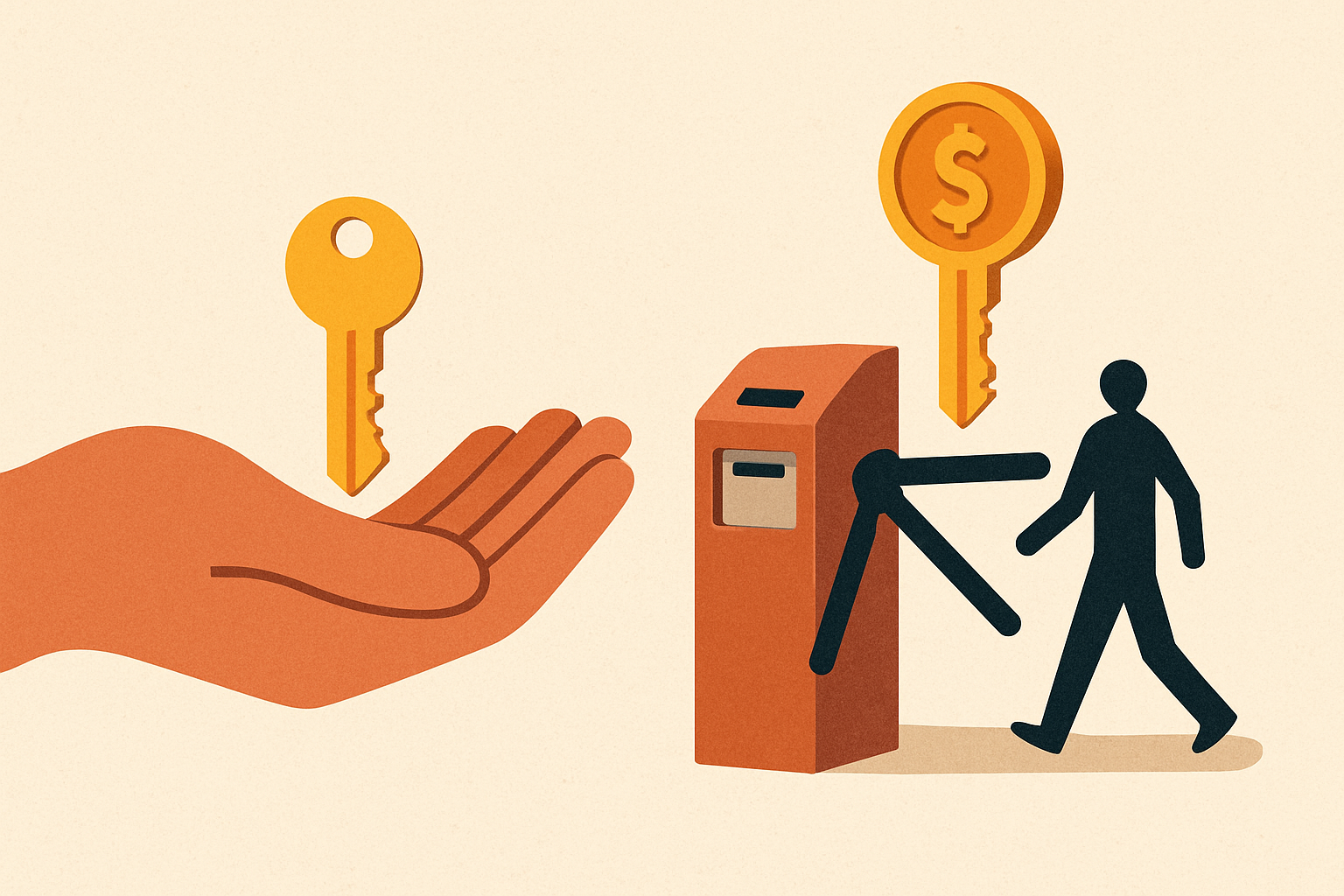
The real choice isn't which login screen looks nicer — it's the billing unit. One charges per user, one charges per returning user, and one charges nothing. Here's how that decides for you.
You don't need to hire a marketer, a support rep, a designer, and a bookkeeper before you have revenue. Here are seven AI-native tools that let one founder run all of it — what each does, who it's for, how to start, and what it actually costs.
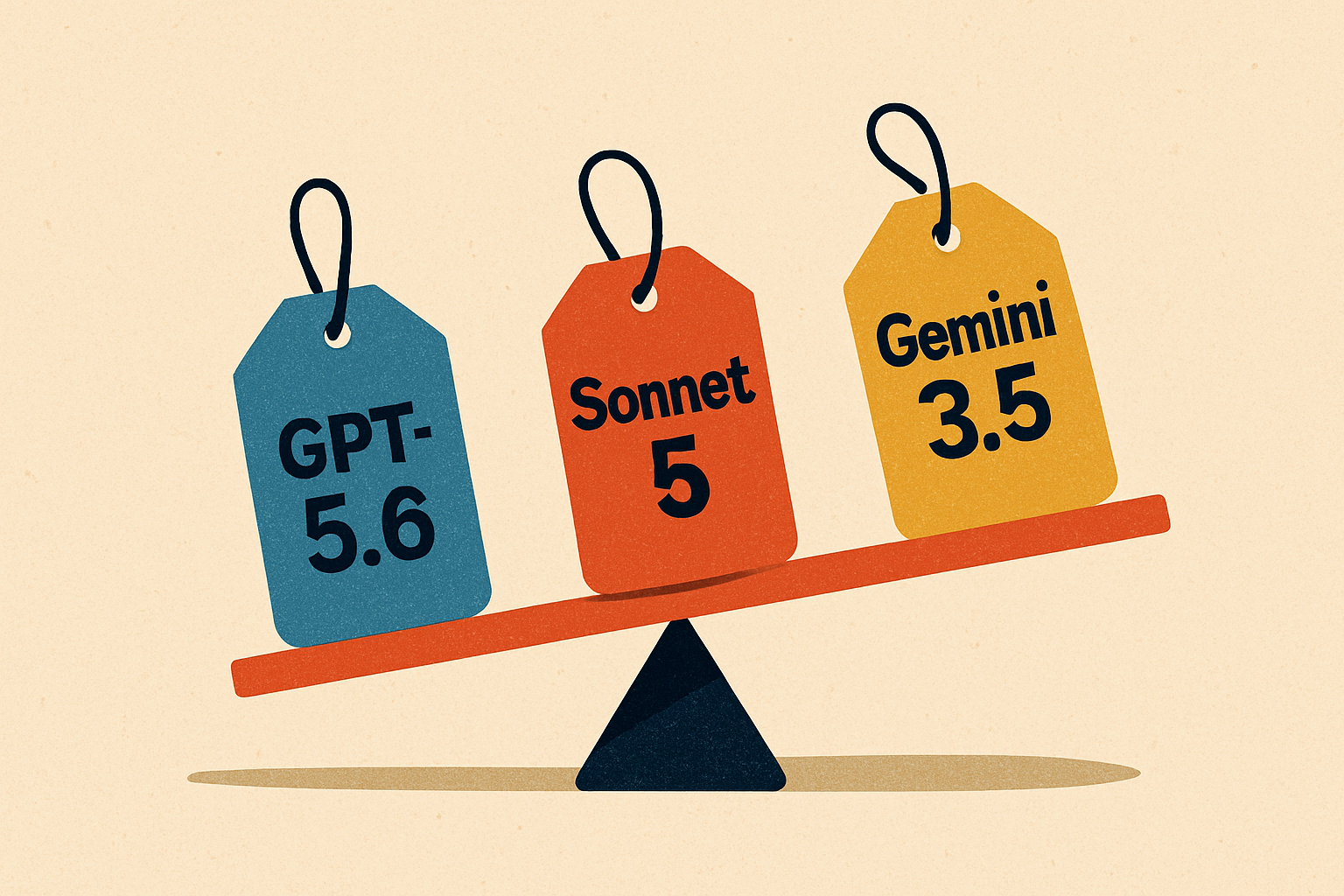
Early July's AI news, read for founders: GPT-5.6, Grok 4.5, and an open-weight Chinese model pushed intelligence toward commodity pricing — while $19B compute leases and an 89% revenue share show the money pooling harder than ever. Here's what to actually do about it.
Model prices are falling, but a falling price only helps if your architecture can capture it. Five open-source tools — a router, a metering layer, a local meeting recorder, an agent multiplexer, and an autonomous pentester — that let a founder actually pocket the savings the price war is handing out.
Read for founders: an agent ran a $100M fundraise, another drove a robot from a single camera, Meta's put image-gen in every chat, and a public GitHub issue tricked an AI agent into leaking private repos. The pattern — autonomy and liability now scale together — and what to do before you ship one.
OpenAI, Anthropic, and Google all shipped new tiers this week. The headline is a price war in the mid-tier — but one of the cheaper numbers is quietly not as cheap as it looks.
The June 29 release flips vLLM's rebuilt execution core on by default and lands a Rust serving front-end. The throughput comes from deleting the CPU–GPU sync, not from a hotter matmul.
HNSW and DiskANN treat an index as a build artifact you periodically tear down and rebuild. SPFresh-class indexes — like Weaviate's HFresh — treat it as a living structure that rebalances as you write. The axis that decides which you need isn't recall. It's your write pattern.
max_num_batched_tokens looks like a throughput setting. It's really a fairness dial between the one user who pasted a novel and everyone else's token cadence.
The library named after TensorRT is deleting TensorRT. The June 30 release candidate is the last to support the compiled engine backend; the next version removes it. The lesson isn't about NVIDIA — it's about which tradeoff keeps winning.
DeepSeek shipped a 1.6-trillion-parameter model under MIT and let vLLM and SGLang publish the serving recipes the same day. The weights are free and portable. The throughput that makes them economical is neither.
Kubernetes already solved "declare a workload, let a mesh own the network." Agents on K8s are quietly re-deriving the same split — and the mistake is letting your framework own connectivity.
Once prefill and decode live on separate GPU pools, you have to decide how many of each. The number isn't a property of your model — it's a property of your traffic, and it drifts.
Text, dense, and sparse now live in a single Pinecone index. But a search request ranks by exactly one score, so 'true hybrid' fusion quietly moves back into your code.
A new benchmark maps the ways agents fail to the spans that would catch them. The GenAI conventions instrument the LLM call and the tool call — and go blind on planning, reasoning, guardrails, delegation, and memory.
The universal advice is 'front-load your static system prompt so it gets prefix-cached.' In a tool-using or RAG agent, one mid-context insertion throws that whole cache away. CacheBlend keeps it anyway.
Once you split prefill and decode onto separate GPUs, something has to ferry gigabytes of KV cache between them. NIXL and Mooncake are the two names you'll meet — and they aren't actually competitors.
The agent-memory leaderboard is fought on LoCoMo, a passive-recall test. MemoryArena couples memory to action — and the same near-perfect systems fall 40 points. The gap isn't inflation; it's the wrong exam.
LiteLLM v1.91.0 quietly started rolling MCP tool-call spend into the same user counters that meter tokens. It's a small line in the changelog and a large move on the board — the half of the agent bill token meters never saw.
The headline reads like a version bump. It isn't. Workflows 1.0 is the moment LlamaIndex's event-driven engine became a package you can install with no LlamaIndex in its dependency tree — and that changes what "using LlamaIndex" means.
LangGraph 1.2 gives a node three ways to fail — timeout, error_handler, drain. They look similar and do opposite things to your state. Mixing them up corrupts compensation.
An unauthenticated RCE and an authenticated cross-tenant IDOR are opposite bug classes. In Langflow they end the same way: a prompt that says 'leak api keys.'
LanceDB 0.34.0 added table branches — writes on a branch don't touch main. The headline feature is substring search; the sleeper is that the hard part of RAG evals was never the metric. It was holding the corpus still.
Full-text search tokenizes your text into words, so it structurally cannot match a fragment inside a token. LanceDB's new FM-Index indexes the raw bytes instead — the exact-match primitive code and log agents were missing.
Deployments assume fungible replicas; StatefulSets assume a numbered set. An AI agent session is neither — it's a singleton with a stable identity, one of a million uniques. The kubernetes-sigs Agent Sandbox project adds the primitive that was missing, plus a warm pool that hands one over in milliseconds.
Sysdig documented an AI agent that ran a ransomware operation end to end. The scary part isn't the model — it's that the attacker's reliability engineering was indistinguishable from yours.
The instinct is to rate-limit per user. An agent breaks that in one move: a single user's run fans out into hundreds of calls, and the ceiling that binds isn't yours — it's the API you're calling.
 🎧 Listen
The Stack
🎧 Listen
The Stack