When your AI coding tool changes hands, 'we don't train on your code' becomes a promise made by a new owner. Here's the defense-in-depth version — the API-vs-chat distinction that decides everything, the zero-data-retention terms to demand, the gateway rule that enforces it, and when the only real answer is self-hosting.
A user closes the tab mid-stream. Your server keeps generating to the last token, billing GPU time to output that reaches no one. Here's why abandoned streams keep running, and how to make the disconnect actually abort the request.
Roughly 10× the throughput of a frontier model on Nvidia GPUs turns a 13-second answer into a 1.3-second one. The number that matters isn't the speed — it's the threshold it crosses: from background agent to in-the-loop product.
The July 9 GA quietly changed the caching contract — explicit breakpoints, a mandatory cache key, a 30-minute floor, and one gotcha that silently skips the write exactly where agents want it most.
Since June 1, Copilot bills by AI Credits, not requests — and added a $100 Max tier for agent-heavy work. The good news for light users: your inline completions are now free. The trap: agent mode burns credits fast.
The preview packages sessions, tools, multi-agent delegation, and HTTP serving behind one chat() call. The one architectural choice it forces on you — client-managed vs server-managed state — reshapes everything downstream.
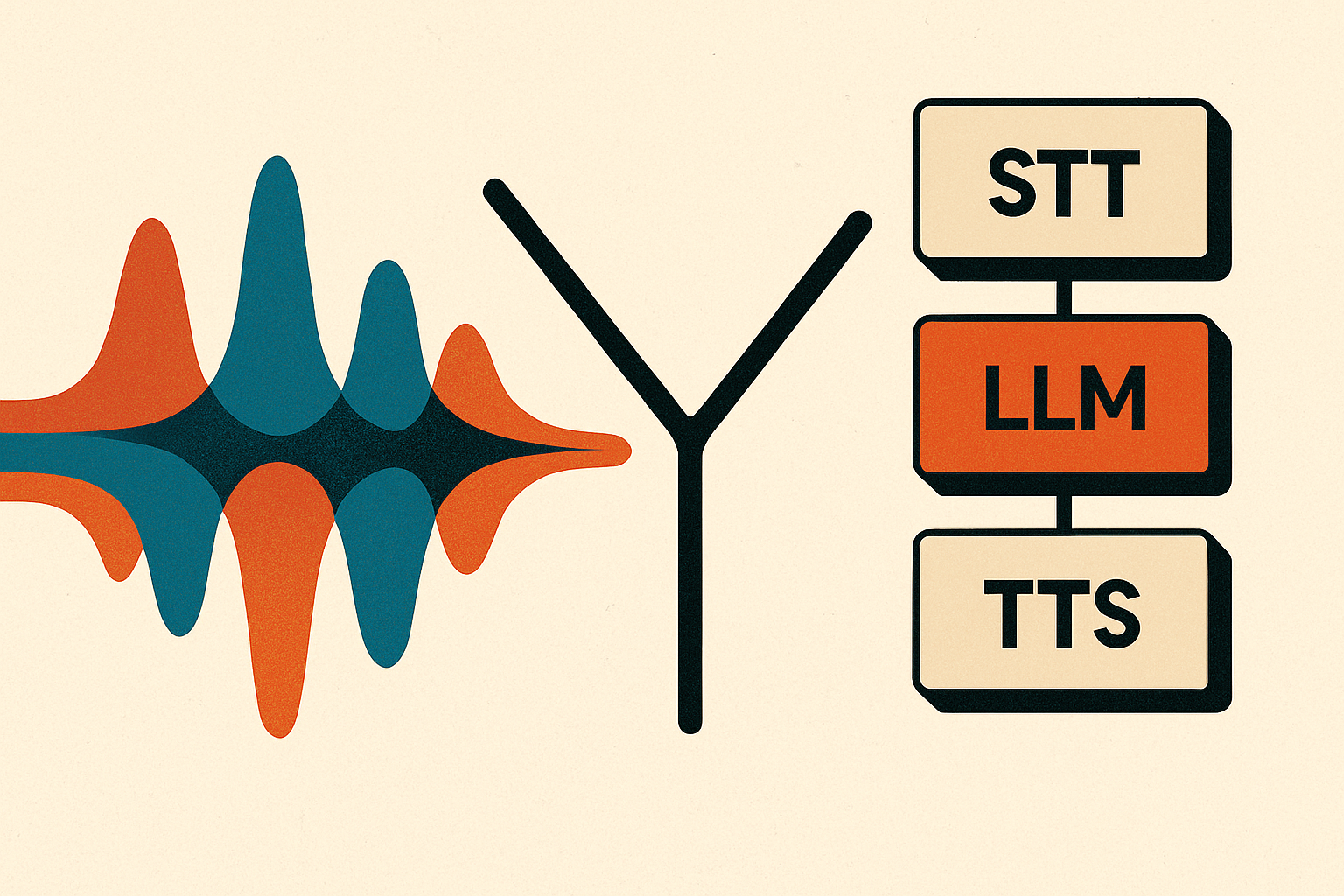
OpenAI's GPT-Live made 'listen and speak at the same time' the story of the week. It's real — and it's ChatGPT-only, no API. Here's what full-duplex actually changes, what it breaks, and the stack you'll still ship.
This week's founder news, read for the pattern: in two months Microsoft, Amazon, OpenAI and Anthropic each built the same business — forward-deployed engineers who move into a customer's company and make the AI actually work. The bottleneck moved, and it tells you where the defensible business now is.
OpenAI now ships an official plugin that runs Codex inside Anthropic's Claude Code. The founder question flipped from 'which agent' to 'what do I standardize on so I'm not locked in' — here's the answer.
Since Claude Code v2.1.172, a subagent can spawn its own subagents — up to five levels deep. The whole feature turns on a single field in your agent definition. Here's the copy-paste build.
OpenAI launched ChatGPT Work on July 9, an agent mode powered by GPT-5.6 that turns scattered notes and drafts into finished docs, sheets, and slides. For solo founders, the unit of AI output just moved from 'answer' to 'artifact.'
The Claude Console now lets you set a lifetime on every API key — 3 hours to Never — and the Admin API reports it as expires_at. Here's how to turn a long-lived secret into a short-lived one without taking prod down at 3am.
Taktile raised $110M to let AI agents approve credit, flag fraud, and clear AML alerts inside banks. Read past the funding: the frontier of what an agent is *for* just moved from answering questions to making decisions someone can be sued over — and that changes what you have to build.
Your agent decides to send an invoice, then persists 'invoice sent.' Two writes, two systems, no atomicity — and the crash always lands in the gap between them. The 20-year-old fix is the transactional outbox.
Microsoft's native compiler is finally stable and it is roughly ten times faster. The catch founders keep missing: there is no stable programmatic API yet, so Vue, Svelte, Angular, and typescript-eslint can't use it on day one.
This week's founder news, read for the pattern: the fastest AI companies aren't just growing, they're accelerating — reaching each new $100M sooner than the last. Mercor, Sierra, Glean, and Lovable put hard numbers on it, and one startup even had an AI run its own funding round.
curl locked its bug-report inbox for a month. A veteran went back to Rails and called it a relief. Developer trust in AI output fell for the first time. Read together, they're one story — and it changes what a founder should build on.
Metered billing on Stripe was quietly rebuilt: the usage-records API is removed, and meters are the only supported path. Here's the working end-to-end flow — meter, price, subscription, usage events, invoice — with real code.
A founder-grade walkthrough: enable pgvector on the Postgres you already run, embed your rows, add an HNSW index, and ship semantic search this afternoon — with the copy-paste SQL and code.
A from-scratch, code-heavy walkthrough: a typed output model, tools with @agent.tool, dependency injection, sync/async/streaming runs, and what V2's capabilities model actually changes in the code you write.
A founder-practical build guide: generate hundreds of unique, indexable pages from one Next.js template with generateStaticParams, per-page metadata, and ISR — and the one rule (data density per page) that decides whether Google indexes them or deletes them.
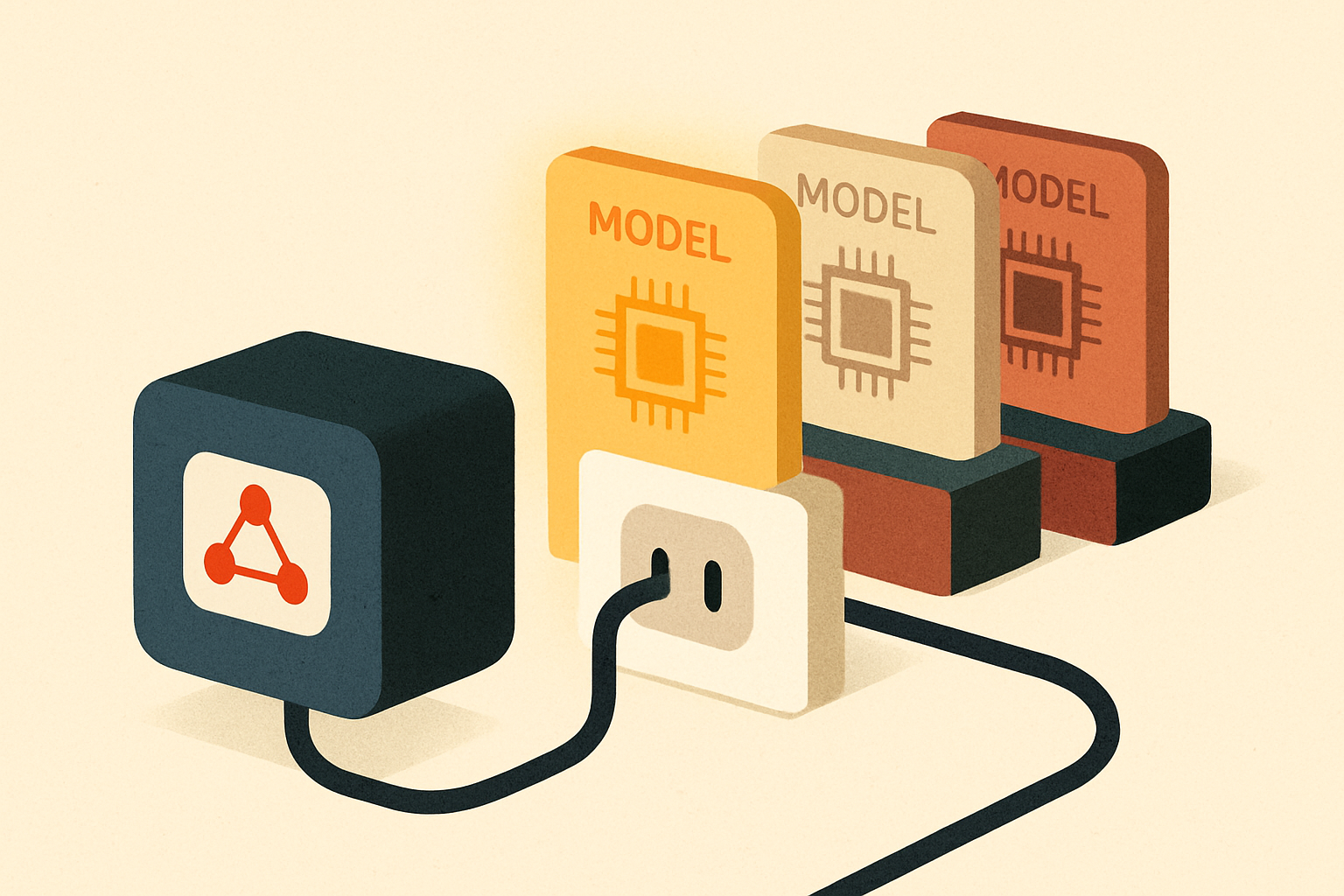
One thin interface between your app and any model provider turns the next price hike, outage, or migration into a one-line config change instead of a rewrite. Here's the whole pattern, in copy-paste TypeScript.
Kimi K2.7 Code landed in Copilot's model picker on July 1. Every other model there is a black box you rent. This is the first one whose weights are on Hugging Face — the first row with a way out.
Jujutsu (jj) keeps Git's storage and pushes to GitHub like nothing changed — but throws out the parts that make Git hard: the staging area, detached HEAD, and merge conflicts that block you. Here's what actually changes when you switch.
Now that AI images cost cents per thousand, the constraint isn't the model — it's the plumbing. Here's a copy-paste pipeline that caches by prompt hash, falls back across providers, and caps your spend before the invoice does.
You wouldn't ship a payments flow with zero tests. Most teams ship LLM features with exactly that. Here's the smallest real eval harness — deterministic assertions plus an LLM-as-judge — with copy-paste promptfoo and Python.
The reflex is to swap in a cheaper model and hope users don't notice. Skip that. The biggest savings never touch the model your customers see — they're in how you send the calls, not which model you send them to. Five moves, ordered by return, none of which lowers quality.
The model you pick today will be overpriced in a quarter. A founder's playbook for keeping your AI stack swappable — the abstraction to route through, the eval set that lets you switch safely, and the three-line code change that future-proofs you.
xAI's new coding model undercuts the field on the rate card. But for anyone running agent loops, the number that actually moves your bill is how many tokens it burns to finish the job.

 🎧 Listen
The Stack
🎧 Listen
The Stack