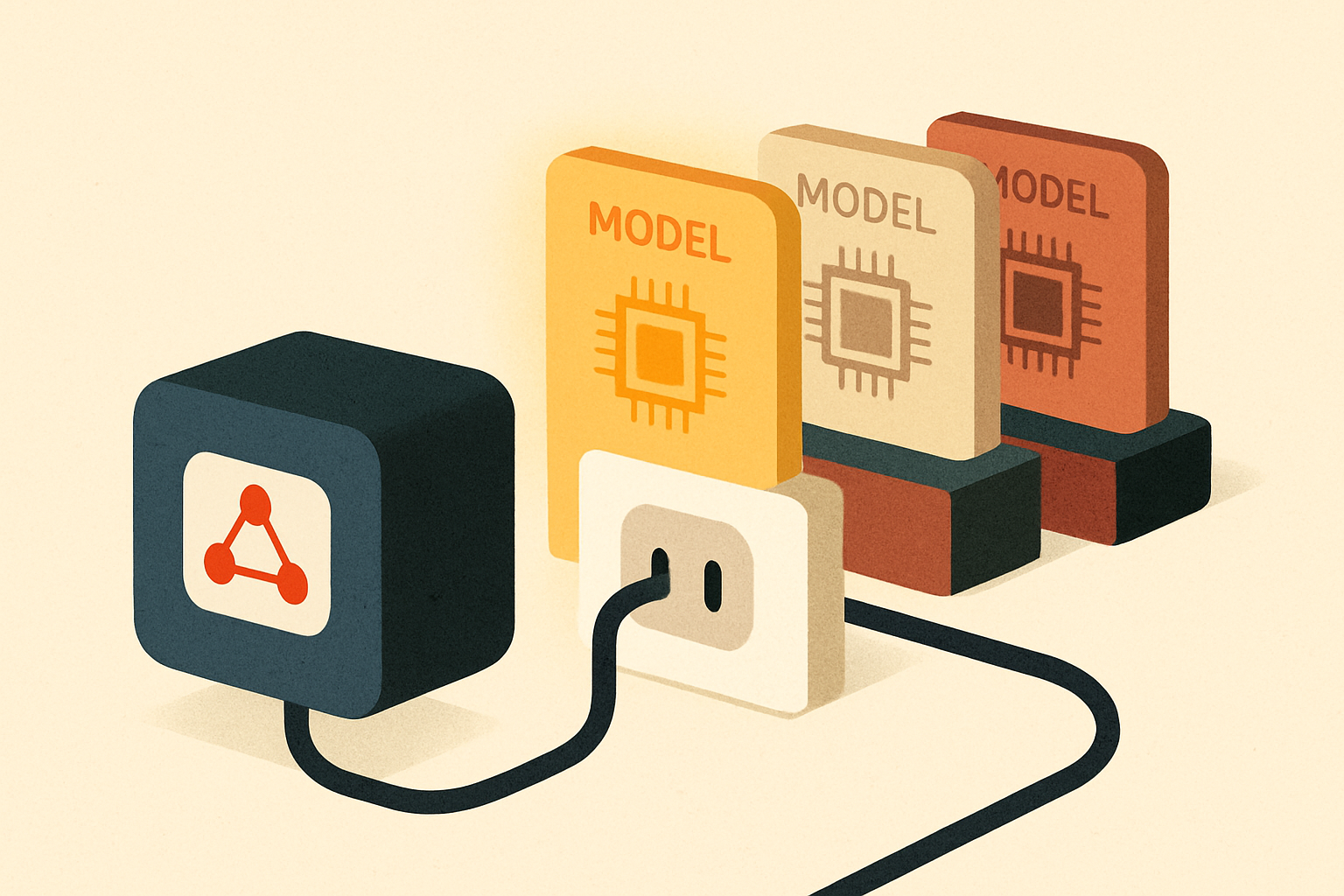
One thin interface between your app and any model provider turns the next price hike, outage, or migration into a one-line config change instead of a rewrite. Here's the whole pattern, in copy-paste TypeScript.
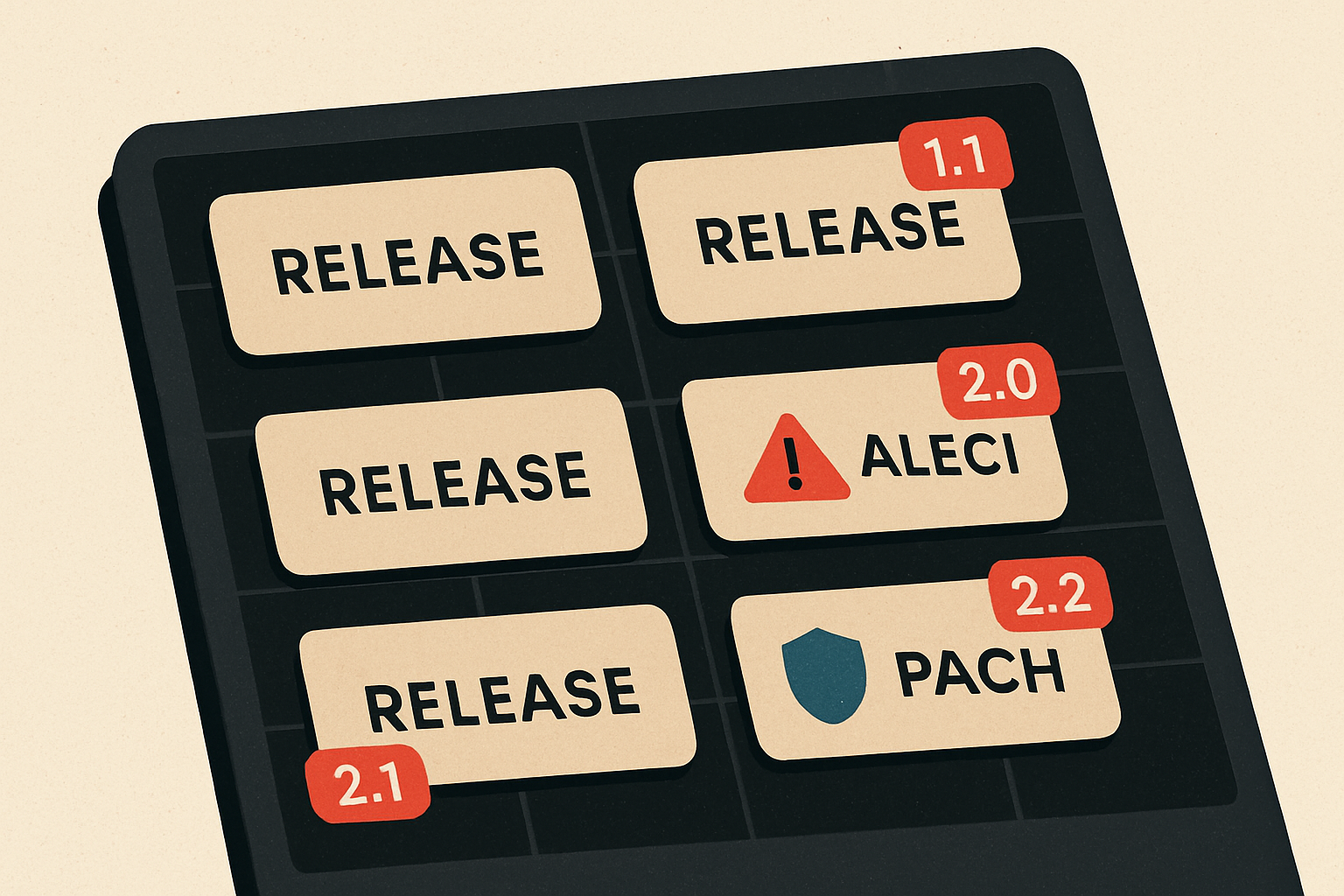
npm v12 stops running dependency install scripts by default — which will red-line your CI the day you upgrade. Here's the copy-paste path from broken install to a committed, code-reviewed allowlist, plus the CI fix.
Kimi K2.7 Code landed in Copilot's model picker on July 1. Every other model there is a black box you rent. This is the first one whose weights are on Hugging Face — the first row with a way out.
Jujutsu (jj) keeps Git's storage and pushes to GitHub like nothing changed — but throws out the parts that make Git hard: the staging area, detached HEAD, and merge conflicts that block you. Here's what actually changes when you switch.
Now that AI images cost cents per thousand, the constraint isn't the model — it's the plumbing. Here's a copy-paste pipeline that caches by prompt hash, falls back across providers, and caps your spend before the invoice does.
You wouldn't ship a payments flow with zero tests. Most teams ship LLM features with exactly that. Here's the smallest real eval harness — deterministic assertions plus an LLM-as-judge — with copy-paste promptfoo and Python.
Everyone says 'route the cheap work to a cheaper model.' Here's the concrete way to prove a cheaper model clears your quality bar — on your own production traffic, with zero user-facing risk — before you move a single request.
A rate card can't tell you cost-per-task — token counts and latency can, and this week's launches proved why. Forty lines of Python to measure the numbers that decide your bill.
The reflex is to swap in a cheaper model and hope users don't notice. Skip that. The biggest savings never touch the model your customers see — they're in how you send the calls, not which model you send them to. Five moves, ordered by return, none of which lowers quality.
If you send the same big system prompt, document, or tool list on every request, you're paying full price for it every time. Here's the four-line change that makes the repeated part cost a tenth as much — with the code, the pricing math, and the one bug that silently turns it off.
The model you pick today will be overpriced in a quarter. A founder's playbook for keeping your AI stack swappable — the abstraction to route through, the eval set that lets you switch safely, and the three-line code change that future-proofs you.
OpenAI's new three-tier GPT-5.6 lineup makes tier routing a live founder decision. Here's the pattern that runs the cheap model first and pays for the expensive one only when it's actually needed.
H1 2026 closed at a record $510B in venture funding; this week Together AI raised $800M, Figma bought a vibe-coding team, Bending Spoons IPO'd up 40%, and a hacker claimed 35GB of Accenture source code. Read for founders.
xAI's new coding model undercuts the field on the rate card. But for anyone running agent loops, the number that actually moves your bill is how many tokens it burns to finish the job.
Three fresh 'good enough' models now fight for the workload that eats most founders' API budgets. Here's how to choose on cost math, context, and latency — not the leaderboard.
This week: OpenAI shipped GPT-5.6 (Sol, Terra, Luna) and GPT-Live to everyone, frontier prices kept falling, and Microsoft and AWS put $3.5B into forcing AI pilots to actually work. Read for founders.
OpenAI shipped GPT-5.6 as Sol, Terra, and Luna on July 9 after a 12-day government review — three models at three prices, not one. The founder question isn't 'is it better,' it's 'which tier does each job in my product deserve.'
Between June 30 and July 9, the cost floor for AI images fell to ~$0.03 per thousand, video got a per-second API price, and pro image editing gained layers and precision selection. Here's the founder's read on each — and the catch.
Norm Ai hit $1.2B, Z.ai shipped a coding agent that undercuts Claude Code by 82%, and this week's rounds show exactly which bets VCs are still writing. What happened, why it matters to you, and what to do about it.
This week the cost of frontier intelligence fell again, the funding concentrated where AI meets the real world, and the tools founders build with started building themselves. What happened, why it matters, and what to do about it.
A step-by-step walkthrough from an empty folder to a running app you can deploy to one $5 server — no Redis, no Node build pipeline, no PaaS. The boring stack, on purpose, with every command.
Four frontier models shipped in a week and dragged inference prices to $1–$2.50 per million tokens. Here's the concrete way to re-route your traffic and bank the margin — in an afternoon.
Anthropic shipped Sonnet 5 as near-Opus agent intelligence at $2/M input, and made it the default on Free and Pro. The founder move isn't 'upgrade' — it's re-pricing your escalation ladder, because a new tokenizer quietly eats ~30% more tokens.
Early-July's release radar for builders, verified against primary sources: a new default Claude model with a 1M-token window, coding agents that now open their own PRs, a breaking Vercel AI SDK major, Electron-free desktop apps from Deno, a free ~90% speedup for local models on Macs — and a Node.js security release you should not ignore.
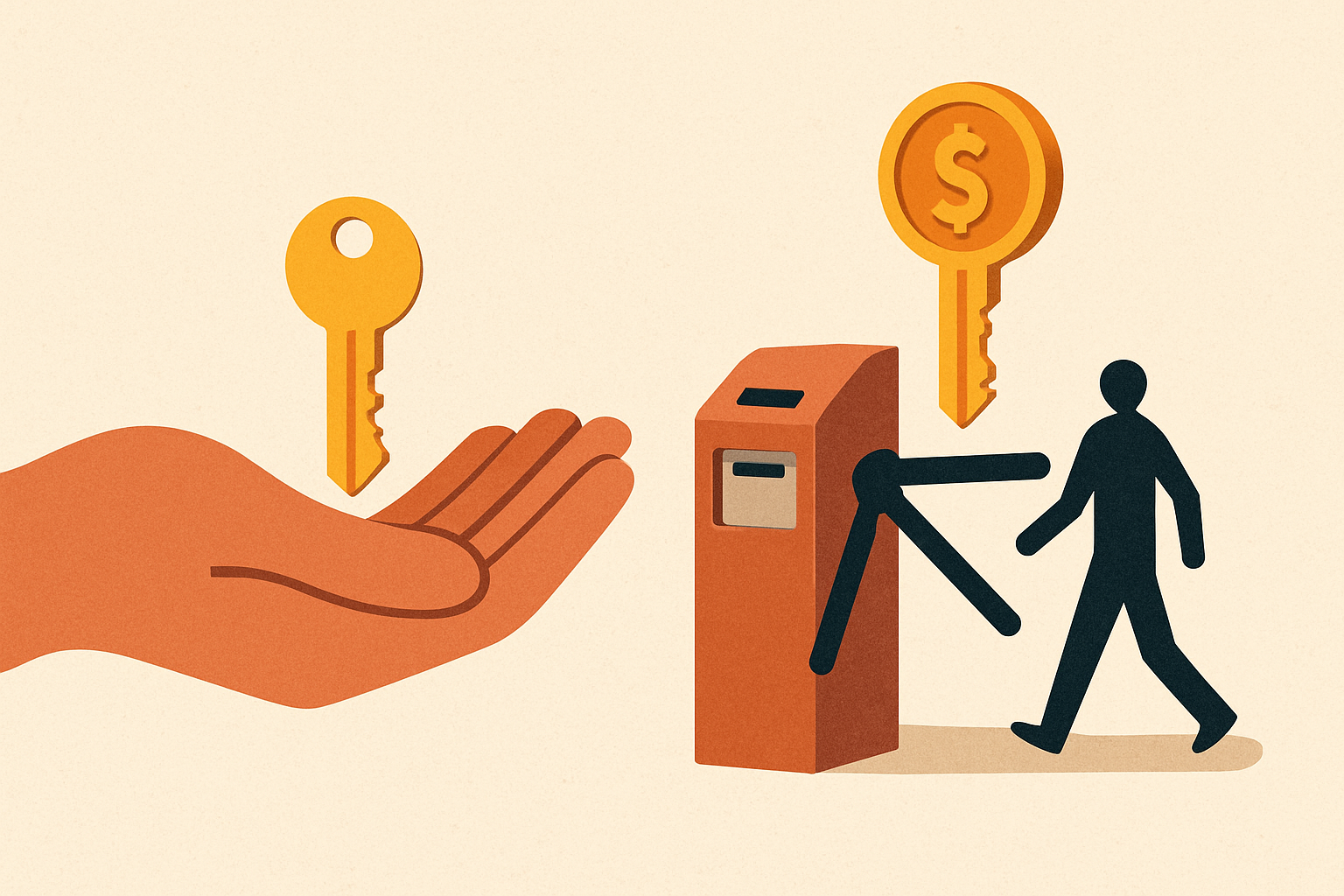
The real choice isn't which login screen looks nicer — it's the billing unit. One charges per user, one charges per returning user, and one charges nothing. Here's how that decides for you.
You don't need to hire a marketer, a support rep, a designer, and a bookkeeper before you have revenue. Here are seven AI-native tools that let one founder run all of it — what each does, who it's for, how to start, and what it actually costs.
Early July's AI news, read for founders: GPT-5.6, Grok 4.5, and an open-weight Chinese model pushed intelligence toward commodity pricing — while $19B compute leases and an 89% revenue share show the money pooling harder than ever. Here's what to actually do about it.
Model prices are falling, but a falling price only helps if your architecture can capture it. Five open-source tools — a router, a metering layer, a local meeting recorder, an agent multiplexer, and an autonomous pentester — that let a founder actually pocket the savings the price war is handing out.
Read for founders: an agent ran a $100M fundraise, another drove a robot from a single camera, Meta's put image-gen in every chat, and a public GitHub issue tricked an AI agent into leaking private repos. The pattern — autonomy and liability now scale together — and what to do before you ship one.
The June 29 release flips vLLM's rebuilt execution core on by default and lands a Rust serving front-end. The throughput comes from deleting the CPU–GPU sync, not from a hotter matmul.
 🎧 Listen
The Stack
🎧 Listen
The Stack