
TypeScript 7.0 Ships the Go Rewrite: 10x Builds Land, but Your Framework Waits for 7.1
Microsoft's native compiler is finally stable and it is roughly ten times faster. The catch founders keep missing: there is no stable programmatic API yet, so Vue, Svelte, Angular, and typescript-eslint can't use it on day one.
5 min
This Week the Money Went to the Open-Model Stack: Ollama, Nemotron 3, and the Bet on Agent Reliability
Three moves in five days — a $65M raise, a family of open models with a 10x-cheaper agent story, and $40M for training environments — all point at the same shift: open weights are commodity, the edge is everything around them.
4 min
VS Code 1.127 Hands Your Agent a Real Browser — and a Sandbox to Run It In
The July 1 release makes browser tools for coding agents generally available and on by default, then wraps the whole agent loop in terminal sandboxing and per-site permissions. Here's what each change does to a solo founder's workflow.
6 min
The Time-to-$100M Is Collapsing — and It Just Reset the Bar for Your Growth Targets
This week's founder news, read for the pattern: the fastest AI companies aren't just growing, they're accelerating — reaching each new $100M sooner than the last. Mercor, Sierra, Glean, and Lovable put hard numbers on it, and one startup even had an AI run its own funding round.
5 min
The Week Three Frontier Labs Shipped at Once — And Money Hit a Record
GPT-5.6, Claude Sonnet 5, Gemini 3.5 Pro, and Grok 4.5 all landed inside eight days while H1 venture funding set an all-time high. What it means for anyone building on top.
4 min
The Week the Defaults Changed: Four Platform Shifts With Deadlines Founders Can't Ignore
npm turned install scripts off, Google Play opted your app in, MCP is going stateless, and Cursor split its usage pools — three of the four are default-on with a July deadline. Here's what flipped and what to do before it bites.
5 min
The Money Is Funding the Escape Hatch: What July 8's Mega-Rounds Mean for Founders
In one day, investors poured $130M into a startup that helps you train your own agents and $1B into a company built to run inference off Nvidia. Read together, the week's biggest rounds are a bet that everyone wants to route around the frontier labs — and that's good news for the people building on top.
5 min
The Durability Turn: This Summer, the Best Engineers Started Choosing Boring on Purpose
curl locked its bug-report inbox for a month. A veteran went back to Rails and called it a relief. Developer trust in AI output fell for the first time. Read together, they're one story — and it changes what a founder should build on.
4 min
This Week, the AI Premium Started Getting Competed Away From the Demand Side
Mid-July's tech news, read for founders: Microsoft is routing Excel and Outlook around its own AI suppliers, US enterprises are running nearly half their tokens on cheap Chinese models, and Nvidia gave back $1T — while Blue Origin raises $10B and Meta ships gen-AI to billions of phones. The pattern, and what to do about it.
7 min
This Week the Agent Economy Started Buying Shovels, Not Models
Early-July's builder news, read for founders: Cloudflare and Vercel collapsed the distance from code to live product again, while $170M in fresh funding flowed into the plumbing around agents — training environments, evals, and per-request cost control — not the models themselves. The pattern, and what to do with it this week.
6 min
The Run-Anywhere Week: ZML's Free Cross-Chip Server, OpenCode at 7.5M, and the Portability Bet for Founders
In one week the counter-move to walled, expensive inference got concrete — a free server that runs open models on any major chip, and a model-agnostic coding agent crossing 7.5M developers. Here's the founder's read on portability as a hedge.
5 min
GitHub Copilot Added Its First Open-Weight Model. The Story Isn't the Price — It's the Exit.
Kimi K2.7 Code landed in Copilot's model picker on July 1. Every other model there is a black box you rent. This is the first one whose weights are on Hugging Face — the first row with a way out.
4 min
Jujutsu vs Git: The Version-Control Model Builders Are Quietly Switching To
Jujutsu (jj) keeps Git's storage and pushes to GitHub like nothing changed — but throws out the parts that make Git hard: the staging area, detached HEAD, and merge conflicts that block you. Here's what actually changes when you switch.
5 min
The $510B Half: Exits Reopen, Compute Gets Its Neocloud, and Accenture Springs a Leak
H1 2026 closed at a record $510B in venture funding; this week Together AI raised $800M, Figma bought a vibe-coding team, Bending Spoons IPO'd up 40%, and a hacker claimed 35GB of Accenture source code. Read for founders.
5 min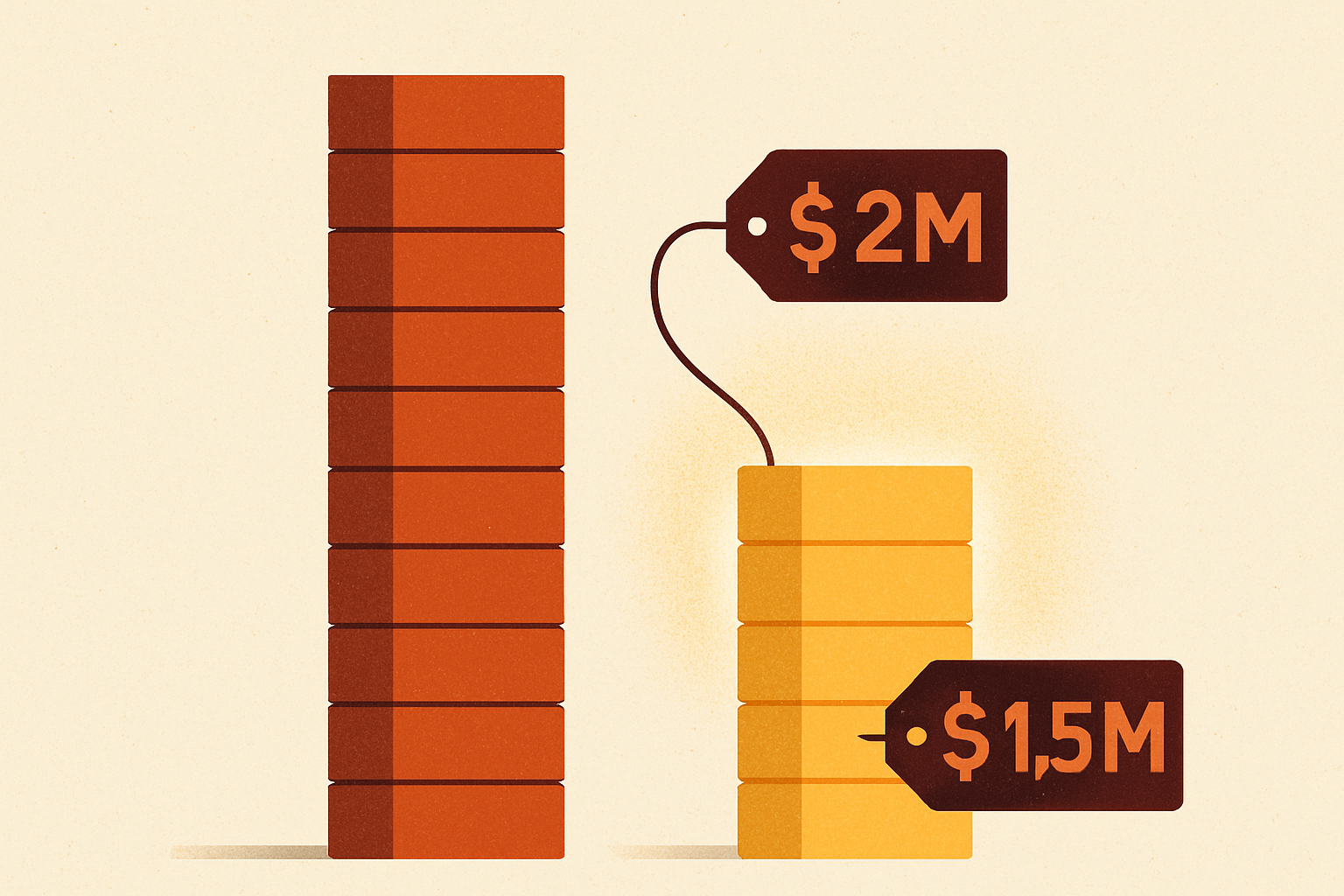
Grok 4.5: The Cheap Part Isn't $2 a Million — It's 4.2× Fewer Tokens Per Task
xAI's new coding model undercuts the field on the rate card. But for anyone running agent loops, the number that actually moves your bill is how many tokens it burns to finish the job.
4 min
GPT-5.6 Goes Public, Prices Halve, and the Deployment Reckoning Begins
This week: OpenAI shipped GPT-5.6 (Sol, Terra, Luna) and GPT-Live to everyone, frontier prices kept falling, and Microsoft and AWS put $3.5B into forcing AI pilots to actually work. Read for founders.
5 min
GPT-5.6 Went Public: The New Three-Tier Menu, and Which Tier Your Product Actually Needs
OpenAI shipped GPT-5.6 as Sol, Terra, and Luna on July 9 after a 12-day government review — three models at three prices, not one. The founder question isn't 'is it better,' it's 'which tier does each job in my product deserve.'
5 min
The Week Generative Media Repriced: Three Drops in Ten Days and What Founders Should Do
Between June 30 and July 9, the cost floor for AI images fell to ~$0.03 per thousand, video got a per-second API price, and pro image editing gained layers and precision selection. Here's the founder's read on each — and the catch.
5 min
The Founder's Week in Tech: A Legal-AI Unicorn, a Free Coding Agent, and Where the Money Went
Norm Ai hit $1.2B, Z.ai shipped a coding agent that undercuts Claude Code by 82%, and this week's rounds show exactly which bets VCs are still writing. What happened, why it matters to you, and what to do about it.
4 min
The Founder's Brief: The Model Price War, the Money Chasing It, and the AI-IDE Wave
This week the cost of frontier intelligence fell again, the funding concentrated where AI meets the real world, and the tools founders build with started building themselves. What happened, why it matters, and what to do about it.
5 min
Claude Sonnet 5 Is the 'Run It Everywhere' Model — and the Tokenizer Is the Catch
Anthropic shipped Sonnet 5 as near-Opus agent intelligence at $2/M input, and made it the default on Free and Pro. The founder move isn't 'upgrade' — it's re-pricing your escalation ladder, because a new tokenizer quietly eats ~30% more tokens.
5 min
Your Toolchain Shipped While You Slept: 6 Releases Founders Should Act On This Week
Early-July's release radar for builders, verified against primary sources: a new default Claude model with a 1M-token window, coding agents that now open their own PRs, a breaking Vercel AI SDK major, Electron-free desktop apps from Deno, a free ~90% speedup for local models on Macs — and a Node.js security release you should not ignore.
4 min
The Model Got Cheap the Same Week the Money Got More Concentrated
Early July's AI news, read for founders: GPT-5.6, Grok 4.5, and an open-weight Chinese model pushed intelligence toward commodity pricing — while $19B compute leases and an 89% revenue share show the money pooling harder than ever. Here's what to actually do about it.
5 min
This Was the Week AI Agents Started Taking Real Actions — Here's the Liability Founders Inherited
Read for founders: an agent ran a $100M fundraise, another drove a robot from a single camera, Meta's put image-gen in every chat, and a public GitHub issue tricked an AI agent into leaking private repos. The pattern — autonomy and liability now scale together — and what to do before you ship one.
5 min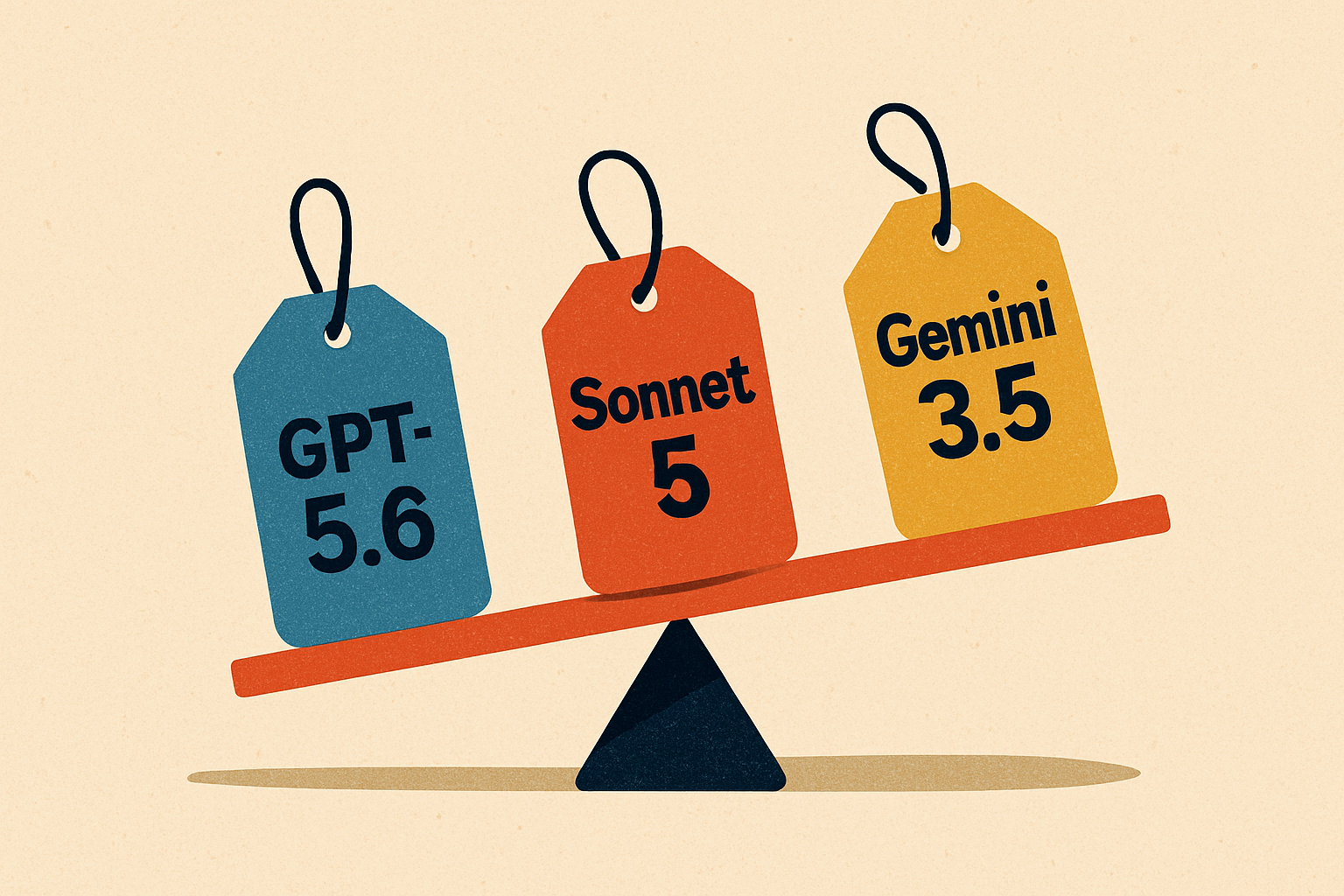
Three Model Families in Ten Days: What GPT-5.6, Sonnet 5, and Gemini 3.5 Change for Your Bill
OpenAI, Anthropic, and Google all shipped new tiers this week. The headline is a price war in the mid-tier — but one of the cheaper numbers is quietly not as cheap as it looks.
4 min
vLLM v0.24 Makes Model Runner V2 the Default. The Win Isn't a Faster Kernel — It's Never Waiting on the CPU.
The June 29 release flips vLLM's rebuilt execution core on by default and lands a Rust serving front-end. The throughput comes from deleting the CPU–GPU sync, not from a hotter matmul.
5 min
The Vector Index That Never Rebuilds: In-Place Updates at Billion Scale
HNSW and DiskANN treat an index as a build artifact you periodically tear down and rebuild. SPFresh-class indexes — like Weaviate's HFresh — treat it as a living structure that rebalances as you write. The axis that decides which you need isn't recall. It's your write pattern.
4 min
Tuning Chunked Prefill in vLLM: The One Knob That Trades First-Token Latency for Smooth Streaming
max_num_batched_tokens looks like a throughput setting. It's really a fairness dial between the one user who pasted a novel and everyone else's token cadence.
3 min
TensorRT-LLM Is Removing the TensorRT Backend — the PyTorch Runtime Won
The library named after TensorRT is deleting TensorRT. The June 30 release candidate is the last to support the compiled engine backend; the next version removes it. The lesson isn't about NVIDIA — it's about which tradeoff keeps winning.
4 min
Serving DeepSeek V4: Why the Day-0 Recipe Matters More Than the MIT License
DeepSeek shipped a 1.6-trillion-parameter model under MIT and let vLLM and SGLang publish the serving recipes the same day. The weights are free and portable. The throughput that makes them economical is neither.
4 min