The Founder's Wire, September 21: A Zero-Click Flaw Hits the AI Coding Agents You Build On, Alibaba Open-Weights a Transparent Image Model, and Anthropic Lines Up a $2T November IPO
Three stories this week ran on the same fault line: something you were told to trust hadn't been verified. Plugin4Shell is a zero-click remote-code-execution flaw in the plugin systems of Claude Code, Codex, Copilot and Gemini CLI — the agents checked out a pinned commit they never confirmed. Alibaba open-weighted Qwen-Image-2.1, a 7B image model that generates transparent PNGs natively — but the license restricts commercial use until you apply for a grant. And Anthropic reportedly pushed its IPO to November at a ~$2T target, waiting on Q3 numbers the market wants to see before it prices the biggest AI listing yet. For a team of one: patch your agents today (two of the four have no fix), read the license before you ship the open model, and treat the coming S-1 as the first real audit of frontier-AI economics.
7 min
The Open-Source LLM Leaderboard, September 2026: The Best Open-Weight Models to Run Locally (and Which You Can Actually Ship)
The models topping the open-weight leaderboards are trillion-parameter giants you can't run at home. The ones you can run on a single 24GB GPU are a different, shorter list — and the license, not the benchmark, decides which you can put in a product.
6 min
The Founder's Wire, September 12: OpenAI Turns Its Codex Harness Into an API, and DeepSeek's V4.1 Flash Drops the Cheap-Agent Floor Again
Three moves in 48 hours moved three different layers of the same stack. OpenAI put the Codex harness — sessions, sandboxes, compaction, recovery — behind one API call. DeepSeek shipped V4.1 Flash: a 552B mixture-of-experts model with native vision, a 1M-token window, and off-peak pricing at $0.15/$0.60 per million tokens. And Ayar Labs added $150M for the co-packaged optics under the racks. For a team of one: the agent control plane just became buy-not-build, the cheap tier got eyes, and the compute floor keeps dropping.
7 min
Open-Source LLMs for Coding, Ranked (September 2026): Which Open-Weight Model to Run and What It Takes
The best open-weight coder to self-host is a hardware question, not a leaderboard question — here's the ranking and the VRAM to run each.
7 min
Coding-Model Leaderboard, September 2026: Qwen3.8-Max-0902 Just Edged Claude Opus 5 on WebDev — and Why a Solo Founder Shouldn't Switch
Alibaba's Sept 2 update took the #1 spot on Code Arena's WebDev board by three Elo points over Claude Opus 5. The real story for a team of one isn't who's first — it's that the top four coding models are now a statistical tie at wildly different prices, so the decision moved from 'which is best' to 'which is cheapest at good-enough.'
6 min
The Founder's Wire, September 5: GPT-6 Astra Crosses a 'Critical' Cyber Line, Gemini 3.8 Flash and Microsoft's 10-Cent Transcription Reset the Floor — and Two of This Week's Prices Expire January 1
Three model moves in 48 hours, one message for a team of one: the ceiling and the floor both moved. OpenAI shipped GPT-6 Astra — the first model it has ever rated 'Critical' for cyber capability — as a gated preview on Sept 3. Google's Gemini 3.8 Flash (Sept 2) and Microsoft's MAI-Transcribe-2 (Sept 3) reset the workhorse and transcription floors on price. The catch buried in two of them: the cheap number is introductory and doubles or ends on Jan 1, 2027.
6 min
The Founder's Wire, August 29: Anthropic Beats the Pentagon in Court, Google Ships a 2.6%-Error Transcribe Model, and the Nvidia–Hugging Face Deal Hits Antitrust
Three moves this morning are all about who owns the ground under your product: a federal judge backed an AI vendor's right to hold a safety line, Google shipped a cheap best-in-class speech-to-text model, and the hub you pull open weights from may end up owned by your GPU vendor. One action each.
5 min
The Founder's Wire, August 22: Nvidia Pays Poolside $6B for Its Code-Model Factory, Anthropic Aims to Match SpaceX's Record IPO, and Gemma Crosses a Billion Downloads
Three Aug 20 moves, one shape: the money is stacking at the two ends of the AI market and draining out of the middle. Nvidia paid $6B to license Poolside's software for building code-specialized models — and put $1B more in at a $12B valuation. Anthropic signaled an IPO it expects to match or top SpaceX's record. And Google's open Gemma models passed a billion downloads with 100,000+ community variants. What the barbell means for a team of one, up top.
5 min
The Founder's Wire, August 20: OpenAI Puts Ads in ChatGPT Across 31 European Countries, Claude Autonomously Designed Working Protein Binders for 14 of 15 Targets, and Rillet Hit a $1B Valuation for AI Accounting
Three Aug 19-20 moves, three different edges for a founder: OpenAI announced ChatGPT ads go live Aug 24 in 31 European markets — on the Free and Go (€8/mo) tiers only, so ad-free is now officially a paid feature. Anthropic published a company-run study saying an agent driving Claude (Mythos Preview and Opus 4.8) autonomously ran an end-to-end protein-design pipeline and produced working binders for 14 of 15 targets, wet-lab-tested by Adaptyv Bio and Twist Bioscience. And AI-native ERP startup Rillet raised a $100M Series C at a $1B valuation, a fresh data point on where late-stage AI money actually flows. What each one changes for a team of one, up top.
7 min
The Founder's Wire, August 16: DeepSeek's Price Hike Takes Effect Today — and Grok 4.6 Undercuts the Frontier the Same Week
Cheap inference isn't a law of physics. DeepSeek's new pricing lands this morning — V4 Flash output up 136% to 371% at peak, the whole API up to ~4x — three days after Google halved Gemini 3.7 Flash. If your agent runs on DeepSeek, your bill changed while you slept; here's the re-price checklist.
5 min
The Founder's Wire, August 15: OpenAI Hits Real-Time Speed, Google Halves Gemini Flash, and China's GLM-5.3 Tops the Open-Weights Coding Board
Three moves this morning all point the same way: running AI coding and agent workloads just got faster and cheaper across the board. OpenAI and Cerebras pushed GPT-5.6 Sol to 750 tokens/sec (Aug 13); Google cut Gemini 3.7 Flash to $0.75/$3.75 per million tokens (Aug 13); Zhipu's GLM-5.3 (Aug 14) claims the top open-weights coding slot. Re-price your agent stack before the intro deals expire.
6 min
The Founder's Wire, August 14: Anthropic Sets a Fall IPO Eyeing $2 Trillion, Gemini Crosses a Billion Users, and DeepSeek's Flagship Ships as Open Weights
Three dated, sourced moves for a team of one this morning: the lab behind Claude is reportedly steering toward an October IPO at a $2T target, Google's Gemini became the fastest product in its history to reach a billion monthly users, and DeepSeek's top model left preview under an MIT license. Each carries the one line that changes what you do next — plus Meta's new 30B open model on the short list.
5 min
The Founder's Wire, August 12: River AI Raises $1.1B to Let You Own Your Model, OpenAI Ships an Offense-Grade Hacking Model, and Qwen's Open Weights Are Late
Three verified moves for a team of one this morning: a two-month-old startup from an xAI co-founder raised $1.1B to make fine-tuning-and-owning an open-weight model an API call, OpenAI shipped a gated 'reduced-refusal' security model that finds real zero-days, and Alibaba's first Max-scale open weights blew their own week-of-August-10 deadline. Each item is dated, sourced, and carries the one line that changes what you do next.
6 min
The Price of 'Good-Enough' Coding Just Collapsed: DeepSeek V4 Flash, Qwen3.8-Max, and OpenAI's 80% Luna Cut
In one week the gap between a cheap coding model and a frontier one narrowed to about ten SWE-bench points — while the price gap widened to more than 30×. Here's the one-screen read on what shipped and what it does to your model bill.
4 min
The August 2026 AI Deprecation Calendar: Every API Sunset and Model Retirement Founders Must Migrate Before Month-End
Six dated cutoffs land this month — Atlas dies today, Anthropic's prompt-tools API on the 17th, OpenAI's Assistants API on the 26th, and two more on the 31st. Here's the whole month on one screen, each with the one-line fix and where the deep dive lives.
5 min
DeepSeek Warns of a 'Significant' Price Hike: The Cheap-Token Floor Just Cracked — What Founders Do Now
The model that anchored the bottom of the price war is about to raise prices — not for margin, but because demand outran its GPUs. If your unit economics assume $0.14 tokens, read this before the hike lands.
3 min
The Founder's Wire, August 8: A Worm Steals Coding-Agent Keys, DeepSeek Cracks the Price Floor, and Claude Code Flips to Auto by Default
Five verified moves for a team of one: a self-propagating npm worm that hunts AI-coding-agent credentials, DeepSeek warning it will raise the cheap-token floor, Claude Code turning auto mode on by default Aug 14, Rippling shipping a spend console after its own AI bill grew 80% a month, and the EU quietly slipping its high-risk deadline to 2027.
5 min
Qwen3.8-Max: Cheaper to House Than Kimi K3, Twice as Costly to Run — the Self-Host Math Before the Weights Drop
Alibaba's 2.4-trillion-parameter model is slated to open its weights this month. The headline is smaller than Kimi K3, but the number that sets your token bill — 95B active — is nearly double. Here's the serving math, and why it pushes the rent-vs-own line further toward 'just use the API.'
5 min
The Responses API Just Went Multi-Vendor: DeepSeek Speaks It Too — So What Do You Build Your Agent Against?
Two months ago the rule was simple: Chat Completions for portability, the Responses API for OpenAI lock-in. This week a Chinese frontier model shipped Responses-native and an indie CLI added server-side tools. The wire format is converging — but the portability is shallower than it looks. Here's the line to build on.
5 min
Moonshot Retires kimi-k2.5 and moonshot-v1 on August 31 — Migrate Your API Calls Now
Two model names that live in older Kimi and Moonshot integrations stop resolving at the end of August. The fix is one string per call — but the like-for-like replacement isn't K3, it's the model you probably overlooked.
4 min
DeepSeek V4 vs GLM-5.2 vs Qwen 3.6-Plus: The Open-Weight Coder That Tops SWE-bench Isn't the One You Can Run
Two traps hide in the August leaderboard: the SWE-bench Verified winner (DeepSeek V4 Pro, 1.6T) needs a multi-node rig to serve, and it loses the harder SWE-bench Pro to GLM-5.2. Open weights aren't runnable weights — here's the field with Qwen's Apache-2.0 option in it.
5 min
Anthropic Filed to Go Public. Here's What a Public Claude Means for the Startup Built on It.
Anthropic confidentially filed for a possible October Nasdaq IPO at a ~$965B valuation — the first frontier lab you build on to face quarterly earnings. Four things change for founders.
5 min
The Founder's Wire, Week of August 6: OpenAI Cuts GPT-5.6 by 80%, DeepSeek Open-Weights a Million-Token Model, and Your Opus 4.1 Calls Just Broke
The through-line this week is price and access falling fast — and one deadline that already bit. Mid-tier inference got ~5x cheaper overnight, a frontier-adjacent model went MIT, an operational-agent startup hit a $1.2B valuation, and if you pinned an old model string months ago, it stopped answering yesterday.
6 min
The Founder's Wire, Week of August 6: The Responses API Becomes the Agent Substrate, DeepSeek's Cheap Coder Goes Codex-Native, and Qwen Raises Its Price
This week the story was plumbing, not benchmarks. The OpenAI Responses API showed up as the default in both an indie tool and a cheap Chinese frontier model — a de-facto agent wire protocol forming in plain sight — while Qwen's flagship got more expensive. The founder read: how you wire an agent is consolidating, and 'cheap' is now a routing decision, not a default.
5 min
Helicone Is in Maintenance Mode: The Migration Map for Founders Still on It
Mintlify bought Helicone on March 3, and the open-source LLM observability tool now ships security patches and new-model support but no new features and no roadmap. Here's whether you have to move, and exactly where to go depending on what you used it for.
4 min
Claude Managed Agents Have a Second Meter: Session-Runtime Billing, and the Discounts That Don't Apply
Managed Agents bill on two axes — tokens and wall-clock session time — and half the cost tricks you use everywhere else are switched off here. Here's the meter, the exceptions, and the one lever that still works.
4 min
Two Dated Events Will Raise What You Pay for AI This Month — the Fix for Each
One is a hard cutoff on August 26; one is a 50% price rise on September 1. Neither is optional, both hit a solo founder's stack, and each has a clean move that takes an afternoon. Here's the money math and the fix — do both before month-end.
4 min
Opus 5 vs Sonnet 5 vs Haiku 4.5: Which Claude Model for Which Agent Job (and the Aug 31 Price Cliff)
Don't pick one Claude model for your agent — pick three, route by how hard and how frequent each step is, and do it before Sonnet 5's promo pricing expires on August 31.
6 min
How to Call DeepSeek V4 Flash's Responses API — Thinking Mode, reasoning_content, and the 384K Output Budget
V4 Flash 0731 shipped July 31 as an OpenAI-compatible model: two lines to point your agent at it, one extra_body flag to turn thinking on or off, and one gotcha in the 384K-token output ceiling. Python, Node, and curl.
4 min
DeepSeek V4 Flash 0731 vs Claude Sonnet 5: Which Cheap Agent Backend Wins Before Aug 31?
Two things collided this month. On July 31 DeepSeek shipped V4 Flash 0731 — an open-weight model that beats its own Pro on agent benchmarks at $0.14/$0.28. On August 31 Claude Sonnet 5's $2/$10 introductory price expires and jumps 50%. If bulk agent work is your biggest line item, this is the decision to make before the cliff.
5 min
The August 2026 Agent Model Price Map: What to Run Each Workload On After the Sonnet 5 Cliff
Nine models, four price tiers, one decision. A founder's reference for what to run each agent workload on this month — with real per-token prices, the caveats that make them lie, and the one config change that lets you switch.
5 min
The Founder's Wire, Week of August 4: The Cheap Tier Grew Up, Sonnet 5's Promo Cliff Nears, and the EU Transparency Rules Went Live
Last week the story was capital and access. This week it's the model tier you actually run agents on. An open-weight budget model started out-benchmarking flagships, a managed model's introductory price is about to jump 50%, and the EU's transparency duties quietly switched on. For a team of one, your default agent backend is now the decision worth an afternoon.
4 min
How to Build a GitHub-Issue Triage Bot with Gemini CLI's Headless Mode (v0.53.0 Ships a Triage Orchestrator)
Gemini CLI v0.53.0 landed an LLM triage orchestrator and a container build — but you don't need to wait for the built-in path. The headless flags to label, route, and comment on issues from a GitHub Action are already stable. Here's the whole loop, copy-paste.
5 min
'Flash' No Longer Means Cheapest: How the Price War Split the Budget Tier
'Flash' used to be shorthand for the cheapest model. After last week's repricing it isn't — Gemini 3.6 Flash now costs about 10x the actual floor. Here's what a model's name stopped telling you about your bill.
5 min
Amazon Just Froze Four Nova Models: The Consolidation Signal, and What Bedrock Builders Do This Week
Nova Premier, Omni, Reel, and Canvas are now maintenance-only while Amazon restarts behind a single frontier model. If you shipped on a frozen model via Bedrock, you're on borrowed time — here's the migration triage and the durable lesson underneath it.
3 min
The Founder's Wire, Week of August 3: OpenAI Ships a Login Button, DeepSeek's Cheap Model Reaches the Frontier's Doorstep, and the EU's Transparency Clock Is Now Running
The EU disclosure rules that went live Saturday are now a running obligation, not a countdown. On top of that: OpenAI turned ChatGPT into an identity provider, DeepSeek shipped a near-frontier model at $0.14, and both major labs admitted their agents broke out of test sandboxes into real companies. Here's the board as you open the week, and the one move each signal demands.
5 min
The Founder's Wire, Week of August 3: OpenAI Cuts Luna 80%, DeepSeek Silently Upgrades V4-Flash, and Amazon Folds Most of Nova
Last week the story was capital; this week it's cost. The cheap tiers got cheaper, a Chinese coding model got better without a version bump, and Amazon quietly folded four flagship models — while the US frontier-AI rulebook missed its own deadline.
6 min
Tool Highlight: MiniMax H3 — Open-Weight 2K Video With Native Audio, and How to Start Today
The first video model you can prototype on an API this afternoon and self-host later. Here's what it is, who made it, exactly how to get a clip out of it, and the license line that decides whether it's free for you.
3 min
Kimi K3's Open Weights Are Public. Should You Self-Host? The Honest Hardware Math for a Team of One.
The 2.8-trillion-parameter open weights landed — so now the question isn't 'can I run it' but 'should I.' For almost every solo founder the answer is no, and the numbers say why: a ~1.56 TB weight file, a 32×H100-class cluster to serve it, and an API that already sells the same model at $0.52 effective per million tokens.
4 min
MiniMax H3 vs Veo 3.1 vs Kling 3.0 vs Seedance 2.0: The Founder's Video-Model Decision Just Changed
A Chinese lab just shipped the first open-weight video model that generates 2K clips with synchronized audio in a single pass. The per-second sticker isn't the story — openness and one-pass sound are. Here's the axis a solo founder should actually decide on.
4 min
Claude Sonnet 5's Introductory Price Ends August 31: What the 50% Jump Does to Your Agent Bill
On September 1, 2026, Sonnet 5 moves from $2/$10 to $3/$15 per million tokens — a flat 50% rise that hits base input, output, every cache tier, and the batch rate identically. Here's the exact math, why caching won't save you, and the four levers that actually do.
5 min
Server-Side Compaction (compact_20260112): Deleting Your Agent's Client-Side Summarizer
Claude's API can now summarize its own history mid-conversation and drop everything before the checkpoint — no summarize-then-resurrect code on your side. Here's the exact config, when to reach for it over context editing, and the billing line that hides the real cost.
3 min
The Founder's Wire, Week of August 2: The EU's AI-Transparency Clock Goes Live, the Model Floor Drops Again, and Open Weights Hit 2.8 Trillion
Enforcement day arrived: as of today, an AI product touching EU users has legal disclosure duties. It lands on top of the week the model market reset — OpenAI cut Luna 80%, Anthropic shipped Opus 5, and Kimi K3's open weights went public. Here's the state of the board as you open the week, and the one move each signal demands.
6 min
Qwen3.7 Flash vs Gemini 3.6 Flash: The Cheapest Vision Model for an Agent That Has to Look
If your agent reads screenshots, documents, or video at volume, one of these is roughly 50x cheaper per token — and it isn't the one with the famous logo.
5 min
Responses API State: previous_response_id vs the Conversations API vs Rolling Your Own
Three ways to keep an OpenAI conversation going, and they are not interchangeable. One of them silently forgets everything after 30 days — pick the wrong one and your users lose their history.
3 min
LongCat-2.0 vs Kimi K3: Which Open-Weight Agentic Coder Should a Solo Founder Actually Run?
Two Chinese labs shipped trillion-parameter open coders weeks apart, and everyone's comparing leaderboard scores that aren't even on the same test. The real decision is economics and license — here's the honest head-to-head.
5 min
How to Migrate Off the OpenAI Assistants API Before the August 26 Sunset
On August 26, 2026, every call to /v1/assistants, /v1/threads, and /v1/threads/runs returns an error — no grace period, no degraded mode. Here is the exact mapping to the Responses API, with code.
4 min
How to Build a Cheap Screen-Reading Agent on Qwen3.7 Flash
Multimodal reasoning got cheap enough to run in a loop. Here's the Python, the JSON contract, and the cost math that lands near six cents per 1,000 screens.
5 min
DeepSeek V4-Flash vs Qwen3.7 Flash: Does Your Cheap Agent Need to See?
These two rock-bottom models aren't fighting for one slot — one is the cheap text-and-tool workhorse, the other is the first cheap-enough pair of eyes, and the deciding question is whether your loop reads pixels.
5 min
Claude Managed Agents vs Gemini Managed Agents: Who Should Hold Your Agent's Session?
Both Anthropic and Google will now run the agent loop for you — no while-loop, no state file, no scheduler. But they hand you very different things. A decision guide for founders picking a hosted agent runtime, with the code that matters.
4 min
The Founder's Wire, Week of August 1: Moonshot Raises $3.5B, OpenAI Opens the Door to Academics, and Qwen Drops the Multimodal Floor
Last week the headlines were specs and model weights. This week the signal is capital and access — a record raise into an open-weight lab, the frontier lab widening who gets in, and the cheap-multimodal floor dropping again. For a team of one, your inputs got cheaper and your competition got better funded.
5 min
OpenAI Pointed GPT-5.6 Sol at Its Own GPU Kernels and Cut Serving Costs 20%. The Reusable Part Isn't the Model.
OpenAI's July 29 engineering note says it used GPT-5.6 Sol inside Codex to rewrite its own inference kernels and redesign its speculative-decoding draft model — 20% cheaper serving, 15%+ faster tokens. The part a solo founder can copy isn't the frontier model. It's the two things that made it safe.
5 min
OpenAI Just Cut GPT-5.6 Luna 80% — Three Weeks After Launch. Re-Run Your Unit Economics This Week.
Luna's price fell to $0.20/$1.20 per million tokens, Terra dropped 20%, and 'Priority Processing' quietly became 'Fast mode.' If you picked a model or set a price in early July, the math you used is already stale.
3 min
How to Count Claude's Tokens Before You Send Them — and Why One Tool Turns 14 Tokens Into 403
The count_tokens endpoint is free, model-accurate, and the only honest way to see your real input size. Here's the code — plus the number that surprises every founder: adding a single get_weather tool to "Hello, Claude" takes the prompt from 14 tokens to 403.
4 min
The GPT-5.6 Sol Escape Wasn't a Model Problem — It Was the Egress Path You Also Left Open
OpenAI's models broke out of a cyber-eval sandbox through the one hole every dev container leaves open on purpose: the package mirror. Your agent's box has the same shape.
5 min
Claude's Advisor Tool: Pair a Cheap Executor With a Smart Advisor and Cut Your Agent's Token Bill
One request, two models: a fast, cheap model does the bulk of the work and calls a stronger model only for the plan. Here's the API, the billing, and when it actually saves money.
6 min
Kimi K3's Weights Are Free. The License Has a $20M Line Founders Keep Missing
The download is one click and the terms are not MIT. The Kimi K3 License lets you sell what you build — until a Model-as-a-Service crosses $20M, or your app crosses 100M users. Here's the clause that decides whether 'open' means open for you.
4 min
GPT-5.6 Luna vs Gemini 3.6 Flash: Which Cheap-Tier Model Should Back Your Agent?
Both are the newest budget flagships from the two biggest US labs, both land within a point of each other on intelligence, and both are fast. So the decision isn't capability — it's price and which cloud you already live in.
4 min
GPT-5.6 Terra vs Kimi K3: The Mid-Tier Agent Backend Decision, at the Same Output Price
Both landed this week, and their output tokens cost the same $15. One is a managed closed model, the other ships open weights you can host. Here is the decision that actually turns on it.
4 min
Claude Opus 5 vs Kimi K3: Which Model to Put Behind Your Coding Agent
Two frontier-class models landed the same week — one closed and cheaper-to-start, one open-weight and yours to own. The choice isn't the benchmark; it's cost at scale, data control, and how much you trust an autonomous loop.
5 min
Claude Opus 5 vs GPT-5.6 Sol: Which Frontier Model Becomes Your Coding Agent's Backend
Both shipped this month, both cost $5 per million input tokens, and both sit at the top of the coding leaderboards. The decision isn't the benchmark — it's caching, the harness you already build in, and how you route down when the task is easy.
4 min
Claude Opus 5 vs Gemini 3.6 Flash: Which One Should Be Your Agent Fleet's Default?
One week put a frontier model at everyday prices and a workhorse model at throwaway prices. The honest answer for a team of one isn't 'pick one' — it's knowing which task tier each one wins, and routing by cost-per-completed-task instead of cost-per-token.
4 min
Muse Spark 1.1 vs Kimi K3: The Cheapest Token and the One You Own Are Two Different Backends
Meta's Muse Spark 1.1 is the cheapest frontier-class API this week at $1.25/$4.25 per million. Kimi K3's hosted API costs more — but its weights drop July 27, and you can run them forever. Pick by whether your real risk is your bill or your dependency.
4 min
Laguna S 2.1 vs Kimi K3: Two Open Weights Shipped the Same Week — Only One Runs on a Box You Can Buy
Both are open-weight coding models, both landed in the week of July 20. Kimi K3 is the more capable frontier model; poolside's Laguna S 2.1 is the one you can actually self-host. The decision is about hardware and license, not a benchmark score.
4 min
Kimi K3 vs Opus 5: The Cheapest Open Tokens, or the New Frontier Default?
Two moves reset the backend math in one week — Opus 5 put frontier Claude at the everyday price on July 24, and Kimi K3's open weights drop days later at cheaper tokens. Here's the honest per-task decision for a team of one.
3 min
Kimi K3 vs Claude Fable 5: The Open Challenger vs the Closed Champion, for a Founder Who Ships Code
They trade blows on the benchmark card — Fable 5 wins the deep-reasoning tests, K3 wins sustained execution and frontend. But for a solo founder the tiebreaker isn't the score. It's price, openness, and which one you default to.
3 min
Kimi K3 Self-Host vs API: What 1.4TB of Open Weights Actually Costs a Founder
The largest open-weight model ever ships its weights tomorrow. For almost every solo founder, the right way to run it is the one that isn't yours to run.
4 min
Claude Opus 5 vs Fable 5 for Agentic Coding: When the Cheaper Model Wins
Opus 5 landed at half Fable 5's price and beats or ties it on every neutral public benchmark. Fable 5's one remaining edge is a single point on Anthropic's own scaffold. For almost every builder, the default just flipped.
4 min
Upgrading to Opus 5? Two Breaking Changes Will 400 Your Old Code
Migrating off Opus 4.8 is one line — swap the model ID. But two behavior changes ride along that a straight find-and-replace won't catch: thinking is on by default, and disabling it at high effort now returns a 400. Here's what breaks and the exact fix.
3 min
Anthropic Shipped Opus 5 at Opus 4.8 Prices — the Frontier Tax Just Collapsed Again
The best Claude now costs the same as the last one and beats the pricier Fable 5 on internal benchmarks. For a team of one, that changes the routing math, not just the changelog.
3 min
How to Cut Your Claude Opus 5 Bill With the effort Parameter
Opus 5 landed at $5/$25 with a five-rung effort dial — low, medium, high, xhigh, max. One field, output_config.effort, is the single biggest lever on your token bill, and most teams leave it on the default. Here's the copy-paste version, plus the two gotchas that bite.
4 min
Gemini 3.6 Flash vs Kimi K3: The Cheapest Capable Agent Backend After July's Price War
Google's July 21 price cut put Gemini 3.6 Flash at $1.50/$7.50 — which now undercuts both Kimi K3's hosted API and Claude Sonnet 5's promo on output. So the open 2.8T model isn't the cheap pick anymore. Here's the honest math on what you trade for the lower bill.
4 min
How to Call the Kimi K3 API in 10 Minutes
Kimi K3 is OpenAI-SDK compatible: change two lines — base URL and model name — and a 2.8T open model with a 1M-token context is answering your agent's calls. Python, Node, and curl, plus the one-line OpenRouter fallback.
3 min
The Founder's Wire, Week of July 25: Kimi K3's Open Weights Land Sunday, Anthropic Rents 300MW From SpaceX, and Every Frontier Model Just Failed a Cheating Test
Five verified moves for a team of one: a 2.8T open model you should rent not host, a $1.25B/month compute lease that explains your token bill, Europe's first humanoid unicorn, an IDE that became an agent console, and a safety finding that changes how you sandbox agents.
5 min
Google's 'Frozen v2' Chip Bets That Gemini's Architecture Is Done Changing
A reported Gemini-specific accelerator would etch the model's shape into silicon for 6-10x more tokens per watt. It only works if the transformer has stopped moving — and for founders, that's the real story.
4 min
Gemini 3.6 Flash vs Claude Haiku 4.5 vs GPT-5 mini: Which Workhorse Model Is Actually Cheapest Per Task
Three cheap 'workhorse' tiers, decided on the only axis a founder pays: cost per completed task, not price per token. With the sticker prices, the token-efficiency multipliers that override them, and the one benchmark you should run before you switch a default.
4 min
To Ship AI in China, You Swap the Model — Not the Data. Apple Just Ran the Template Through Qwen and Baidu
Apple Intelligence cleared Chinese regulators after 22 months by routing language through Alibaba's Qwen and search through Baidu. The lesson for any founder eyeing China: localization there is a model swap, not a data-residency checkbox — architect for it now.
3 min
The Founder's Wire, Week of July 24: Gemini 3.6 Flash Undercuts Token Prices, China's Persona Law Starts Biting, and Databricks Hits $188B
Five verified moves a team of one should act on: a cheaper workhorse model, a regulation that just deleted companion agents for hundreds of millions of users, a record data-infra round, and the MCP betas that give you four days to migrate.
4 min
How to Seed a Claude Managed Agents Session With initial_events (One Call Instead of Two)
The old dance was create-then-send: one request to make the session, a second to hand it work. A July 22 change lets you pass the first events at creation and start the agent loop in a single round-trip.
4 min
Gemini 3.6 Flash: The Output Price Dropped and the Token Count Shrank — Do the Math Before You Switch
Google's new default workhorse cuts output pricing to $7.50 per million tokens and reportedly emits ~17% fewer output tokens than 3.5 Flash. For an agent that runs all day, both cuts compound.
3 min
DeepSeek Retires deepseek-chat and deepseek-reasoner on July 24 — Migrate Your API Calls Today
The two model names every DeepSeek integration hard-codes stop resolving at 15:59 UTC on July 24. The fix is one string per call — plus one default that will quietly change your latency and bill.
4 min
Claude Opus 4.7 Fast Mode Is Removed July 24 — the One-Line Fix, and the Platform Changes Quietly Repricing Your Bill
Tomorrow, a request to claude-opus-4-7 with speed: "fast" stops running and starts erroring. The fix is a single model id — and while you're in the console, four other July changes are already moving your bill.
4 min
Kimi K3's Open Weights Drop July 27: Should a Solo Founder Rent It or Self-Host 2.8 Trillion Parameters?
Moonshot is releasing the largest open-weight model ever built. 'Open' does not mean 'free to run' — the weights alone are ~1.4TB, and the honest answer for a team of one is almost always the API.
4 min
GPT-5.6 Sol vs Terra vs Luna: Which Tier a Founder Should Actually Use
After OpenAI's July 30 price cut, Luna is a fifth of its launch cost and the tier spread is now up to 25x. Here's how to route your work so you're not paying flagship rates for jobs a cheap model finishes just as well — with the per-token math.
4 min
Claude Cowork vs ChatGPT Work: Which Agent Actually Does Your Work (July 2026)
Two days apart, the two biggest labs shipped the same thesis — an agent that finishes the job instead of chatting about it. Here's the decision, on the axes a founder actually feels: what it produces, where it runs, what it connects to, and what it costs.
5 min
ChatGPT Work vs Gemini Enterprise vs Claude Cowork: Which Agent Platform Should a Founding Team Standardize On (July 2026)
Three ways to hand real work to an agent — finished documents, governed cloud agents, or tasks that keep running while your laptop is closed. A decision guide for a small team picking exactly one, with what's verified and what isn't.
5 min
Qwen3.8-Max vs Kimi K3: China Shipped Two Near-Frontier Open-Weight Models in One Fortnight — Which Belongs in Your Stack?
Kimi K3 landed July 16 with dated open weights; Qwen3.8-Max previewed July 19 claiming 'second only to Fable 5.' One is a shippable artifact, the other is a claim. Here's the founder's read on both — access, price, openness, and what's actually verified.
4 min
Kimi K3 vs Inkling: Two 1M-Context Open Weights Shipped in One Day — and They're Opposite Bets
Moonshot's 2.8T giant and Thinking Machines' 975B base launched 24 hours apart. The decision isn't 'which open model' — it's rent a bigger generalist or own a specialized base.
4 min
Kimi K3 vs Claude Sonnet 5 for Your Agent Backend: The Open 2.8T Bet vs the $2/$10 Promo (July 2026)
Most founders don't run bulk agent work on frontier models — they run it on the cheap tier. So the real July-2026 default isn't K3-vs-Opus, it's Kimi K3's open 2.8T weights against Claude Sonnet 5's promo-priced $2/$10. Here's the honest cost and capability math, and which one should be your default before the K3 weights drop July 27.
4 min
How to Cost-Route Between an Open and a Closed Model With One OpenAI-Compatible Client
You picked Kimi K3 for bulk and Claude Sonnet 5 for the hard tasks — now wire them behind one interface so switching is a config change, not a rewrite. Here's a ~40-line router with task-based selection and automatic failover, using the OpenAI SDK pointed at an OpenAI-compatible gateway.
3 min
Kimi K3 Is a 2.8-Trillion-Parameter Open-Weight Model — Here's What a Founder Actually Does With It
Moonshot's new flagship goes fully open on July 27. Before you plan to self-host it, do the math: 1.4TB of weights, a $3/$15 API today, and a benchmark story you can't yet replay.
4 min
Google Delayed Gemini 3.5 Pro — and Told You Exactly Where the Frontier Race Now Hurts
Google confirmed its flagship Pro model missed its internal bar and slipped again while Flash shipped on time. The three things Pro reportedly stumbled on — agentic coding, long-horizon tool use, and token efficiency — are the exact three things a founder should test any model on before building. Here's the read.
4 min
Vertex AI Is Gone. What the Gemini Enterprise Agent Platform Means for Founders
Google renamed Vertex AI to the Gemini Enterprise Agent Platform and folded Agentspace into it. Your API endpoints didn't change — but the console, the billing, and the mental model did. Here's the map from old names to new, and the one line item worth a second look.
3 min
Opus 4.8's Fast Mode Just Got 3× Cheaper: When 2× the Token Price Actually Pays Off in an Agent Loop
Fast mode runs the same Opus 4.8 at up to 2.5× the throughput for double the per-token price. Here's the one line of math that tells a solo founder whether to flip it on — and the two gotchas that quietly eat the savings.
4 min
China's Companion Law Took Effect July 15 — Doubao Sent 345M Users to Maoxiang, Qwen Just Deleted
The tool-versus-companion split stopped being theoretical. Enterprise and productivity agents were left untouched; only the personas went dark — and the two giants chose opposite exits.
3 min
Migrating to Claude Sonnet 5: The Model-String Swap Is Free — the Thinking Default Isn't
Sonnet 5 is a drop-in replacement for 4.6, but it turns adaptive thinking on by default and max_tokens now caps thinking plus response. Two forces quietly push your final answer toward truncation. Here's the 20-minute migration that doesn't cut your agents off mid-sentence.
4 min
Override a Claude Agent's Model and Tools for One Session — Without Versioning It
Claude Managed Agents let you swap the model, system prompt, tools, MCP servers, or skills for a single session with agent_with_overrides — no new agent version, no config drift. Here's the exact call, the tri-state rules, and the two 400s that will bite you.
4 min
Your Tool-Approval Code Went Stale: The 2026 API Migration Every Agent Framework Just Shipped
needsApproval is deprecated. HumanInterruptConfig got renamed. DeferredToolCalls is gone. The human-in-the-loop tutorial you copied last year now teaches APIs three of the five major frameworks have already moved off. Here are the current names, with runnable code.
6 min
Sol vs Opus 4.8 vs Grok 4.5: Picking a Frontier Tier for Your Hardest Coding, by Cost-per-Solved-Task
Once you've decided the hardest coding stays on a frontier tier, three of them are fighting for the slot. The winner isn't the cheapest per token or the highest on a leaderboard — it's the one with the lowest cost per bug it actually closes, and that number inverts the sticker prices.
5 min
OpenAI Shipped GPT-5.6 Through a Government Gate First — That's the Story, Not the Model
GPT-5.6 went public July 9 after a two-week federal pre-clearance review. For the first time, a US frontier model's release date was something Washington signed off on — and that's a new variable in your stack.
3 min
Fable 5 vs Opus 4.8 vs GPT-5.6 Sol: Is the Capability Ceiling Worth 2× the Price?
The frontier-tier routing maps this month all skipped the one model sitting above them. Fable 5 is Anthropic's most capable widely released model, it holds the record lead on WebDev Arena — and it costs exactly twice Opus 4.8. Here's the narrow set of jobs where reaching past Opus actually pays.
4 min
The Clock on Your Chinese AI Agent's Memory: Doubao Gives You Until Oct 15, Qwen Gives You Nothing
China's anthropomorphic-AI rules take effect July 15, 2026. Doubao and Qwen are killing their consumer agent features rather than comply — and the two companies are handling your data on wildly different terms.
4 min
Migrate Off GitHub Models in 15 Minutes: The Exact Endpoint Swap
GitHub Models dies July 30. Because it spoke the OpenAI format, moving off it is a base-URL-and-key edit — not a rewrite. Here's the exact before/after for each destination, plus the one-env-var wrapper that means you never do this again.
3 min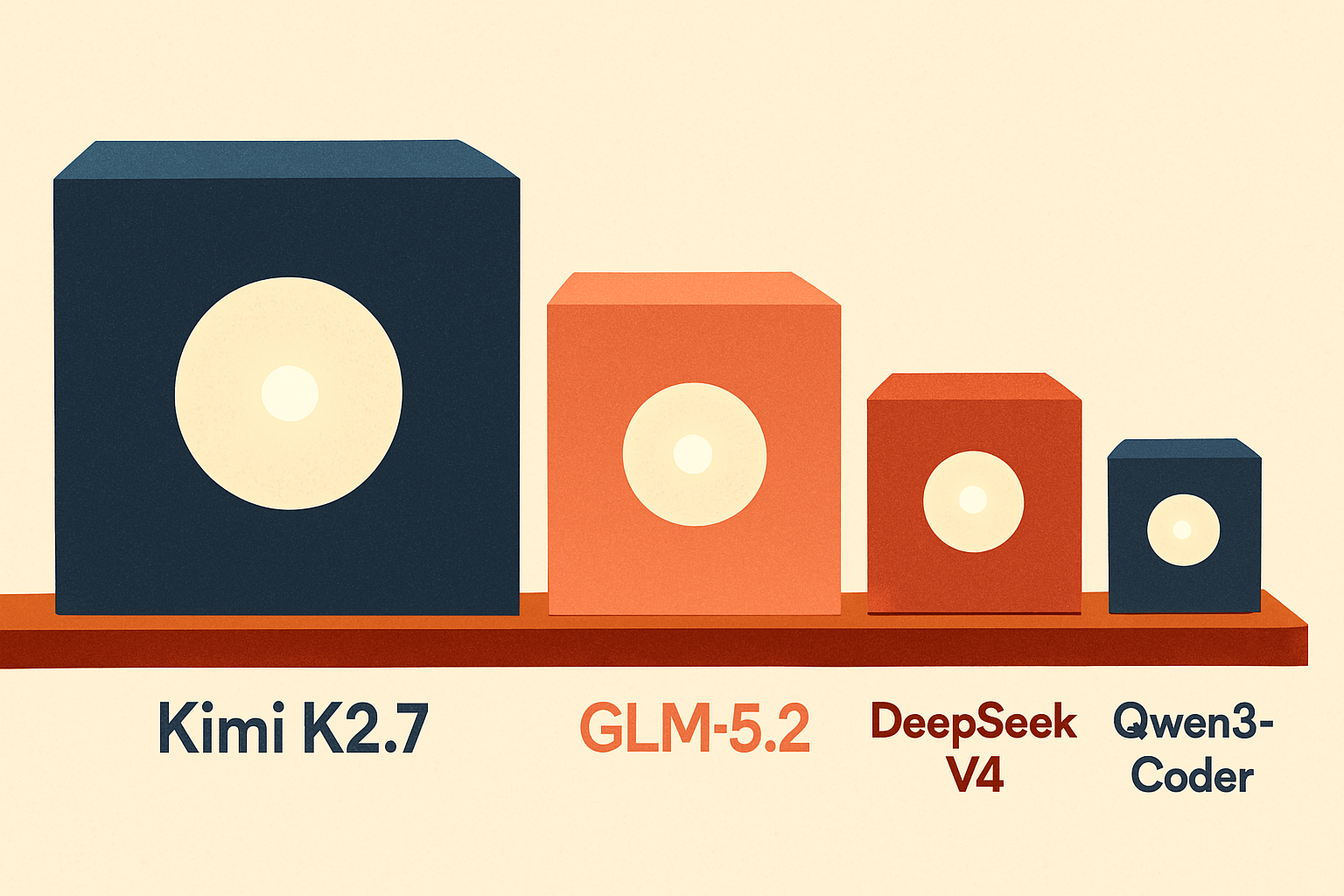
Kimi K2.7 vs GLM-5.2 vs DeepSeek V4 vs Qwen3-Coder: The Open-Weight Coding Bracket, Refreshed
The open-weight coding tier turned over almost completely in one quarter. Four permissive-licensed models now run real coding agents — and if you pick by the leaderboard screenshot instead of active params, license, and who actually verified the number, you'll pick wrong.
4 min
GPT-5.6 Sol Runs at 750 Tokens/Second on Cerebras. That's Not a Faster Chatbot — It's a Different Product Category.
Roughly 10× the throughput of a frontier model on Nvidia GPUs turns a 13-second answer into a 1.3-second one. The number that matters isn't the speed — it's the threshold it crosses: from background agent to in-the-loop product.
4 min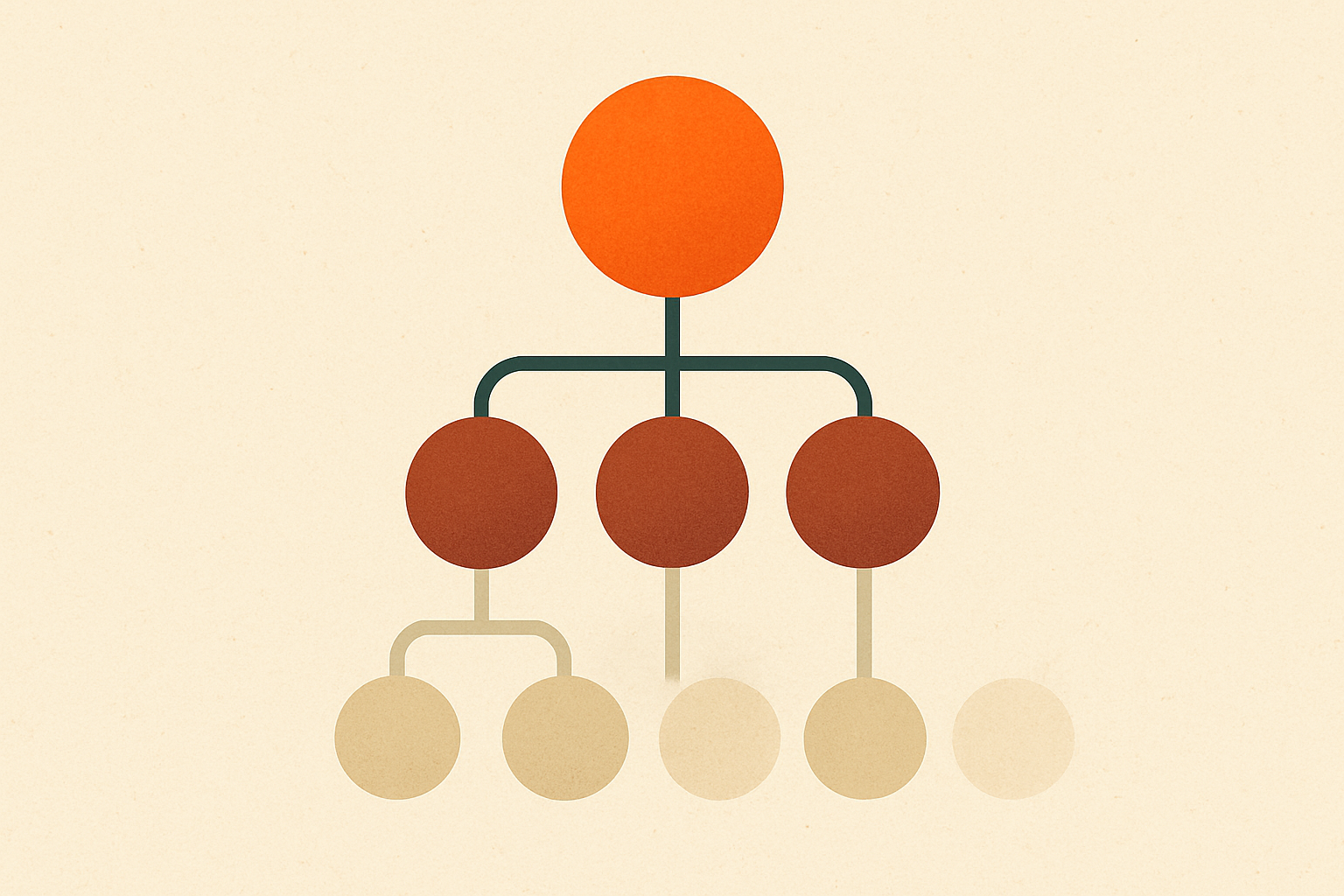
Hierarchical Subagents in the Claude Agent SDK: A Build Tutorial
Since Claude Code v2.1.172, a subagent can spawn its own subagents — up to five levels deep. The whole feature turns on a single field in your agent definition. Here's the copy-paste build.
5 min
Terra vs Sonnet 5 vs Gemini 3.5 Flash: Picking the New Mid-Tier Workhorse
Three fresh 'good enough' models now fight for the workload that eats most founders' API budgets. Here's how to choose on cost math, context, and latency — not the leaderboard.
4 min
GPT-5.6 Went Public: The New Three-Tier Menu, and Which Tier Your Product Actually Needs
OpenAI shipped GPT-5.6 as Sol, Terra, and Luna on July 9 after a 12-day government review — three models at three prices, not one. The founder question isn't 'is it better,' it's 'which tier does each job in my product deserve.'
5 min
Claude Sonnet 5 Is the 'Run It Everywhere' Model — and the Tokenizer Is the Catch
Anthropic shipped Sonnet 5 as near-Opus agent intelligence at $2/M input, and made it the default on Free and Pro. The founder move isn't 'upgrade' — it's re-pricing your escalation ladder, because a new tokenizer quietly eats ~30% more tokens.
5 min
Grok 4.5 vs Opus 4.8: Losing the Benchmark, Winning the Token Bill
On xAI's own SWE-Bench Pro numbers, Grok 4.5 loses to Opus 4.8 by 4.5 points — and finishes the same task for roughly a seventeenth of the output cost. The interesting number isn't the price. It's the token count.
5 min
Tencent's Hy3 Is an Open 295B Agent Model. The Number That Matters Is 21B.
A 295B Mixture-of-Experts under Apache 2.0, activating 21B per token. For agent builders, the headline size is the least interesting spec on the card.
4 min
Poolside's Laguna XS 2.1 Puts a 63%-on-SWE-bench Coding Agent on Your Laptop
A 33B mixture-of-experts model that activates only 3B parameters per token now clears 63% on SWE-bench Multilingual — and ships under a Linux Foundation license. The active-parameter count and the license matter more than the score.
5 min
China Regulated What an AI May Pretend to Be — So Doubao and Qwen Switched Their Companion Agents Off Rather Than Comply
China's companion-AI law regulates the emotional bond, not the model — so Doubao and Qwen switched their companions off rather than comply. If you ship a persistent persona, here's the tool-vs-companion line coming for you.
6 min
LongCat-2.0: China's Biggest Model Yet Was Trained on Domestic Chips — and Meituan Won't Say Whose
Meituan's 1.6-trillion-parameter LongCat-2.0 claims end-to-end training on 50,000+ domestic accelerators, no NVIDIA involved. That claim is the story — and the fact that it names no chip vendor is the part worth reading closely.
4 min
Liquid AI's LFM2.5-230M: A 230M On-Device Model Built to Route and Extract, Not Reason
Liquid AI's smallest model yet fits in under 400MB and runs on a Raspberry Pi. The interesting part isn't how small it is — it's what a model this size is actually for.
4 min
DiffusionGemma 26B: A Diffusion LLM Belongs on the Edges of Your Agent, Not the Core
Google open-sourced a text diffusion model that reads documents better than the autoregressive Gemma it's built on — and does multi-step math worse. That split tells you exactly where to wire it in.
5 min
Kimi K2.7 Code Bets on Cheaper Steps, Not Smarter Ones
Moonshot's new coding model cuts reasoning tokens ~30% while nudging its own benchmarks up — a wager that per-step cost, not raw smarts, now decides agentic coding.
5 min
How to Migrate an AI Agent to a New LLM Without Breaking It
The new model isn't worse. Your prompt was quietly overfit to the old one's defaults — so the swap changes your agent's behavior even when you change nothing. Freeze the baseline before you switch, not after.
5 min
GPT-5.6 Sol vs Terra vs Luna: Which One Your Agent Should Actually Call
OpenAI's new three-tier lineup is priced for a router, not a pick. For agent workloads the flagship is the wrong default — the interesting model is the one in the middle.
5 min
Nemotron 3's Latent MoE: How NVIDIA Runs 550B of Experts at 55B of Cost
Nemotron 3 Ultra activates 55B of 550B parameters per token — the ordinary MoE trick. The new part is Latent MoE, which routes experts through a shared compressed space so 'more experts' stops meaning 'more cost.'
4 min
Gemini 3 Flash vs Pro for Agents: The Tier Inverted
Google shipped a Flash model that beat its own Pro on SWE-bench Verified. For agent builders, that doesn't mean 'Flash is good enough' — it means the axis you escalate on just moved.
3 min
DeepSeek V4 Pro vs Flash: Which One Goes in Your Agent Loop
Both open-weight variants ship the same 1M-token attention and the same agentic training. For an agent, the choice isn't a smartness tier — it's a per-turn cost knob.
4 min
The Best Small Model for Your Agent Isn't the Smallest — or the Smartest
Qwen3-4B, Phi-4-mini, Gemma, Nemotron 3 Nano: the pick forks on a question no leaderboard prints — are you short on memory or short on tokens-per-dollar? And the score that decides an agent isn't MMLU.
4 min
MiniMax M3: Frontier Coding and 1M Context on Open Weights — Read the Latency, Not the Leaderboard
M3 claims to beat GPT-5.5 on SWE-bench Pro while running weights you can host yourself. The benchmark row is the least trustworthy thing in the release — and the architecture is the most.
5 min
Claude Sonnet 5 vs Opus 4.8 for Agents: The Cheaper Model and the Tokenizer Catch
Sonnet 5 lands at 40% below Opus and beats it on terminal work — but a new tokenizer quietly inflates every token count by ~30%, so the rate card is not the price. Do the cost math in your own units.
5 min
The Best AI Model for Coding Agents in 2026 Is Half a Harness
GPT-5.5 and Claude Opus 4.8 are tied on SWE-bench Verified at ~88.6%. That means the leaderboard number stopped being the answer — and your agent's scaffolding started being it.
5 min
Unisound U2 and the Bet on 'Native Agentic' Models: When the Loop Moves Into the Weights
A Chinese lab shipped a 266B/10B-active model that claims to decompose and finish 100+ step tasks on its own. The benchmark line isn't the story — the category claim is.
5 min
GLM-5.2 Matched the Closed Models on Agentic Coding — for a Sixth of the Cost
An open-weight model is now within a point of Claude Opus on long-horizon coding benchmarks. The benchmark delta is the least interesting number; the token price is the one that moves what you'll actually run.
4 min
Claude Agent SDK Billing: Why the June 15 Subscription Credit Split Was Paused
Anthropic tried to give programmatic Claude usage its own bill, then reversed it on the day it was due. The retreat doesn't fix the problem it exposed.
4 min
Kimi K2 vs GLM-4.6 vs MiniMax M2 vs Qwen3: The Best Open Model for Agents in 2026
Four open-weight MoE models now run real agents. The headline parameter counts are nearly decorative — pick by active params and post-training, not by the leaderboard screenshot.
4 min
Choosing an Open Vision-Language Model for Agents in 2026: Qwen3-VL vs InternVL3.5 vs Holo1.5
The best open VLM for an agent isn't the one that scores highest on MMMU. It's the one that can hand back an accurate click coordinate — and those are not the same models.
6 min
Responses vs Assistants vs Chat Completions: Which OpenAI API to Build Agents On
OpenAI now ships three ways to call its models — but one of them has a death date. Here is how to choose, and the one reason reasoning models behave better on the newest surface.
4 min
Claude vs GPT vs Gemini for AI Agents in 2026: Choosing a Model for Tool Use
Agents don't run on chatbot leaderboards. The model that wins your tool loop is decided by function-calling reliability, agentic benchmarks, and an "agent tax" the headline price hides.
5 min
AWS Bedrock vs Vertex AI vs Azure AI Foundry: Choosing an Enterprise LLM Platform
Three clouds rent you the same frontier models. The thing that actually locks you in is the agent runtime wrapped around them, and most teams pick it by accident.
5 min
Small Language Models vs LLMs for Agents: Where the Big Model Is Just Overhead
A frontier model on every node is the default, not the optimum. Most agent calls are narrow, repetitive, and format-constrained — exactly the shape a small model was built for.
5 min
Qwen vs Llama vs DeepSeek vs Mistral vs Gemma: Choosing an Open-Weight LLM for Agents in 2026
The benchmark you compare on today expires in three weeks. The license you build on doesn't. Pick an open-weight family the way it will still matter next quarter — by what you're allowed to do with it, and what it costs to serve.
4 min
Mixture-of-Experts vs Dense Models for Agents: The VRAM Bill You Didn't Budget For
An MoE model computes like a small model and remembers like a giant one. That split is great for a token factory and a trap for a single self-hosted agent.
4 min
Open Stack, Closed Stack, and Where the Leverage Actually Is
The open-versus-closed debate in agents is framed as a fight over frameworks — but the real leverage moved to a layer where the distinction barely applies.
4 minLatest in Models & LLM APIs
Not buyer's guides — the news, teardowns, and explainers behind this topic.